
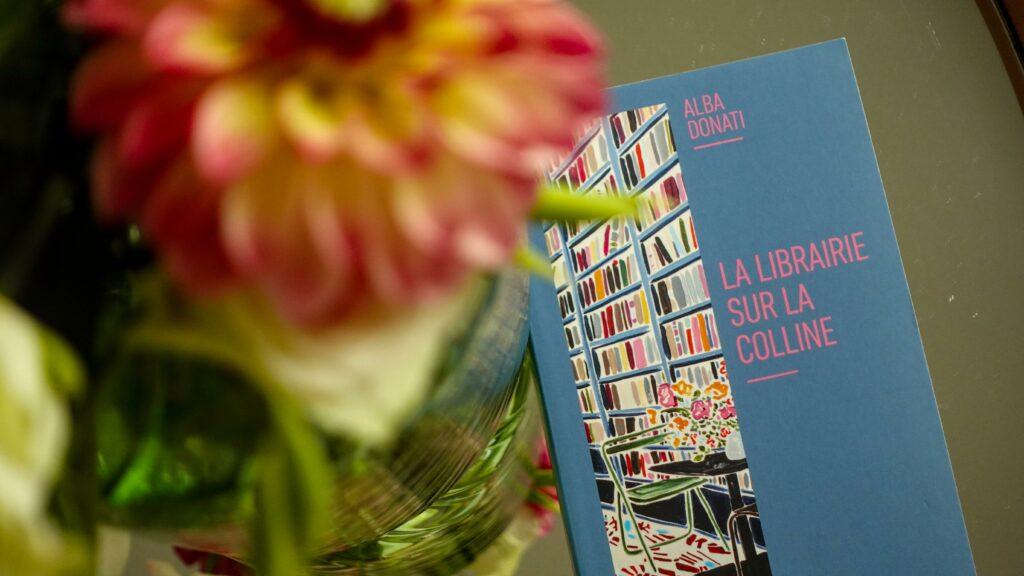
“People want stories; it doesn’t matter who wrote them, they need stories to take their mind off things, stories to identify with or to take them elsewhere.
― Alba Donati, Diary of a Tuscan Bookshop
Stories that won’t hurt, that will heal a wound, restore trust, instill beauty into their hearts.”
Alba Donati’s words hold a quiet conviction: that people turn to stories not only for distraction, but for restoration. Stories, she reminds us, are not just entertainment — they can soothe, rebuild, and seed beauty in the heart. There’s something profound in her understanding of what stories can do. They don’t merely occupy our minds; they transform them. In a world that often feels fractured, stories become a form of medicine — not the bitter kind that forces us to confront only what’s broken, but the gentle kind that shows us what wholeness might look like.
And yet, the stories most celebrated in recent decades are often the darkest ones. Our shelves are filled with dystopias: futures of surveillance, ecological collapse, political corruption, worlds where human kindness flickers but rarely survives. These books can be powerful warnings, sharp mirrors of our anxieties. But if warnings are all we read, what vision of the future do we carry within us?
Consider how this shapes our collective imagination. When every acclaimed novel ends in ruin, when every celebrated series paints humanity as fundamentally selfish or doomed, we begin to mistake cynicism for sophistication. We start to believe that only dark stories tell the truth, that hope is naive, that imagining better is somehow less intelligent than imagining worse.
A warning without hope can paralyze. It can leave us with the impression that disaster is inevitable, that solutions are naïve, that harmony is a fantasy. And when readers lose hope, when imagination itself is trained only toward ruin, we risk surrendering the possibility of something better. We risk forgetting that the stories we tell shape not just how we see the world, but how we act within it.
This is why I believe so deeply in utopian literature. Not a literature that denies hardship, but one that imagines a path beyond it. Utopias are not about perfection — they are about possibility. They offer visions of cooperation, of care, of art and nature at the center of life. They remind us that trust is still conceivable, that healing can be collective, that beauty can be built rather than merely salvaged.
If dystopias reveal our fears, utopias nurture our courage. They give readers more than warnings — they give blueprints. A story of harmony can ignite the imagination of someone who feels powerless; it can suggest a new beginning rather than only an ending. In this way, utopian storytelling does exactly what Donati describes: it heals, restores, and instills beauty into the heart.
Perhaps this is what we’ve forgotten in our rush to be realistic: that imagining better is itself a form of resistance. When we envision communities where people care for each other, where work has meaning, where the natural world is cherished rather than exploited, we’re not being foolish — we’re being revolutionary. We’re refusing to accept that the way things are is the way they must always be.
I find this especially resonant while reading Diary of a Tuscan Bookshop. Donati herself has created a utopia in miniature: a bookshop in a small village, a place where stories change lives not through despair, but through light. Her diary is proof that imagining something gentle and beautiful is not naïve — it is radical, and deeply necessary. In her pages, we see how a single person’s vision of what a bookshop could be — not just a place of commerce, but a sanctuary of stories — transforms an entire community.
Her bookshop becomes what every utopian story aspires to be: a demonstration that another way is possible. Not perfect, not without its challenges, but fundamentally oriented toward human flourishing rather than human suffering. It reminds us that utopia isn’t a distant fantasy — it’s something we can create wherever we are, one story at a time.
This essay was first published in August 2025 on my Substack, Bookmarked Moments. It grew out of my reflections on Donati’s book, which I read while preparing my article : Tales of an Italian Life – 3 Books to Understand the Charm of Italy’s Countryside. If this letter sparked something in you, I invite you to continue the journey with me in that article — a celebration of Italy, where literature and landscape meet.

Written by Alexandra Poppy
Writer, reader & curator of The Ritual of Reading
I’m Alexandra, the voice behind The Ritual of Reading. Somewhere between a stack of novels and a half-finished pot of tea, I keep finding traces of the life I want to live—slower, richer, filled with stories. The Ritual of Reading is where I gather what I love: books that linger, places with a past, and rituals that make ordinary days feel a little more meaningful. I write from Paris, where elegant bookshops and old-fashioned cafés offer endless inspiration—and I share it here, hoping it brings a spark to your own days, too.
Enter The Ritual of Reading
Each Sunday, receive a letter to steady your attention—literary inspiration, seasonal rituals and reflections from a life shaped by books.
On the first of each month, a gift: The Literary View, a custom wallpaper created to accompany your days.
That’s a really interesting point about using utopian visions to hold ourselves accountable. It’s easy to get stuck in complaining about what’s wrong, but imagining a truly good society can be a powerful motivator.
It makes me think about the gap between observing and acting, particularly in the age of social media. We’ve become very good at forming opinions, but less practiced at carrying them forward. What transforms thought into something constructive? I keep coming back to imagination.