
There is a habit I have developed over years of living between languages: when understanding lags a step behind, I reach. For an analogy, a familiar root, a grammatical shape I recognise from somewhere else. Something in Italian to unlock something in Portuguese, something in the architecture of English to make sense of what’s happening in a Flemish sentence. I am, in those moments, rather like the spinning hourglass that used to appear beside the cursor in Windows 98 when the computer was working something out. Patient, automatic, absolutely determined.
What I had never encountered, until last week, was a language that offered no handhold at all.
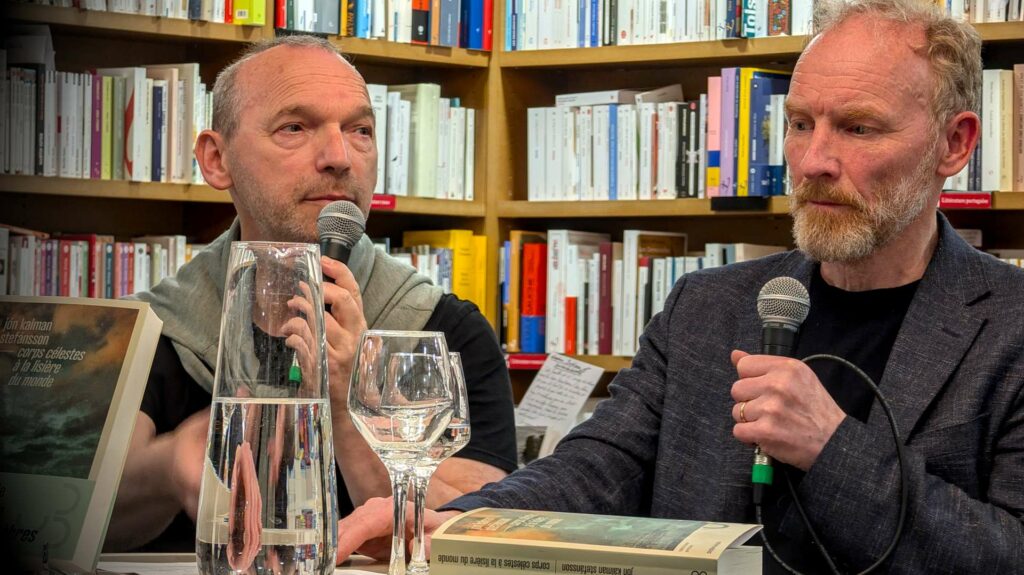
It happened in a bookshop (my favourite in Paris, which is saying something) on an evening that had begun, as the best literary evenings tend to, with a very old story. Not the one being presented that night, but one I had first encountered in the winter of 2022, when I was building my Scandinavian Literary Advent Calendar and trying to solve a problem I hadn’t anticipated: what do you read for Iceland when you’ve decided, firmly, that you will not be reading another Nordic thriller?
The answer, after weeks of digging (my favourite part of any themed reading project), was Jón Kalman Stefánsson. His novel Summer Light, and Then Comes the Night was unlike anything I had read before — a story with an apparently simple plot that spoke in crystalline, almost ephemeral light, like a snowflake you could somehow hold. I made a video about it at the time, and looking back at it recently I find the memories diffuse yet strangely intact, which is perhaps the best thing you can say about a book that quietly changed something in you.
So when my favourite bookshop announced an evening for the French launch of his latest novel, I was both excited and cautious. His work emits a frequency that calls to me, and I wasn’t entirely sure I wanted to test what happened when the frequency became a person in the room.
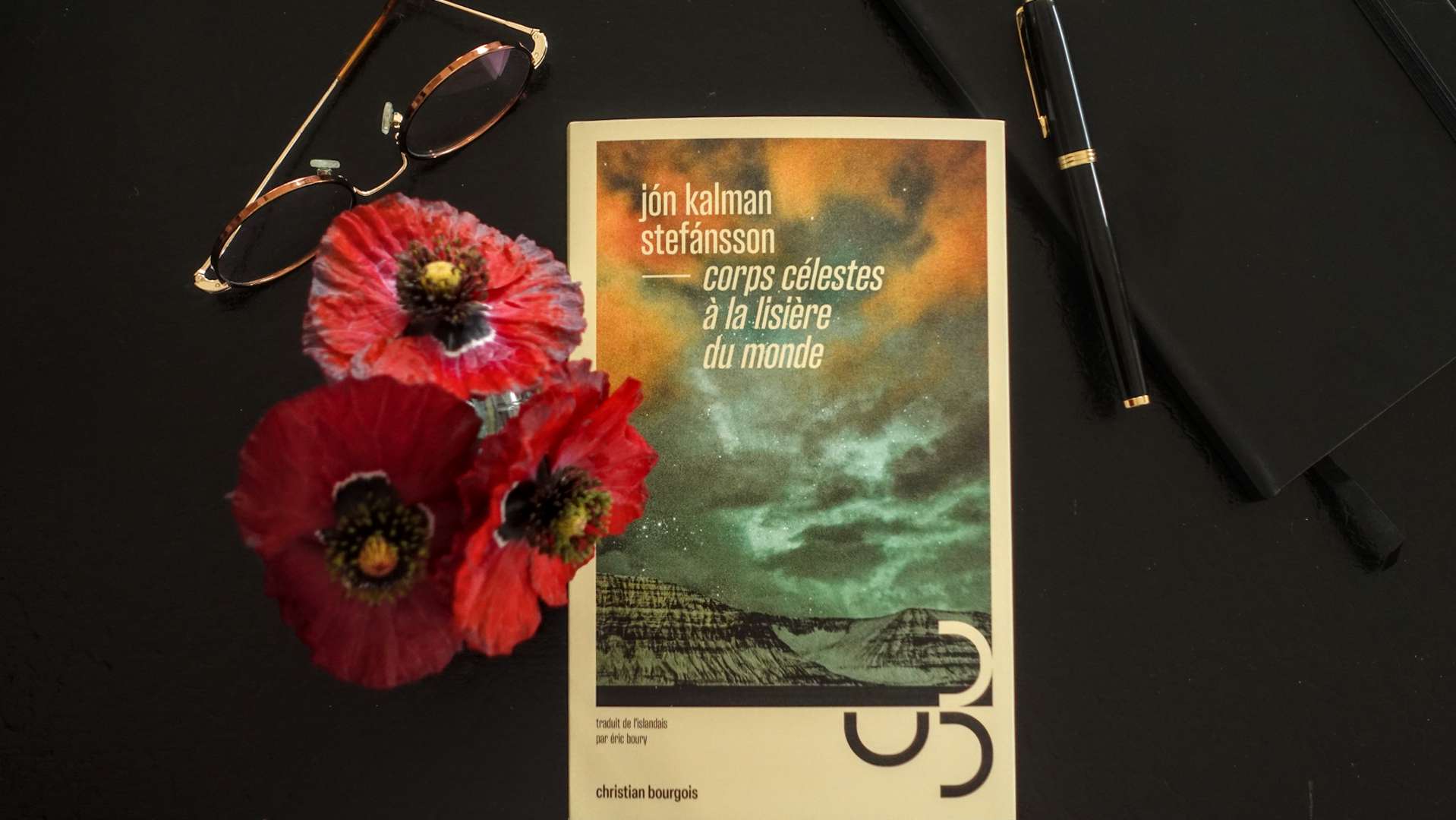
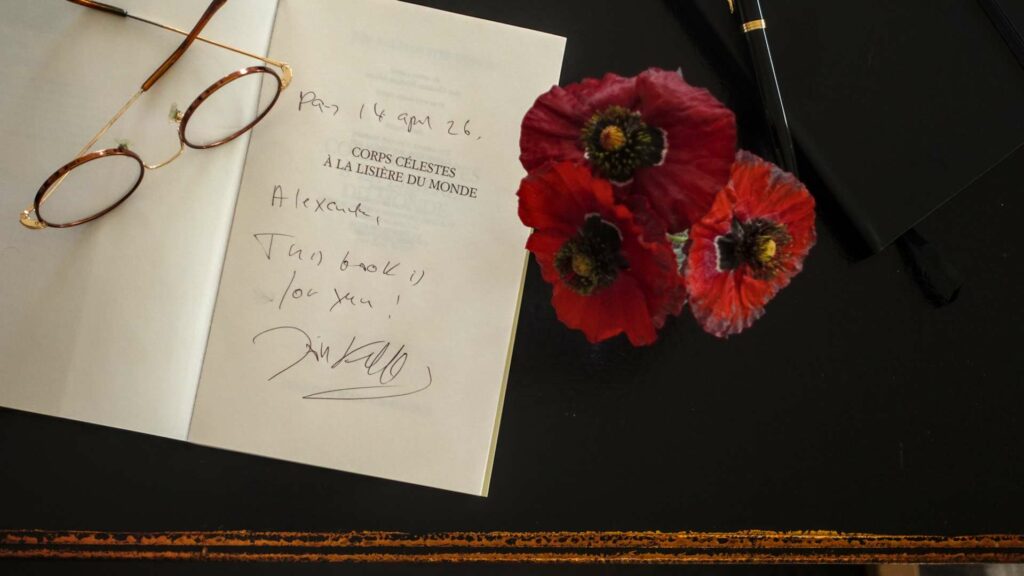
Jón Kalman Stefánsson’s Latest Novel: Celestial Bodies at the Edge of the World
Christian Bourgois Éditeur has translated the 2024 novel Himintungl yfir heimsins ystu brún as Corps célestes à la lisière du monde (Celestial Bodies at the Edge of the World). Set in 17th-century Iceland, it follows a troubled reverend named Pétur, posted to a remote parish deep in the West Fjords, who attempts to prevent a violent reckoning when the Danish crown’s local bailiff turns against a group of Spanish fishermen stranded after a shipwreck. Caught between past and present, the intimate and the political, the story unfolds through an extraordinary cast (a loyal and formidable servant named Dóróthea, the sailors Pedro and Sebastián, a mysterious woman named Helga, and even a dog named Sappho) as it recounts one of the darkest chapters in Icelandic history.
It is, from everything I heard that evening, a novel about what happens when the powerful decide that certain lives don’t count. Which made the context of its presentation — a small, warm, book-filled room where people had come voluntarily to care about literature — feel quietly significant.
The Role of Poetry and Literature in Icelandic Culture
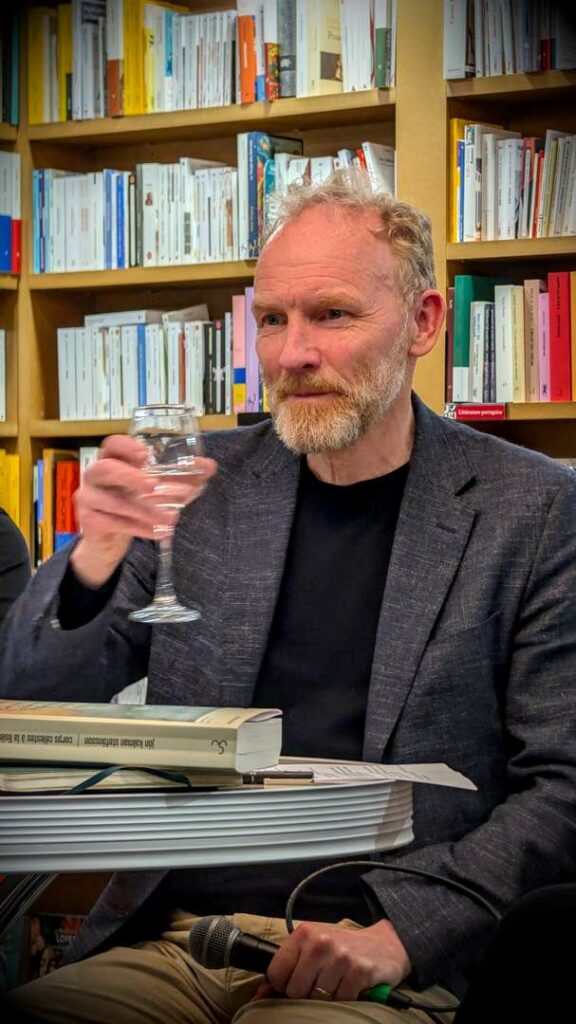
The conversation was translated from Icelandic to French, which meant everything arrived to me at a slight delay, like light from a distant star. But the ideas themselves needed no softening. One in particular has stayed with me since.
Describing Iceland’s landscape and its centuries of near-total isolation (hostile terrain, months of darkness, villages of a few dozen inhabitants with nothing in the way of what we would now call entertainment), Stefánsson suggested that literature was precisely what prevented Icelanders from killing each other out of boredom. It was said with characteristic Icelandic understatement, which somehow made it land harder than any impassioned argument could have.
I’ve been sitting with that thought. Could the absence of boredom — or rather, the extreme proliferation of entertainment available to us now — be one reason people read less and less? This would certainly explain the rising trend of Reading Retreats, those weekends and weeks set deliberately apart from everything else, where reading becomes the sole occupation. People feel the need to stop everything so that they can finally focus on a book in the way the Icelanders did for centuries, which appears to be so embedded in their culture that it has simply become who they are.
He also spoke about the omnipresence of poetry in Icelandic life — an effect, he explained, of widespread historical illiteracy that made oral transmission of myths and legends into standard practice, a lifeline passed from one generation to the next without ever touching the page. His descriptions of a country with no cities, only scattered communities barely visible against the landscape, reframed something I thought I already understood about what literature is for. It is not decoration. It is not leisure in the way we have come to use that word. It is, or it was for Iceland, as essential as warmth.
Finding Presence Through Languages We Don’t Understand
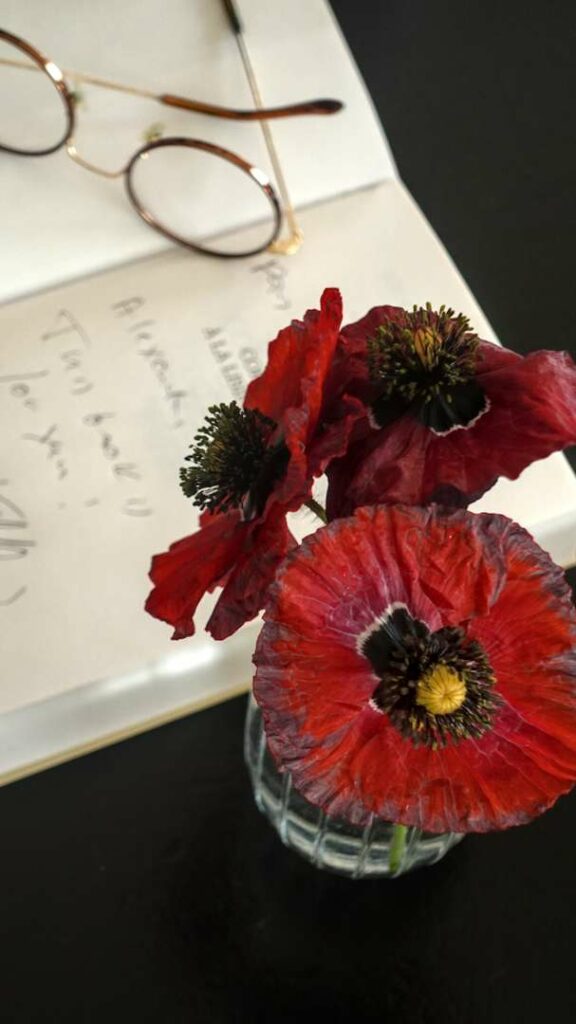
All of this — the boredom, the darkness, the villages, the poetry passed mouth to mouth across generations — he told in Icelandic. And it was only once I stopped waiting for the interpreter and allowed myself to simply listen to the language itself that I understood what the evening was really offering me.
I had absolutely no knowledge of Icelandic, and before that night I had never heard anyone speak it aloud. I carried the usual preconceptions: that it would sound somewhere between Danish and Norwegian, with a few harsh consonants scattered in between. What I discovered instead was something closer to Greek in its music, and ultimately, uniquely, irreducibly itself.
The hourglass appeared. I waited for the familiar click of recognition, for something to reach toward. Nothing came.
And in those minutes before the interpreter stepped in and returned meaning to my analytical mind, something unexpected happened. Deprived of my usual tools, I stopped searching. My attention redirected itself, almost involuntarily, to the phonetics of what I was hearing rather than its content. And in that enforced passivity, I found I was paying a completely different kind of attention to the man speaking.
I noticed the extraordinary calm with which he delivered everything (jokes and anthropological observations in exactly the same unhurried tone). I noticed how concise his Icelandic phrasing was, each sentence expanding into three or four times as many words once the interpreter caught up. I noticed the particular clarity in his gaze when he said something that has stayed with me since: “I don’t always know from which depth my characters appear on paper, but I do know one thing — they end up being part of my bloodstream.”
I understood none of that in the moment he said it. I only felt it. And feeling it was enough to know that something real was being said.
Meaning as Energy: Why Literature is a Practice of Presence
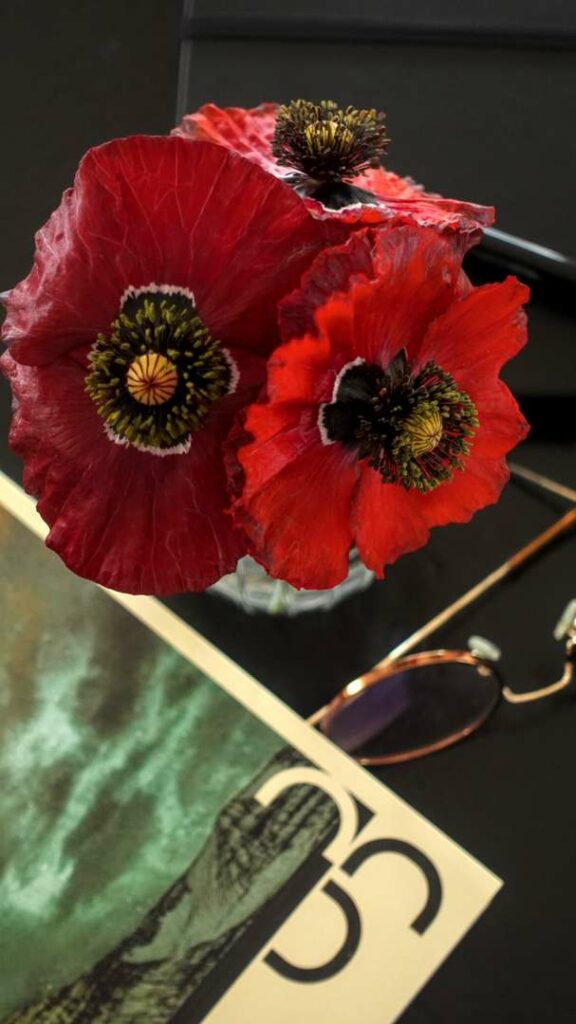
Not understanding him immediately was my lesson in presence. The revelation that meaning can be distilled, like an essential oil, into something closer to energy — and that being just as volatile, just as capable of evaporating the moment you try to grasp it directly, it asks only one thing of us in return: that we stay.
I have been thinking, since that evening, about how rarely I allow myself to simply stay. To be in the presence of something without immediately processing it, categorising it, finding the right drawer for it. The reaching habit is useful. But it is also, sometimes, a way of never quite arriving.
What Icelandic gave me, for those few minutes, was the experience of arrival without the map. And what I found there was not confusion but a strange, clean quality of attention that I don’t often access when understanding is too easy.
Literature, Stefánsson suggested that evening, is not just what we read. It is the practice (centuries old, bone-deep in some cultures) of sitting with a story we don’t fully understand yet, and trusting that the meaning will come if we stay. The Icelanders knew this not as a philosophy but as a fact of survival. We are still learning it as a choice.
I think about that now when I sit down with a difficult book, or a new one in a language I’m still finding my footing in. The understanding isn’t always immediate. The hourglass spins. But the presence, it turns out, is the point.

Written by Alexandra Poppy
Writer, reader & curator of The Ritual of Reading
I’m Alexandra, the voice behind The Ritual of Reading. Somewhere between a stack of novels and a half-finished pot of tea, I keep finding traces of the life I want to live—slower, richer, filled with stories. The Ritual of Reading is where I gather what I love: books that linger, places with a past, and rituals that make ordinary days feel a little more meaningful. I write from Paris, where elegant bookshops and old-fashioned cafés offer endless inspiration—and I share it here, hoping it brings a spark to your own days, too.
Enter The Ritual of Reading
Each Sunday, receive a letter to steady your attention—literary inspiration, seasonal rituals and reflections from a life shaped by books.
On the first of each month, a gift: The Literary View, a custom wallpaper created to accompany your days.
I completely agree, the feeling of being utterly absorbed in his stories, not quite grasping everything but feeling it so deeply, is a really special experience.
A trip to Iceland feels inevitable…