

However much you might love Parisian life, there is a particular lightness on a Friday morning when you leave Paris behind. Somewhere past the périphérique, past the retail parks and the last billboard for something you don’t need, the constant chatter of the city simply stops. And then, the countryside begins.
I was lucky enough to be invited by a dear friend to visit her native Burgundy, and there is nothing quite as special as getting to know a land through the eyes of its people. I caught glimpses of our weekend away — postcards to remind me that a leaf, a drop of water, or a patch of blue sky can tell the most extraordinary story, in the right company. I’ve gathered them into a short film too, if you’d rather watch than read, waiting for you at the end.
The Medieval Village
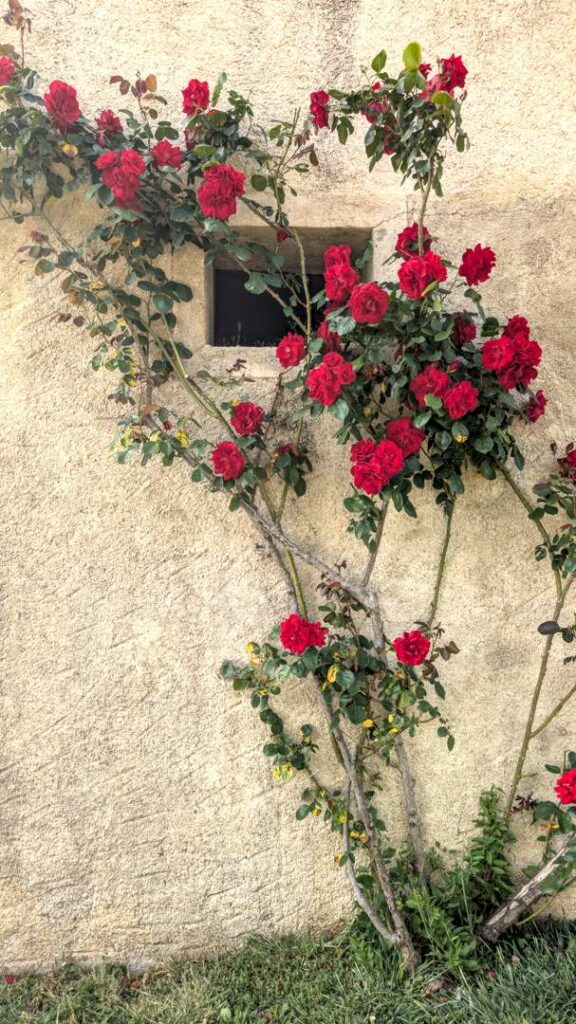
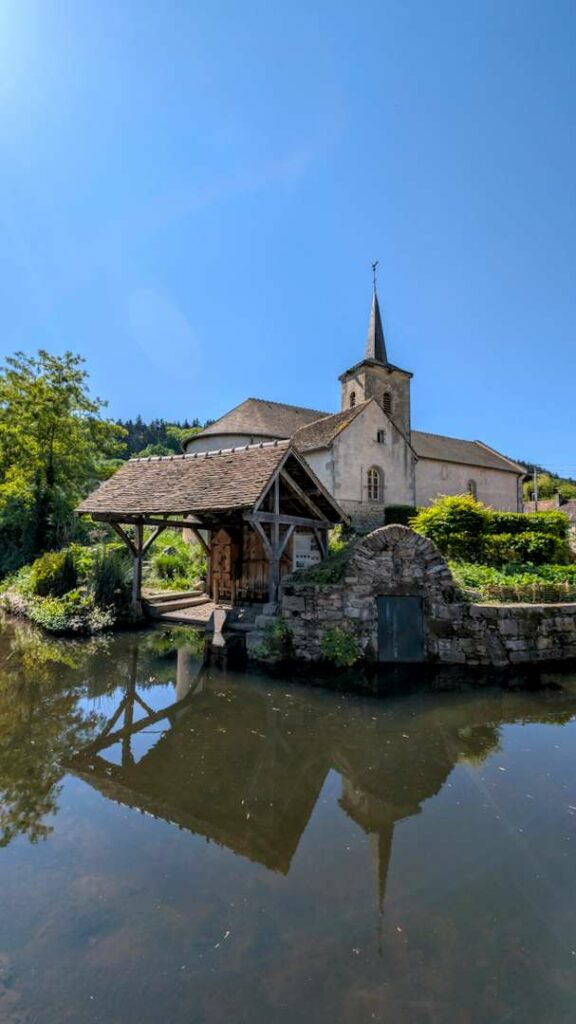
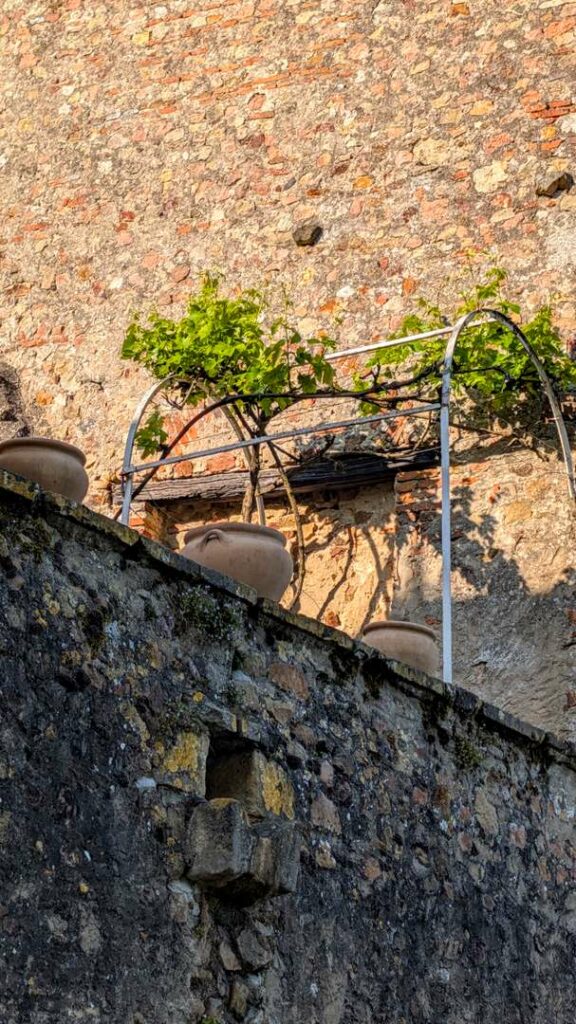
I don’t remember who first told me that the most honest architecture is the kind built without any intention of impressing posterity. These villages were not designed to be photographed. They were built to be lived in — to shelter a baker, a blacksmith, a notary. The stones were laid by people who expected them to last, not because anyone would admire them, but because that was simply the correct way to do a thing.
And yet here we are, centuries later, turning corners and stopping short.
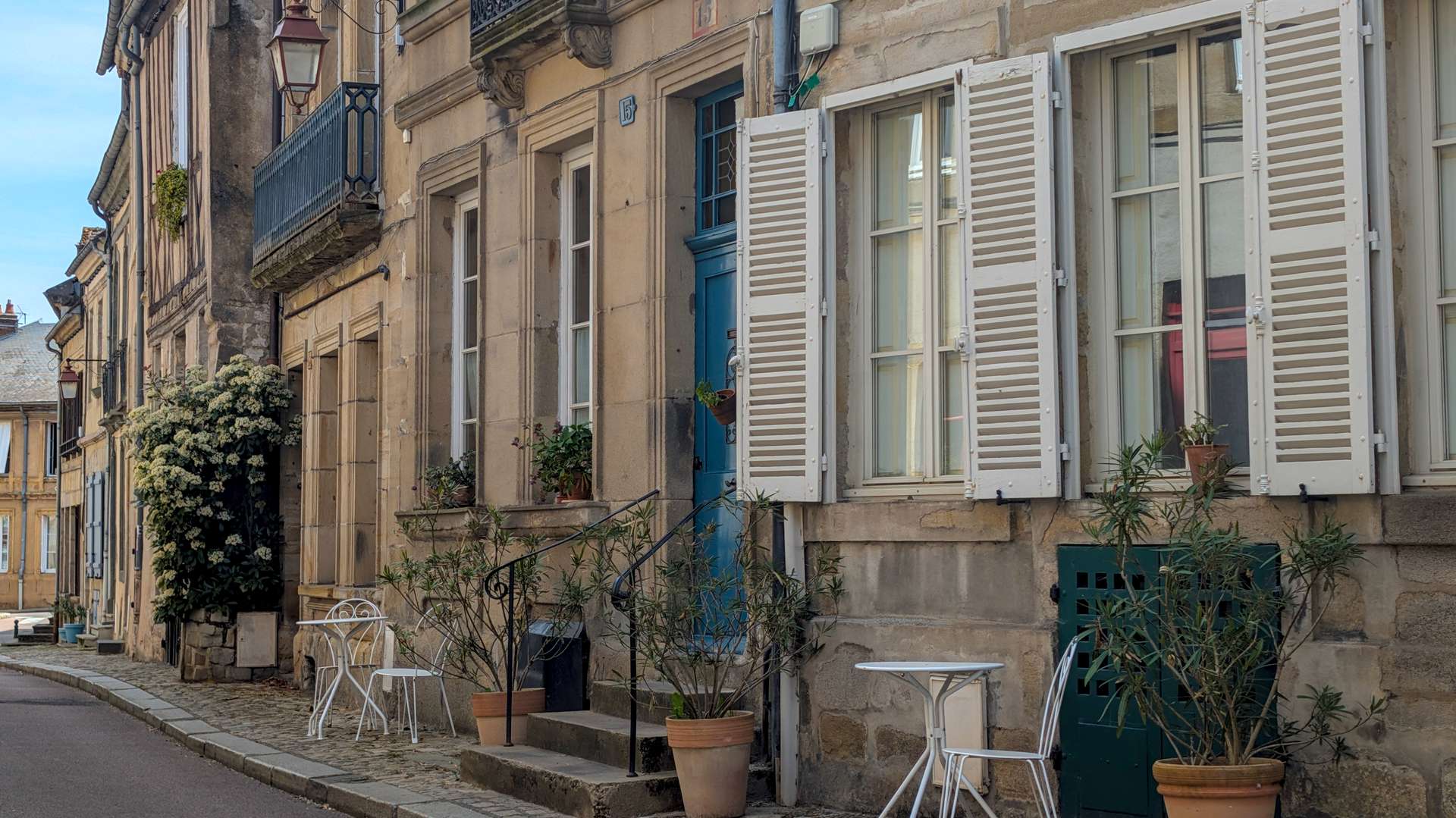
The medieval village of Bourbon-Lancy is one of the last thermal spring towns in Burgundy, and while I did enjoy a very relaxing afternoon in the spa, the real surprise was the stroll around the village in the company of my friends. Every street corner tells a story: the house of a woman writer who published under a male pseudonym and received Guy de Maupassant in her home; a narrow passage called the Wolves’ Passage, in memory of a mother wolf who came into the village searching for her lost pups; the fifteenth-century collegiate church where the wet nurse of King Henry III was buried; and the exquisite timber-framed house said to have sheltered Madame de Sévigné.
What strikes me every time is the detail at eye level — the texture of it up close. A wooden balcony bleached silver by decades of sun. A doorstep worn hollow by centuries of the same threshold crossed, the same weight of feet, the same returning home. History leaves its marks so quietly that you almost walk past them. Almost.
Stone, Water and the Roman Horizon
Burgundy has this in common with all the old places: it knows how to be still. The Stone of Couhard has been standing on top of its hill since the first century AD, funerary monument of the Roman citadel of Autun. Standing beside it, I found myself wondering what kinds of hopes and wishes had been whispered here over twenty centuries, and whether we still think of the afterlife as we once did.
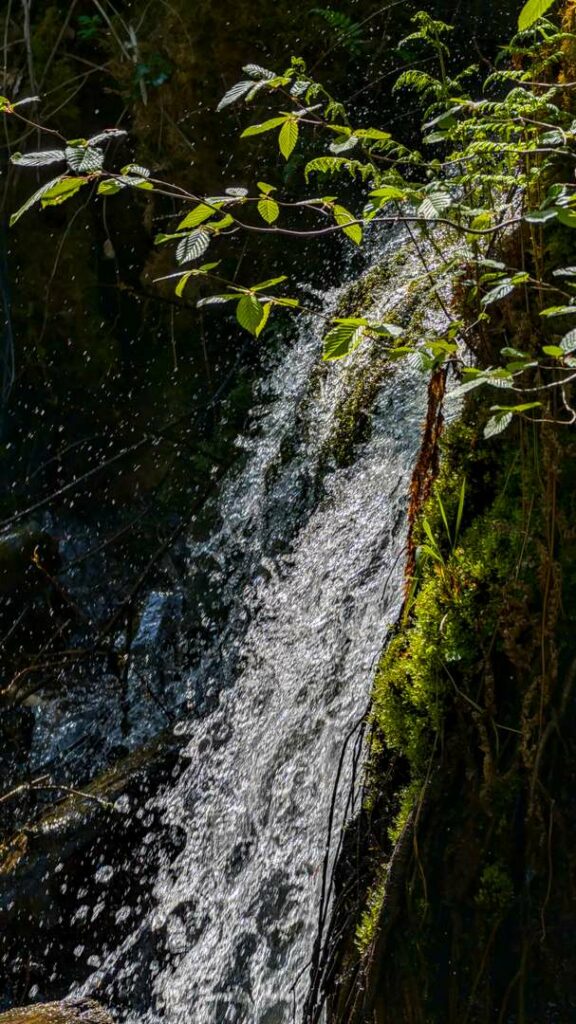
There is something about stone that has been standing for hundreds of years, next to water that has been moving for just as long, that puts the urgency of the week into a rather clarifying perspective. The forest feels like a rooting ritual — a return to what was always there, waiting.
I didn’t bring a book here. Some places ask you to simply look. To let the sound of water do the work that words usually do — the work of carrying you somewhere outside yourself for a little while.
The Market Morning
There is a kind of French town that never quite makes it onto the tourist lists and is, for precisely that reason, my paradise. Autun on a market morning: the square in full sun, the theatre façade, the stalls arranged with that particular French combination of abundance and order that I have never seen replicated anywhere else.
Each region of France knows its own worth when it comes to produce. And while some markets are more famous than others, there is always a particular joy in the voices of the producers — lively, proprietary, generous — that reminds you of the miraculous land you find yourself in. The market was deep in asparagus season. White, green, the occasional violet-tipped bunch. Piled in wooden crates with that no-nonsense generosity that French market vendors seem to inherit rather than learn. Next to them, strawberries so ripe the air itself smelled of them — already summer-red even though summer was weeks away. Spring in Burgundy is not shy about its ambitions.
Saint-Lazare, Restored
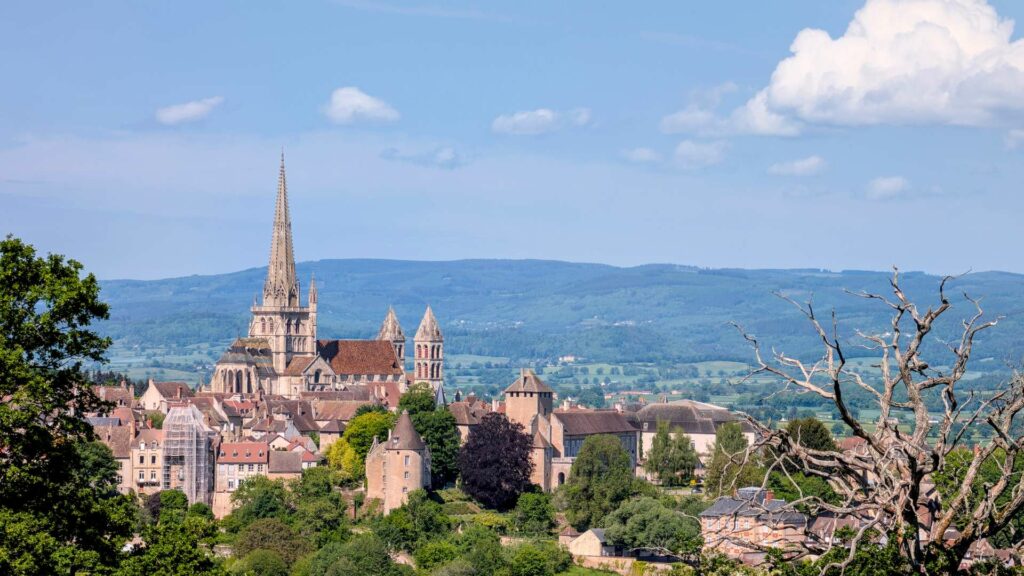
Medieval towns have always felt like an invitation to take my time. To walk slowly and observe each doorstep, each balcony. To take in one of France’s most quietly extraordinary gifts: a kind of beauty that cannot fade with time.
The newly restored Saint-Lazare Cathedral of Autun felt like a sanctuary in the most literal sense of the word — a place for your soul to seek peace, solace, room to breathe. I am not a religious person in any conventional sense. But I am, I think, a person who believes in paying attention. And churches in France — especially the ones that have been standing long enough to forget they were ever new — ask for that attention in a very particular way. What they give back in return is a peace that requires only one thing: that you arrive with your full attention intact.
The Bookshop (Inevitable, Really)
And then, there was the bookshop. My friend had warned me it would be irresistible — but let’s be honest, I have rarely walked past a bookshop without going in. This is not a discipline problem. It is, I’ve decided, a vocation.
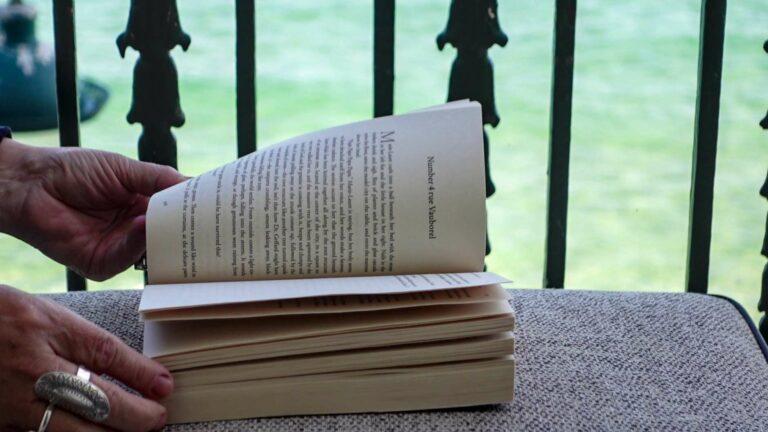
There is a specific pleasure in bookshop browsing that has nothing to do with efficiency and everything to do with serendipity. You go in looking for nothing in particular and find something that has been waiting for you without knowing it. A title that catches. A cover that stops you. A back-cover description that makes you stand in the middle of an aisle reading three paragraphs before you’ve even decided to buy it. This is what I came for, really — not as a separate activity from the trip, but as the same activity. The same quality of attention. The same willingness to be surprised.
Seven Books from Burgundy
I came home from La Promesse de l’aube with seven books — a few of them gifts pressed into my hands as a welcome to the region.
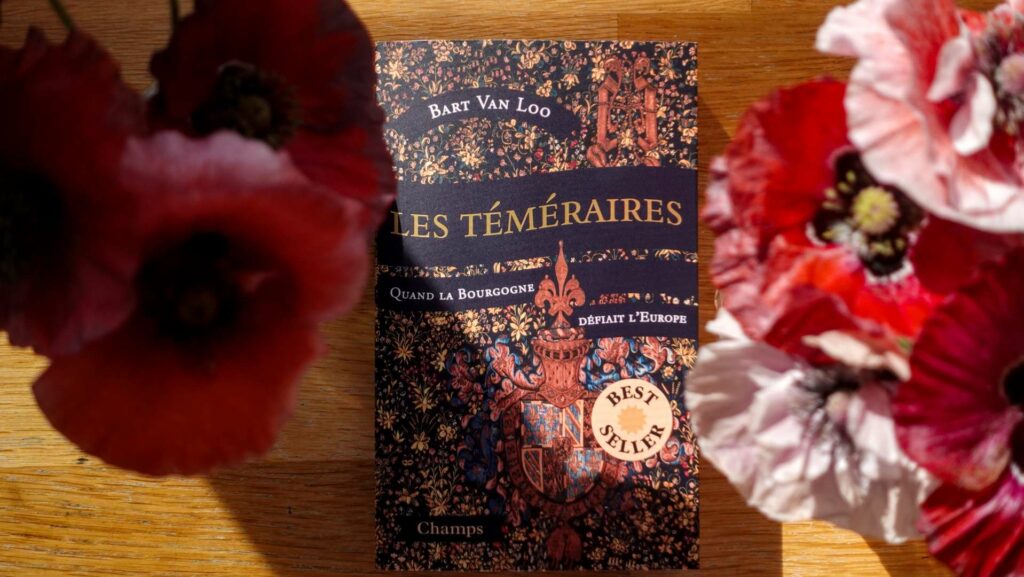
The one that stopped me first was Les Téméraires by Bart Van Loo (The Burgundians: A Vanished Empire). I stood in the shop and thought: obviously. Obviously this is the book I needed to find here, in the very region where the Valois Dukes once built a duchy so extraordinary it made the kings of France nervous. Philippe le Hardi, Jean sans Peur, Philippe le Bon, Charles le Téméraire — that dynasty of audacity, of staggering ambition and equally staggering beauty, of tapestries and banquets and political chess played at a scale that makes our modern ambitions look quaint.
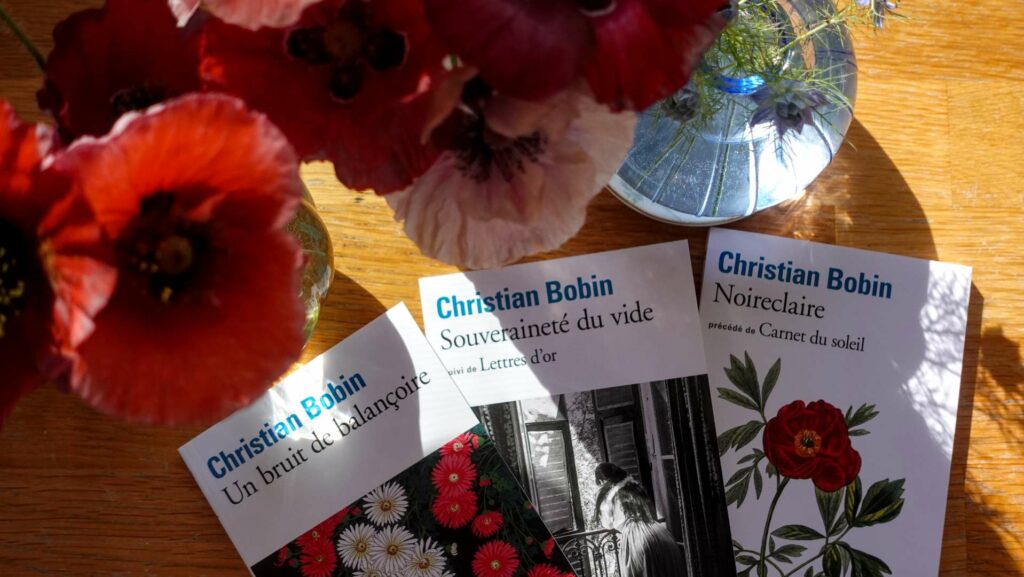
The Christian Bobin trilogy was a gift from my friend — a writer native to this very land, who worked in the public library of Autun, and whose books have quietly conquered the hearts of the French people. This will be my first encounter with his writing, and from browsing the pages, he seems to live somewhere between poetry and philosophy, moving in a rhythm entirely his own. Reading him will be another way of entering Burgundy.
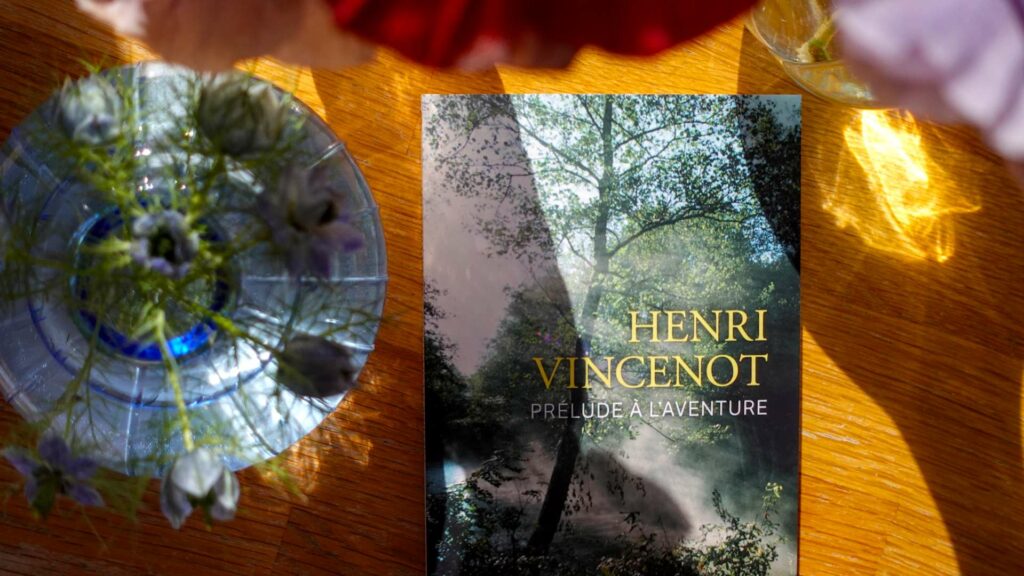
Another Burgundian discovery is Henri Vincenot — writer, painter and sculptor born in 1912 in Dijon, whose works are so deeply rooted in the dialects, mythology and rural spirituality of Burgundy that they remain, perhaps unsurprisingly, untranslated into English. Prélude à l’aventure is the lyrical coming-of-age story of a young Burgundian man discovering freedom, work, friendship and the living soul of the world through travel, railways and the rural landscapes of France. It felt like a natural companion to the weekend I’d just had.
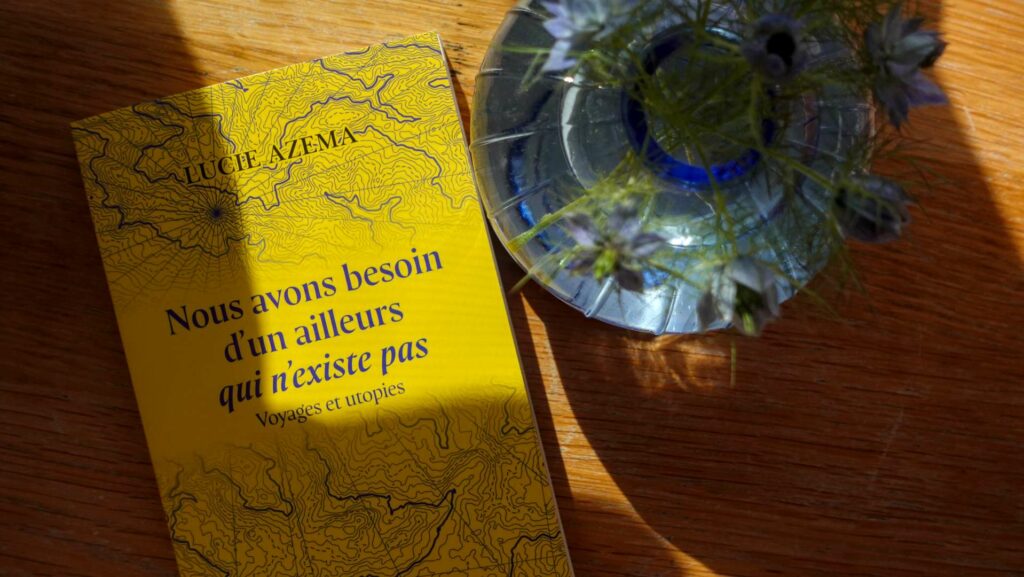
Lucie Azema writes about travel not as tourism but as a vital human need for imagined horizons. In Nous avons besoin d’un ailleurs qui n’existe pas, she explores how fictional, mythical and literary elsewheres help us remain inwardly free in a world that often feels increasingly closed and predictable. This feels like the perfect companion for The Ritual of Reading — something close to a manifesto for the power of imagination.
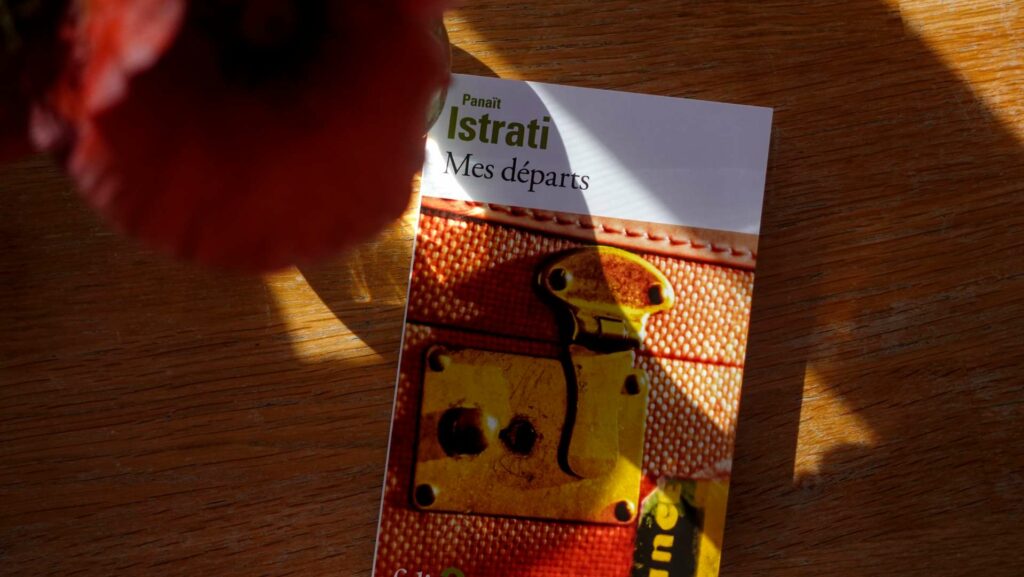
And then, the find that felt most serendipitous of all: a Romanian author waiting for me in a bookshop in Burgundy — Panaït Istrati, and his short autobiographical story My Departures. Anecdotes and travel memoirs of a young boy living in a small Romanian town on the banks of the Danube, who dreamed of great adventures, and whose dreams led his steps all the way to France. This felt like an encounter I had no choice but to honour.
What Travel Gives
Two days of conversation and contemplation. Everything spoke to me — the forest, the doorways, the book covers — but most of all, the generous people I met along the way.
I came back with books and cheese and wine, and the particular tiredness that comes from having used your eyes properly for two days. That is not nothing. In fact, I’d argue it’s rather a lot. There is a specific quality of fullness at the end of a trip like this — not the pleasant exhaustion of having done many things, but something quieter. The sense of having been present enough to actually receive what was on offer.
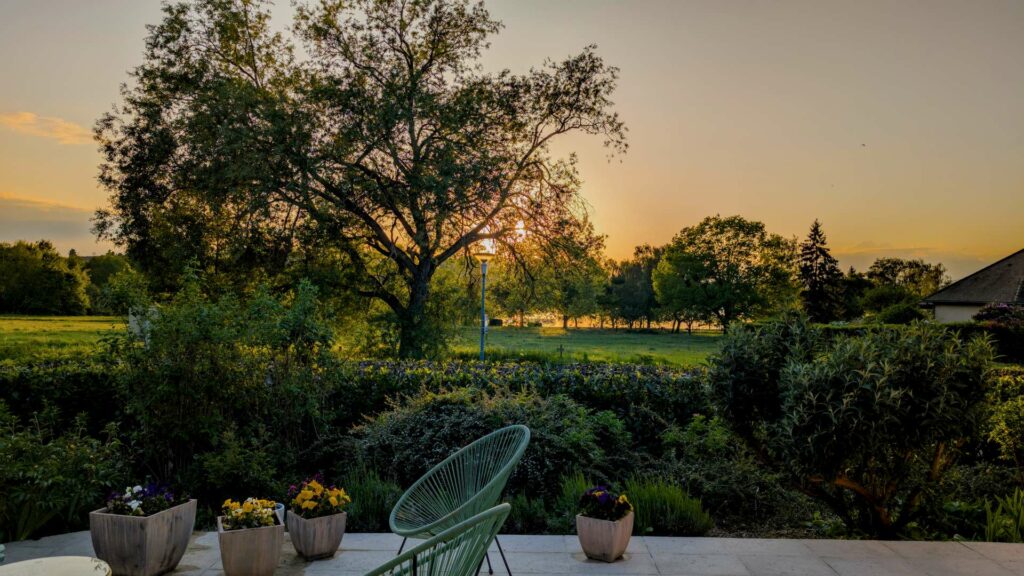
The last thing Burgundy showed me was this: the sun dropping behind the water, through the trees, at the precise angle where everything silhouettes and the world reduces itself to shape and light. No detail. Just the essential thing.
Have you ever discovered a region through the eyes of a friend rather than a guidebook? Or found a book in a shop that felt almost too perfectly timed to be coincidence? I’d love to hear about it in the comments — and if you’re curious about any of the books from my Burgundy haul, I’ll be sharing more as I read my way through them.

Written by Alexandra Poppy
Writer, reader & curator of The Ritual of Reading
I’m Alexandra, the voice behind The Ritual of Reading. Somewhere between a stack of novels and a half-finished pot of tea, I keep finding traces of the life I want to live—slower, richer, filled with stories. The Ritual of Reading is where I gather what I love: books that linger, places with a past, and rituals that make ordinary days feel a little more meaningful. I write from Paris, where elegant bookshops and old-fashioned cafés offer endless inspiration—and I share it here, hoping it brings a spark to your own days, too.
Enter The Ritual of Reading
Each Sunday, receive a letter to steady your attention—literary inspiration, seasonal rituals and reflections from a life shaped by books.
On the first of each month, a gift: The Literary View, a custom wallpaper created to accompany your days.
That sounds absolutely lovely. I always find the most interesting discoveries happen when you wander off the beaten path and stumble upon a good bookshop.
You’re right, bookshops are always the sign for great discoveries