
There is a room at my gym where I go to be alone among other people. The sauna is hot and it is hushed, or it used to be, and for a long time it was the most dependable silence in my week.
This autumn the hush gave way. After an exhausting summer of never ending heat, the whole world seemed to wake up at once and start talking. Plans for the months ahead, opinions on the news, a colleague’s project, a stranger’s holiday, all of it carried between the benches and the door at a volume that had nothing to do with the heat. Nobody was being unkind. Everyone had simply come back from the holidays overflowing, and I had come back wanting nothing more than to hear my own thoughts.
I sat there with my eyes closed and admitted something I have probably always known: I love quiet the way other people love music. I also believe we live surrounded by far too much ambient noise, a good part of it made of words that did not need saying. I find myself wishing for a little more listening in the world, and a little more reflection in the pause before the mouth opens. I say this with tenderness for the silence that keeps getting crowded out.
So I did what I always do when the world turns up its volume. I went inward.
Permission to Pause: Creating a Portable Sanctuary
Autumn is supposed to be the season of fresh starts, the moment when everyone sharpens a pencil and begins again. I have loved that energy in other years. This year it felt like too much, at work and on the commute and even in the one room where I expected to be left alone with my silence.
What I want to say, and I say it without apology, is that we are allowed to pause the world for a little while when it feels like too much. We are allowed to close the door and tend to our inner life without explaining ourselves to anyone. We do not owe society our brightness on demand, and we do not owe anyone the labour of making them happy. Being joyful ourselves is already enough. A person who has taken the time to be quiet and to nurture her soul comes back to the world more pleasant and more inspiring, and happier too. Joy has a vibration, and it lifts the people standing near it without anyone having to try.
In response to this, I have been building what I like to call a portable sanctuary: a calm I can carry through the office and the metro and the changing room, wherever the noise happens to find me. Reading has always been my way in, both for entertainment and for inspiration. This autumn I chose three books that felt like life jackets in an ocean of ambient noise. Each of them gave me ideas on how to look at my days so that the unpleasant becomes the intentional: Suleika Jaouad’s The Book of Alchemy, Gretchen Rubin’s The Happiness Project and Ross Gay’s The Book of Delights.
Why Relatable Reading Beats Standard Self-Help
We live in a world that has labelled self-help books as cheap essays for bored city people, and I understand the suspicion. Theory has its purpose, but rarely in the middle of a crisis, when every mindfulness guide seems to have been written by a zen monk on top of a mountain who cannot possibly understand the mental load of a working woman living in a metropolis.
What I wanted was relatable company. I wanted an author who says: here is how I handled my own roadblock. Sometimes that is exactly what you need, someone else’s experience in place of a method for the perfect life. None of these books asks you to spend money or quit your job or change anything about your circumstances. They only ask you to look again.
Suleika Jaouad: The Book of Alchemy
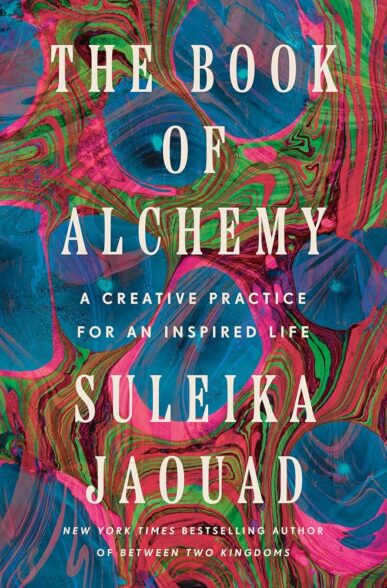
Jaouad gathered about a hundred short essays from writers, artists and thinkers. They are grouped into ten themes, and each essay closes with a journaling prompt.
I will be honest: her own introduction and chapter openings were hard for me. I am an empath learning to manage her sensitivity, so hearing about illness and suffering and loss of hope still weighs on me, even when it comes wrapped in the extraordinary strength it takes to get through all of it. I powered through. Perhaps the page would have been gentler, but hearing Jaouad’s own voice narrate the audiobook made everything more personal and, at times, heartbreaking. Then came the contributions, and they made it worth every minute. Some of the names were familiar and others were true discoveries, and each one offered such a personal glimpse into a life that I felt inspired instead of lectured.
I find the idea of a short essay followed by a journaling prompt absolutely brilliant, and I have my own reasons. I have spoken about my relationship with journaling before, and I am still struggling to find regularity. My Monday to Friday means leaving the house at 7am and getting back at 9.30pm, so there are simply not enough hours in the day. But the real difficulty goes beyond time. When I do sit down with my notebook, I often find it calming to put everything on paper, and yet there are days when I wonder whether it makes any difference at all. Those are mostly the days when I pour out what happened and how I feel about it. I generally have that pretty clear in my head already, so writing it down is not the cathartic moment I expected. It can even feel heavier, as though I were living the day twice: rewriting every conversation and every small irritation, ruminating all over again when what I was really looking for was perspective. A little clarity. A way out of the day instead of a second walk through it. I suspect I am not the only one who feels this.
That is what The Book of Alchemy gave me. Journaling, I understood, can be about something more than the events of a day. When I channel my attention towards a specific memory, a detail of the present or an imagined ideal, writing becomes a meditative moment. It transforms the what into the why, and that feels meaningful to me. It also helps that the inspiration arrives in small doses, which is the only way I can take it without feeling overwhelmed. This is not a book you can read in one go, and it would not be fair to the dozens of writers who contributed if you tried. It is a perfect ritual-inspiring read: one chapter, one morning, pen and paper.
“I realized that the more I ran away from my fear, the bigger and more looming it became. Yet if I confronted the fear, it lost its power. As the fear evaporated, other feelings materialized in its place—feelings like wonder and curiosity.”
― Suleika Jaouad, The Book of Alchemy: A Creative Practice for an Inspired Life
Gretchen Rubin: The Happiness Project
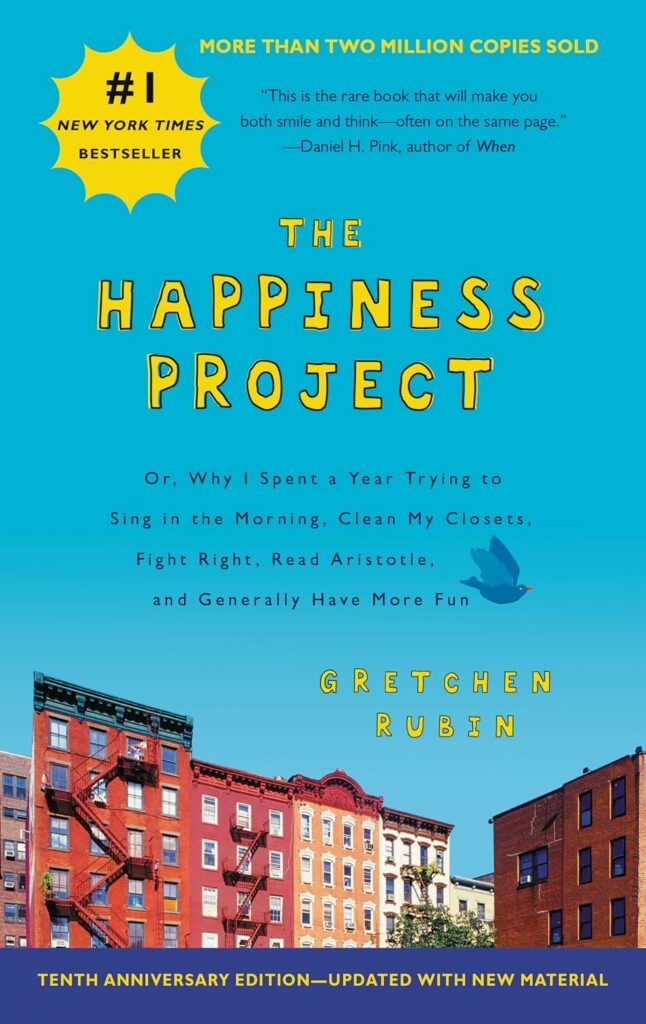
This was an audiobook for me too, and there is something wonderfully motivating in Rubin’s voice. Hearing her read her own book felt like spending time with a friend. She was not speaking from a place of all-encompassing wisdom and serenity already acquired. She was a friend willing to put in the time and experiment with bettering her life, giving each month a different focus. The conclusions are not miraculous. They are, however, eye opening. Her systematic approach feels reassuring to me, like a method I can apply the way I would take an antibiotic: one pill every six hours, achievable.
The book reads like a memoir and is analysed like a social experiment, with one single goal: that sense of light contentment and peace with one’s own life. It does not chase productivity or nirvana, and it is certainly not another recipe explaining to women how they “can have it all”. It is simply a way of connecting your reality to your inner compass, and the analytical mind of a law student makes all the difference. I recommended it to my best friend as well, and her method might be even better than mine: she listened to it on her daily walk in nature, which is a very good way to boost your endorphins.
But what I loved most is the permission this book gives. Rubin says out loud something that so many of us feel and do not dare to admit: life can feel dull and on auto-pilot without any big, identifiable cloud over our heads. There is no financial crisis, no health problem, no breakup. On paper everything is going according to plan. The job is there, the bills are paid, the people we love are well. And yet somewhere along the way we have lost the enthusiasm that makes waking up every single day feel like a special event. The thing that makes us want to get out of bed in the morning, that makes us glad to see other people, that makes us happy to live the life we designed for ourselves, has gone quiet, and we cannot point to a reason.
Then comes the guilt. Next to the real tragedies going on in the world, we feel spoiled and entitled, as though having nothing serious to complain about meant having no right to notice. This book says the opposite. You are allowed to notice. You are allowed to want your enthusiasm back even when nothing is officially wrong, and it is worth going back for. It is worth the effort, and even the struggle, of bringing it back into your life, because that spark is what the whole life you built was meant to be lit by. It does not belong only to people who have survived something. It made me feel seen and a little less alone, and optimistic that all it takes is some reshuffling of priorities to get the spark back.
“The belief that unhappiness is selfless and happiness is selfish is misguided. It’s more selfless to act happy. It takes energy, generosity, and discipline to be unfailingly lighthearted, yet everyone takes the happy person for granted. No one is careful of his feelings or tries to keep his spirits high. He seems self-sufficient; he becomes a cushion for others. And because happiness seems unforced, that person usually gets no credit.”
― Gretchen Rubin, The Happiness Project
Ross Gay: The Book of Delights
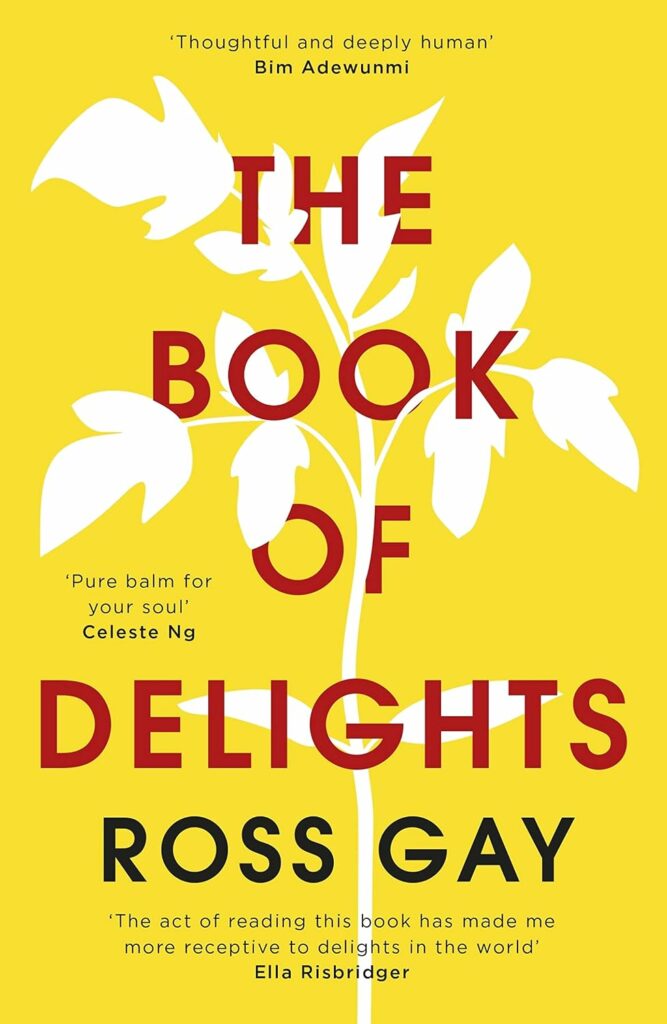
My third confidence card went to a poet, because I strongly believe the world would be a much poorer place without the hypersensitive touch of poets. Ross Gay is also a gardener, and I think you can feel it in the writing: the patience of someone who knows that things grow when you pay them attention.
On his forty-second birthday, he gave himself a simple rule. For one year, from that birthday to the next, he would write a daily essay about something delightful, by hand and without fussing over it. The result is 102 short pieces (he admits he skipped some days, which I find endearing), some as brief as a paragraph and others running to several pages. The delights are wonderfully ordinary: two strangers sharing the handles of one shopping bag, a morning stop at a fragrant bakery, a kiss planted on a flower blooming in his garden. They are so precisely observed that they perform the most magical of transformations. They make you see your own ordinary days as if you were a poet yourself.
The structure inspired me in the same way as Rubin’s, simply through its natural order. One delight observed each day, with a natural predisposition towards beauty and kindness. The chapters are as delightful as they are surprising, and like most good writing they feel effortless and utterly within reach. What moved me is that Gay never uses delight to look away from difficulty. Loss and the harder parts of his life sit in the same pages, and the delight carries more weight for it. That is the kind of joy I trust: one that has looked at the world and chosen to notice the good anyway.
Reading it felt a little like being allowed into someone’s gratitude journal. It was intimate without being embarrassing, and inspiring through the power of personal example. And it handed me the opposite of the journaling problem I described earlier. Instead of reliving a whole day, you only have to catch one small thing, once, before it passes.
“It didn’t take me long to learn that the discipline or practice of writing these essays occasioned a kind of delight radar. Or maybe it was more like the development of a delight muscle. Something that implies that the more you study delight, the more delight there is to study.”
― Ross Gay, The Book of Delights: Essays
What I Carry Into the Room
I still go to the sauna and the chatter is still there, as is the autumn rush of everyone beginning again. What has changed is what I bring in with me: a chapter of Jaouad on mornings when I can manage it, a month of small adjustments borrowed from Rubin, and one delight I try to notice before it passes, the way Gay does. None of it silences the room. It changes what I listen for while I sit in it, and I walk out a little lighter than I walked in.

The Books in This Ritual
If you want to add these companions to your shelf or audiobook library, you can find them below:
- The Book of Alchemy by Suleika Jaouad
Best for: Gentle journaling prompts and quiet morning reflection. - The Happiness Project by Gretchen Rubin
Best for: Practical, month-by-month life experiments and enthusiasm. - The Book of Delights by Ross Gay
Best for: Daily mindfulness and training your eye to notice goodness.
Disclosure: Some of the links above are affiliate links. If you choose to purchase through them, it supports the publication of this journal at no extra cost to you. You can read more on my Affiliate Policy by clicking here.

Written by Alexandra Poppy
Writer, reader & curator of The Ritual of Reading
I’m Alexandra, the voice behind The Ritual of Reading. Somewhere between a stack of novels and a half-finished pot of tea, I keep finding traces of the life I want to live—slower, richer, filled with stories. The Ritual of Reading is where I gather what I love: books that linger, places with a past, and rituals that make ordinary days feel a little more meaningful. I write from Paris, where elegant bookshops and old-fashioned cafés offer endless inspiration—and I share it here, hoping it brings a spark to your own days, too.
Enter The Ritual of Reading
Each Sunday, receive a letter to steady your attention—literary inspiration, seasonal rituals and reflections from a life shaped by books.
On the first of each month, a gift: The Literary View, a custom wallpaper created to accompany your days.