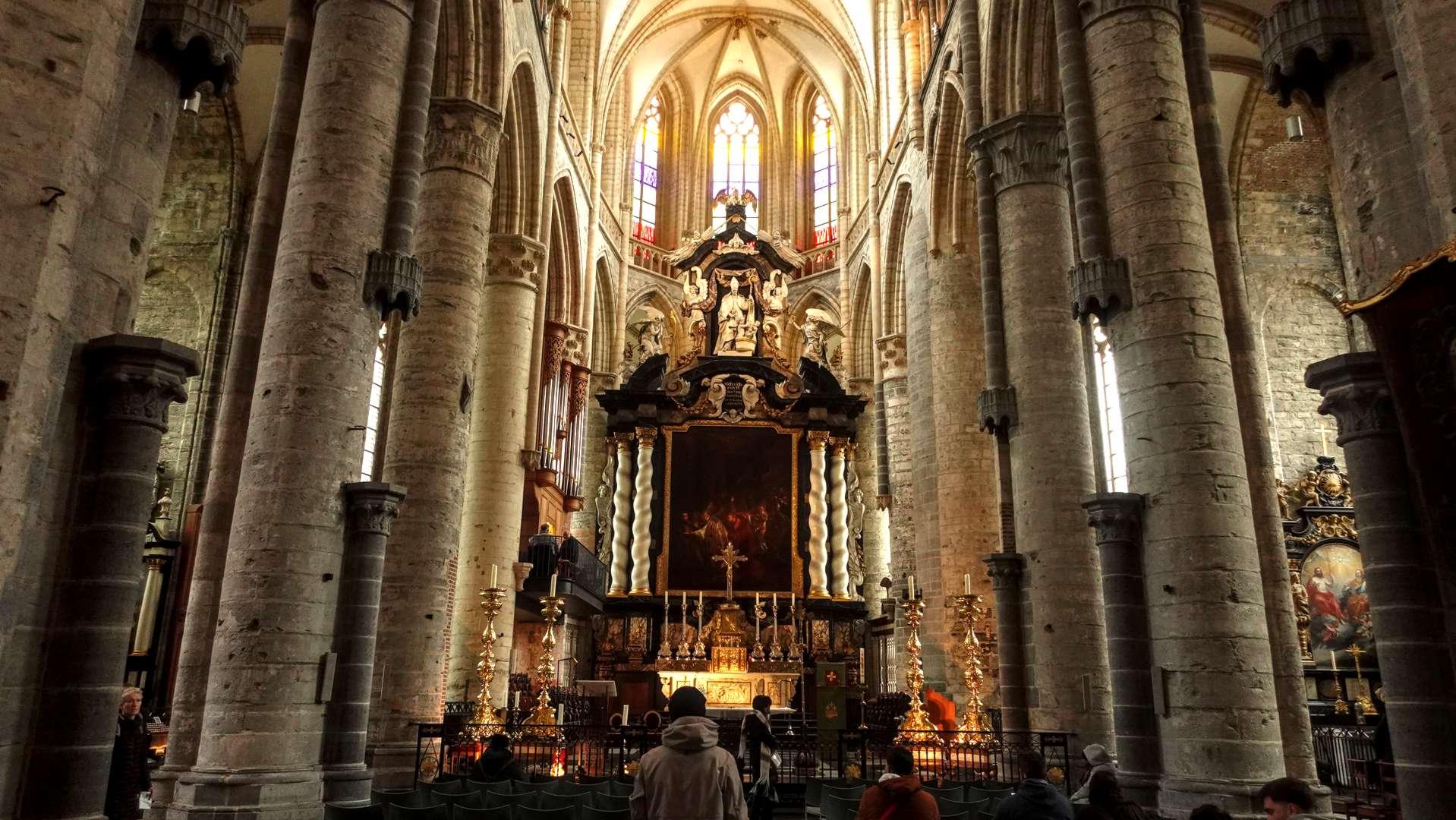
Belgian Advent Calendar – Day 5
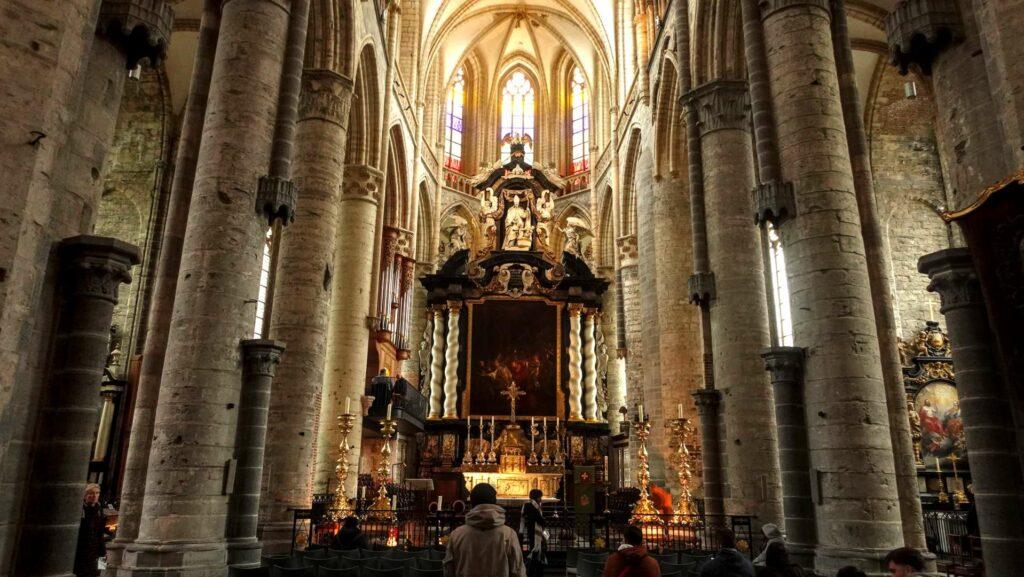
It wouldn’t be December 5th at The Ritual of Reading if we didn’t speak of Saint Nicholas on the eve of his feast, but this year, since we’re traveling to Belgium, St. Nick offers us something more—the opportunity to trace the origins of Santa Claus himself, back to the cobblestones and bell towers where the legend first took root in the Low Countries.
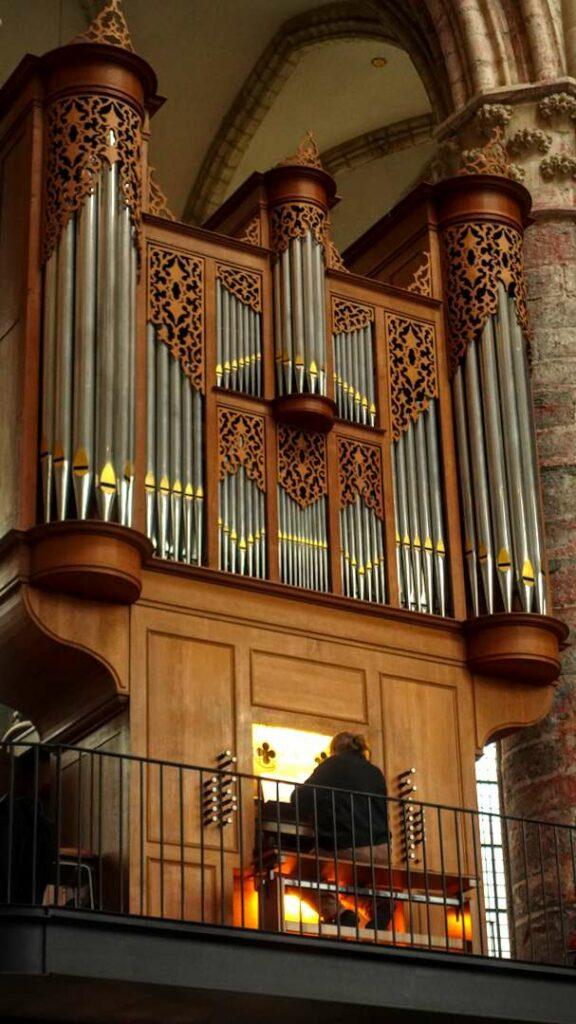
Our journey begins in the Flemish city of Ghent, the second largest Belgian city after Antwerp by population. Right in the heart of this medieval wonder stands the Saint Nicholas Church, a Gothic masterpiece that has watched over the city since the 13th century. The church, dedicated to the patron saint of merchants and sailors, dominates the old city center with its distinctive blue-grey stone tower. Inside, the space opens up into soaring arches and filtered light, and if you’re lucky—as I was—you might catch the sound of the historic organ filling the nave with music that seems to come from another century entirely. The instrument itself is a work of art, and watching an organist’s hands move across the keys while those ancient pipes respond is to witness a conversation between human and sacred that has been happening in this exact spot for hundreds of years.
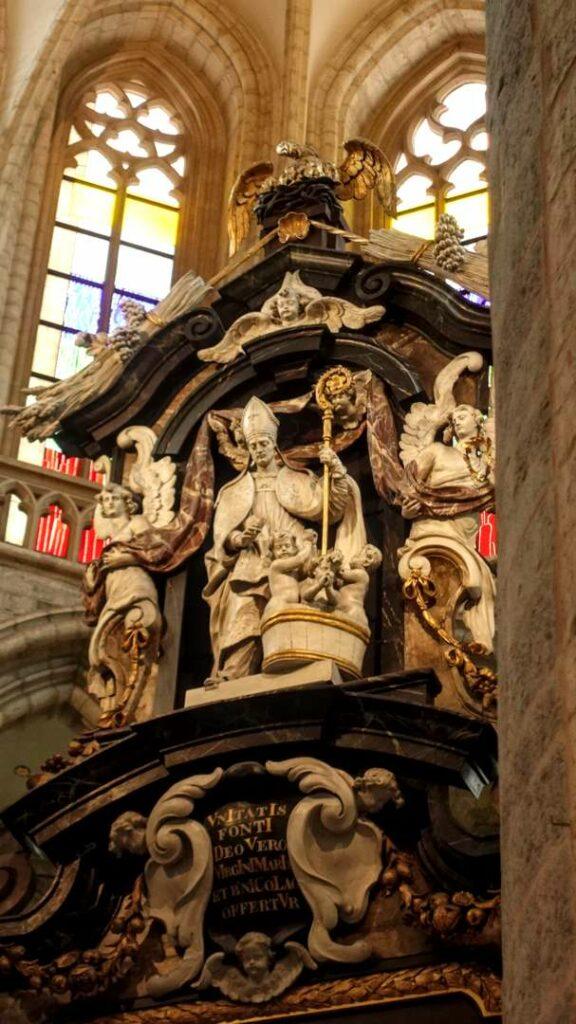
But why does Saint Nicholas hold such a cherished place in Belgian hearts? The answer lies in a tradition so beloved that it’s broadcast live on national television each year when Sinterklaas arrives by steamboat in the port of Antwerp. The Saint disembarks along the Scheldt quays, greeted by the city’s mayor, and leads a procession to the Great Square where he addresses crowds from the town hall balcony. It’s a spectacle of joy, with children lining the streets, singing traditional songs, while his helpers toss candy and sweets into the eager crowds.
The character of Sinterklaas himself is based on the historical Saint Nicholas, a fourth-century bishop from Myra in present-day Turkey, renowned for his generosity and miraculous deeds. In Belgium and the Netherlands, he evolved into a tall, dignified figure dressed in bishop’s robes—red cape, miter, and golden staff—arriving each year from Spain to reward good children (a detail with its own peculiar history and if you’re curious, then you should read today’s Advent Letter – just check your inbox or subscribe to the letters down below). In Flanders, he rides a white horse, while in Wallonia, he travels by donkey. This is Sinterklaas: part saint, part folklore, entirely beloved.
And this tradition crossed the ocean. When Dutch settlers established the colony of New Amsterdam in the 17th century—what would become New York City—they brought their devotion to Sinterklaas with them. After the British took control in 1664, the name gradually evolved from Sinterklaas to Santa Claus. Writers like Washington Irving and Clement C. Moore reimagined the tall, solemn Dutch bishop as a plump, jolly figure in red, adding reindeers, a sleigh, and the North Pole. The Sinterklaas who arrived by steamboat became the Santa who flies through Christmas Eve skies. It’s a remarkable journey from Flemish and Dutch canals to American chimneys—proof that the best stories travel far, even if they change shape along the way.
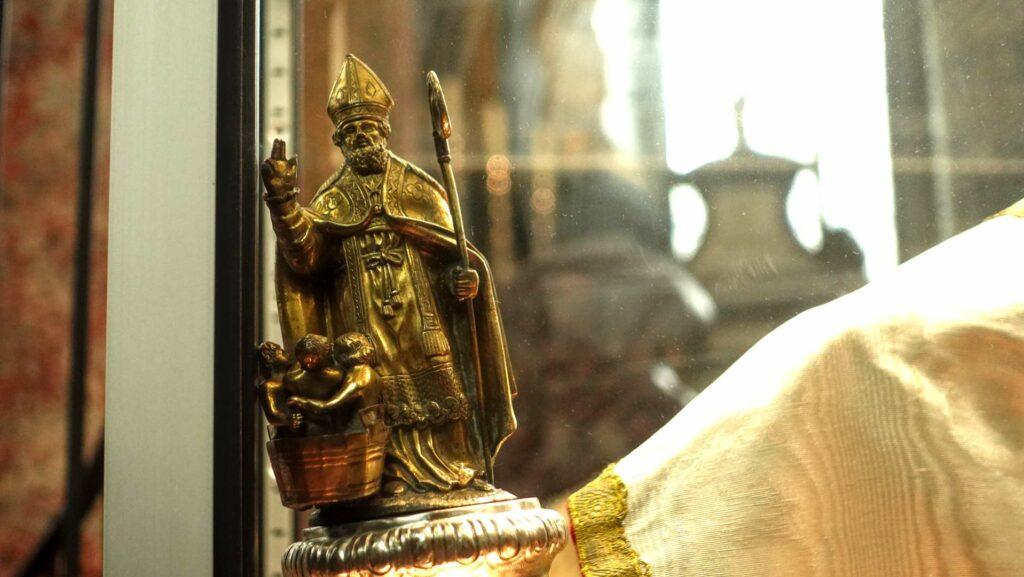
In my native Romania, St. Nick would bring symbolic gifts, mostly sweets and citrus fruits that felt exotic in a country with a climate that didn’t suit them. I guess we have that in common with Belgium, since the local tradition dictates that Sinterklaas brings clementines and the aromatic special cookies of the Low Lands: speculoos.
In theory, there are some technical differences between Dutch and Belgian speculoos—the type of sugar, the combination of spices—so I decided to embrace the true and original Belgian tradition by visiting the legendary Maison Dandoy in Brussels.
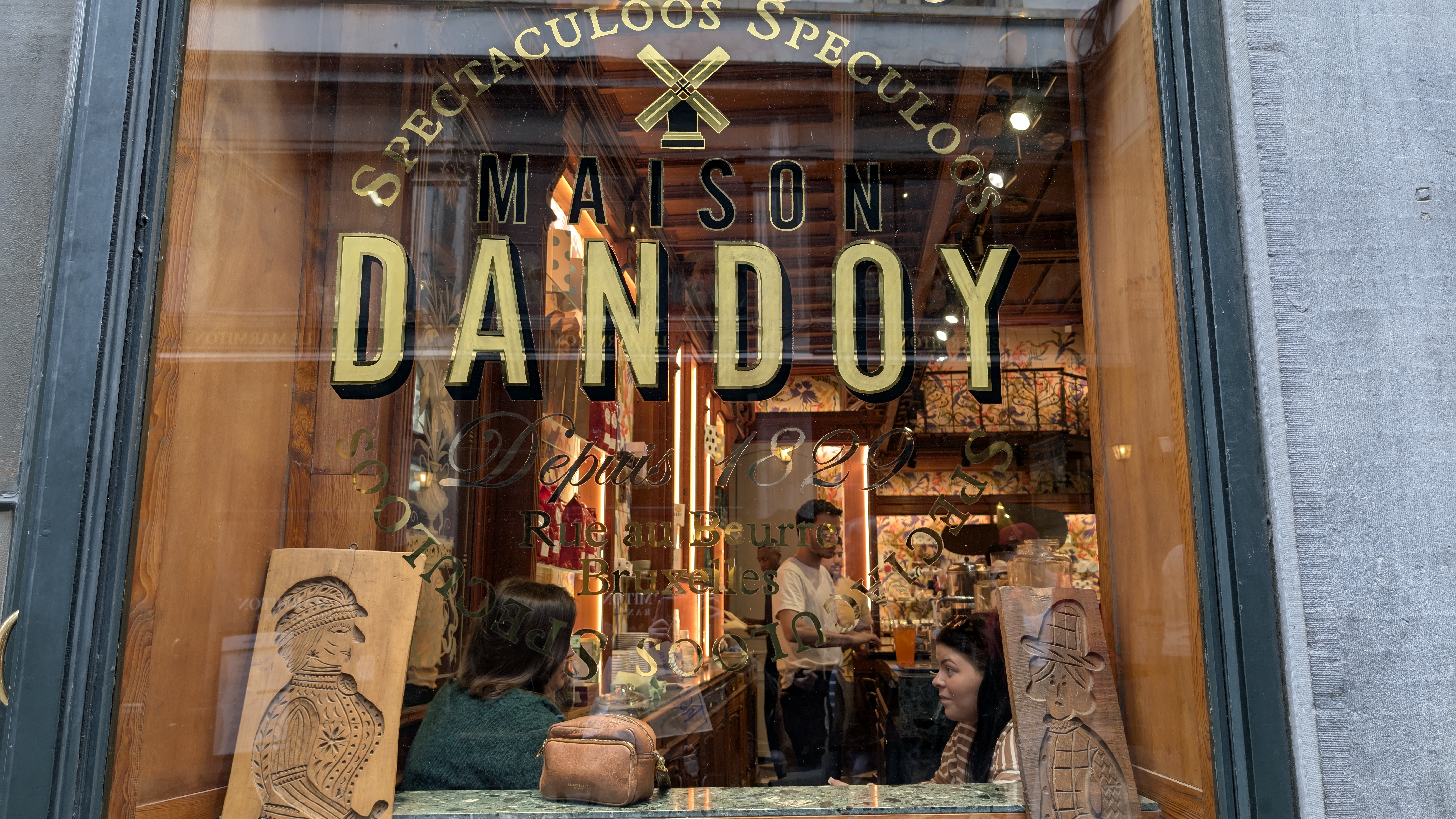
Founded in 1829 by Jean-Baptiste Dandoy, this Brussels institution has been crafting speculoos for nearly two centuries, making it slightly older than Belgium itself. Their recipe comes straight from their great-great-great-grandfather, made the traditional way with real butter, brown sugar, and handcrafted wooden molds. Speculoos are crunchy, spiced biscuits—part gingerbread, part cinnamon magic—that carry within them the essence of winter celebration.
The Sinterklaas tradition of a speculoos shaped like Saint Nicholas himself is carefully kept throughout Belgium, and when I looked at a Dandoy St. Nick cookie with all its intricate details, I felt quite overwhelmed by the task ahead. But the internet provided me with their historic recipe, so I decided to give it a go.
Butter, sugar, flour, and your favorite mix of spices—I went for cinnamon, cloves, a little nutmeg, and a pinch of white pepper. The ingredients are simple, but the quantities were massive! I had to change mixing bowls twice just to be able to get my hands in there and form the dough. As always with cookies, the key is not to overmix—just bring it together until it holds, then let it rest. (You’ll find the full recipe just HERE)
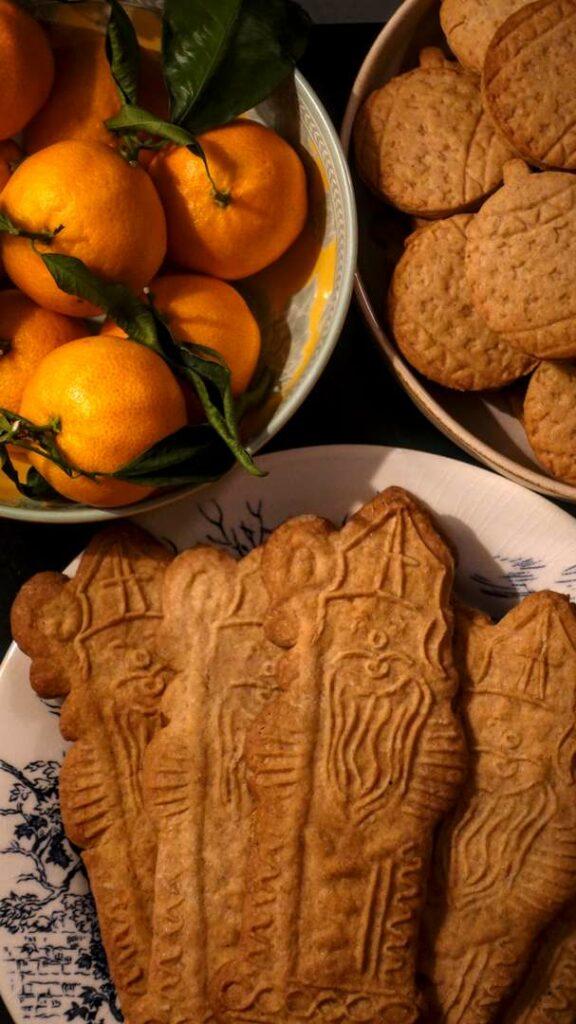
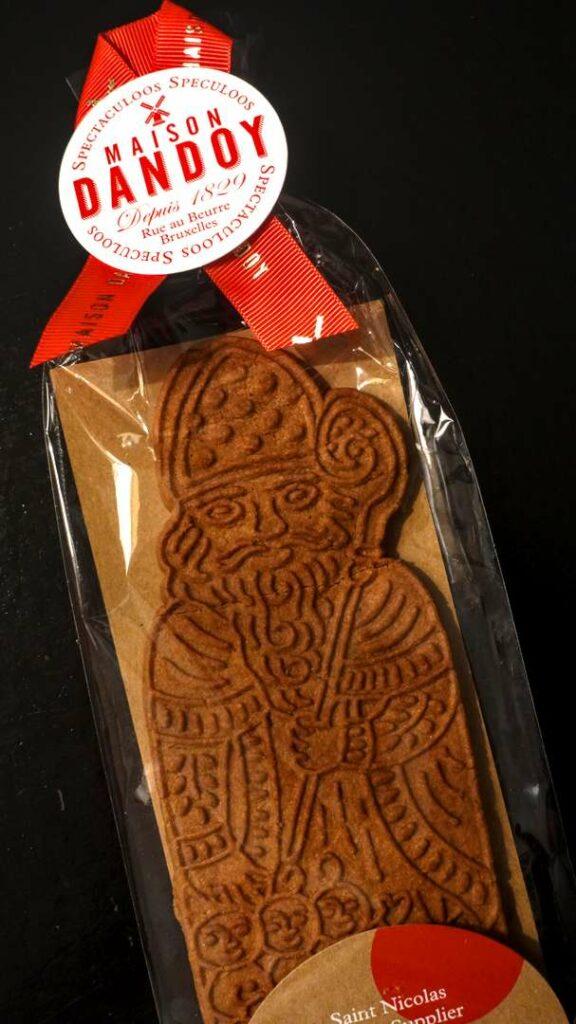
The real tricky part was the Sinterklaas mold. There are so many details carved into the wood—the mitre, the staff, the embroidery of his robes—and for the first attempt, the flour didn’t really stick to the dry wood. It’s been a learning process, pressing the dough firmly enough to capture every line without tearing it when I tried to release it. But in the end, I got the hang of it and produced some pretty decent-looking saints, their faces stern and kind at once, just as Sinterklaas should be.
Christmas baking is its own kind of magic. That’s why every culture has its type of cookie or cake infused with warming spices that fill up the home with delicious promises. The scent alone—cinnamon, clove, butter turning golden in the oven—is enough to make you believe in something larger than yourself.
So tonight, as we contemplate the simple joy of homebaking, let’s imagine Belgian children waiting for their clementines and speculoos from Sinterklaas, arriving on his donkey or his horse. Let’s think of all the traditions that connect us across borders and generations, the ones that taste like brown sugar and butter, that arrive in the dark of December to remind us that sweetness still exists in the world.
Tomorrow, we’re talking about a book that went instantly onto my favourites shelf. I can’t wait to share it with you.
Until then, Merry Saint Nicholas Eve, friends !

During the 2025 Advent season, each post on The Ritual of Reading was accompanied by a Daily Advent Letter, sent privately to subscribers. These letters echo the theme of the article, but take a more personal and reflective path — closer to the hesitations, intuitions, and emotions that accompanied the writing.
What follows is the Daily Advent Letter that was written alongside this post.
| December 5th |
| Dear Friend, There’s a question Belgian children ask every year as the steamboat pulls into harbor : “Why does Sinterklaas come from Spain?” The adults offer stories—something about oranges, something about Spanish rule—but the real answer winds through centuries and across the Mediterranean, from a Turkish city to an Italian shore, carried on the backs of sailors and merchants and the faithful. When Nicholas of Myra died in 343, he was buried in his city. But after Myra fell to conquest in the 8th century, his relics were moved to Bari—that beautiful port city in Puglia, all white stone and blue water. And Bari, in the 16th century, belonged to the Spanish Kingdom of Naples. So when Dutch children were told their beloved saint came from far away, across the sea, carrying gifts—well, Spain it was. Spain, where the oranges grew. Spain, where the steamships departed. But here’s what I want to tell you: I’ve been to Bari. I stood inside the Basilica di San Nicola, where his bones rest beneath the altar, and I wept. I wasn’t expecting to. I’m not a woman who prays in the traditional sense—I don’t recite sacred texts or ask for intercessions. But Saint Nicholas has followed me through my life like a gentle presence, appearing in moments when I needed exactly what he represents: generosity without expectation, kindness without condition, the quiet belief that small acts of goodness matter. In Bari, I felt him close. Closer than I’ve felt almost anything sacred. The pilgrims around me crossed themselves and whispered prayers, and I just stood there, overwhelmed by something I still can’t quite name. Gratitude, maybe. Recognition. The sense that some saints choose us, rather than the other way around. So tonight, when I learned how deeply the Belgians love him—how they gather by the thousands to welcome his arrival, how children wait with shoes by the hearth, how the entire nation pauses to honor this figure of tenderness—I felt something shift. A kinship. Because I understand. I understand loving a saint not for miracles or doctrine, but for the way he makes the world feel safer, kinder, more generous than it actually is. He arrives by steamboat from Spain, they say. But really, he arrives from wherever we need him to arrive from—from memory, from hope, from the belief that someone, somewhere, is watching over children and remembering to be kind. Tonight, across Belgium, speculoos are cooling on kitchen counters. Clementines are being tucked into shoes. And I’m thinking of Bari, of that moment when I stood in the presence of something holy and felt seen. Perhaps that’s what all traditions do, in the end—they give us a language for the things we can’t quite say. A way to honor what we love without having to explain why. Sinterklaas arrives tomorrow. And I, for one, will be waiting. Until tomorrow, Alexandra |

Written by Alexandra Poppy
Writer, reader & curator of The Ritual of Reading
I’m Alexandra, the voice behind The Ritual of Reading. Somewhere between a stack of novels and a half-finished pot of tea, I keep finding traces of the life I want to live—slower, richer, filled with stories. The Ritual of Reading is where I gather what I love: books that linger, places with a past, and rituals that make ordinary days feel a little more meaningful. I write from Paris, where elegant bookshops and old-fashioned cafés offer endless inspiration—and I share it here, hoping it brings a spark to your own days, too.