
Belgian Advent Calendar – Day 13

In Belgium, the tree doesn’t come out immediately after Saint Nicholas passes through on the 6th of December. Tradition asks for a little pause, a breath between celebrations—the tree waits for the weekend that follows, and only then does Christmas truly begin to take shape in Belgian homes. This year, I’m honoring that rhythm, letting the days unfold as they should. Especially since I need a little more time to bring together my vision for this year’s Christmas tree decorations.
You may remember my visit to the Royal Museum of Fine Arts in search of winter landscapes, but that wasn’t the only thing I found there, calling to me from the walls. A Belgian historic tradition caught my eye : lace. Portrait after portrait revealed themselves—lace collars framing aristocratic faces, sleeves cascading in intricate patterns, ruffs standing proud like architectural marvels. Here was another winter, preserved not in snow but in thread: the delicate, painstaking beauty that Belgium has perfected over centuries.So I followed that thread to its source.
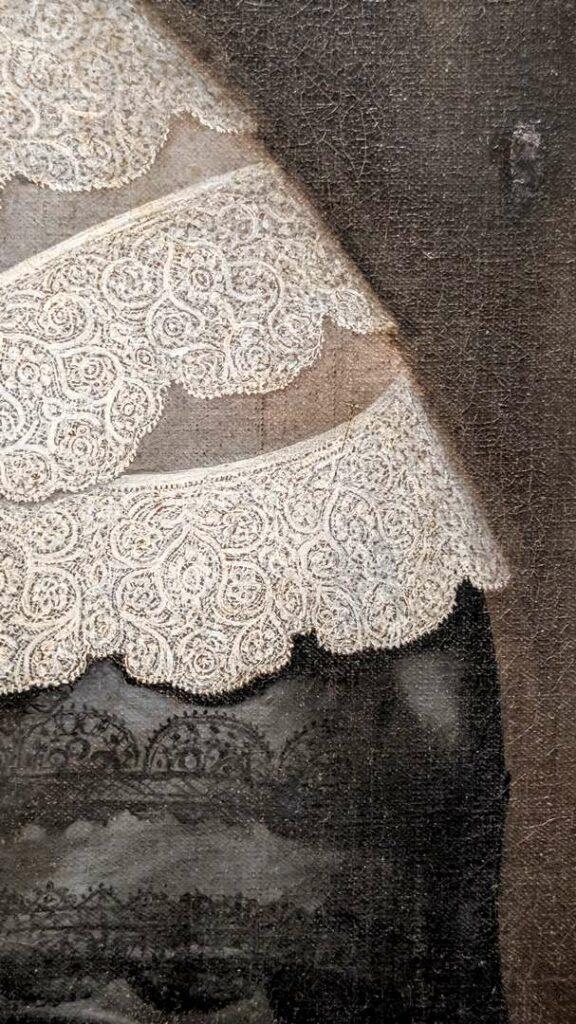
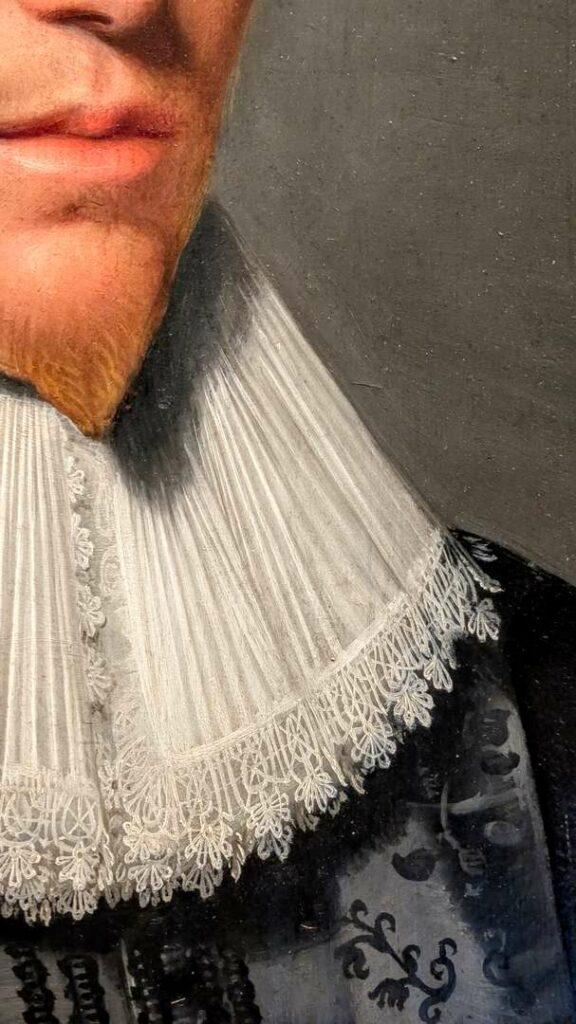

The Lace Museum in Brussels is small, unassuming even, tucked into the narrow streets near the Grand Place. But step inside, and you feel like someone let you in on the most delicate of secrets. The collection, like any textile exhibition, is semi-permanent, pieces come out for a few months, before going back to recover in the darkness of the reserves. But in those short months of glory, they draw out the history of the craft with precise passion, like a geography lesson written in silk and linen—Bruges lace with its floral abundance, Brussels lace so fine it seems to float, Valenciennes lace with its gossamer lightness. Each region claimed its own vocabulary, its own signature in the language of thread. And then there’s the chronology: Renaissance collars stiff with formality, Baroque cuffs spilling over with exuberance, Rococo flourishing light as air, Victorian sentimentality captured in doilies and handkerchiefs.


To walk through this gallery is to trace not just the history of lace, but the shifting moods of Europe itself—what people valued, what they wore close to their skin, what they wanted to say without words.
I could have stayed for hours. Every display case held a small infinity. I knew right then and there that my Christmas tree had to honour exactly this : my absolute fascination in front of a few squeaky drawers that held little fragments of magic.
In Bruges, the Christmas shops glow with lace ornaments—snowflakes and angels, stars spun from thread. I wandered through one, the kind of place where everything catches your eye. The lace here is meant to be seen, admired, perhaps purchased as a memory. And I did get some delicate, beautiful statement pieces. But I wanted something more—something made, something that carried my own hand in it.
So I came home and spread my materials across the table: lengths of less expensive lace I’ve been collecting, scissors, thread. A kind of patient meditation. There’s something deeply satisfying about working with lace—the way it wants to be handled gently, the way it reveals its pattern only when you slow down enough to see it. I cut and folded, stitched and shaped, turning flat pieces into ornaments that hold dimension, that catch shadow and light.
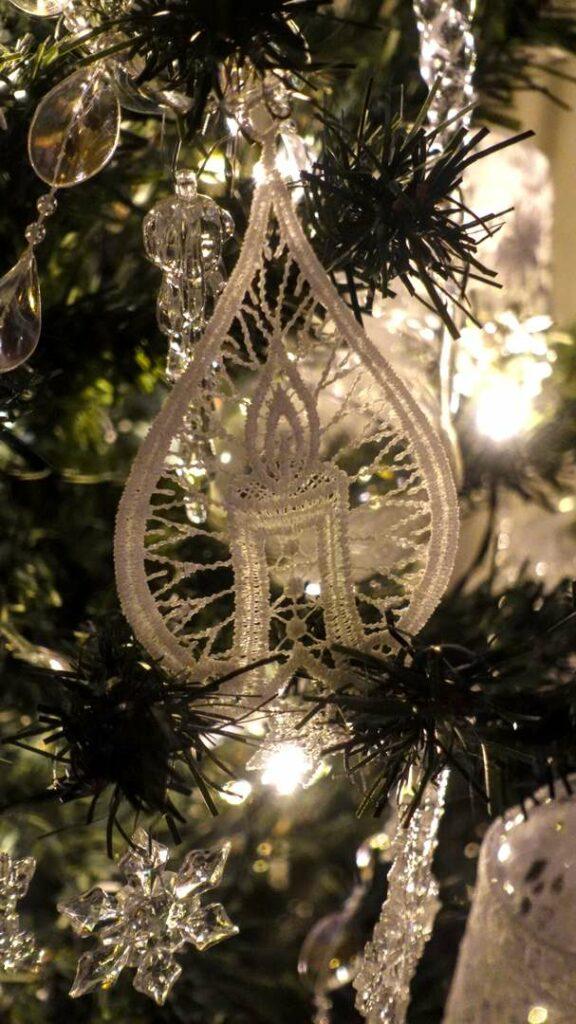
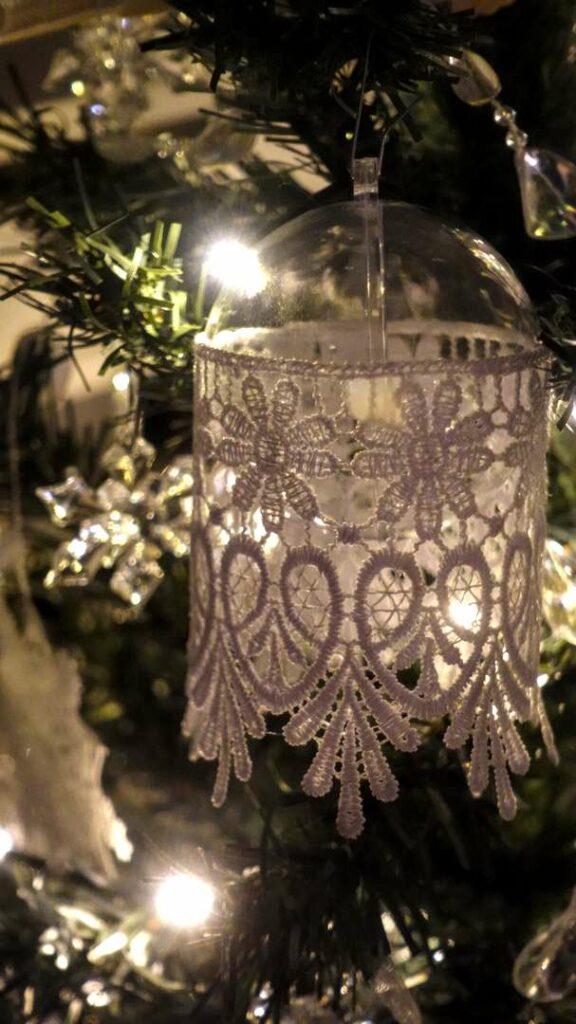
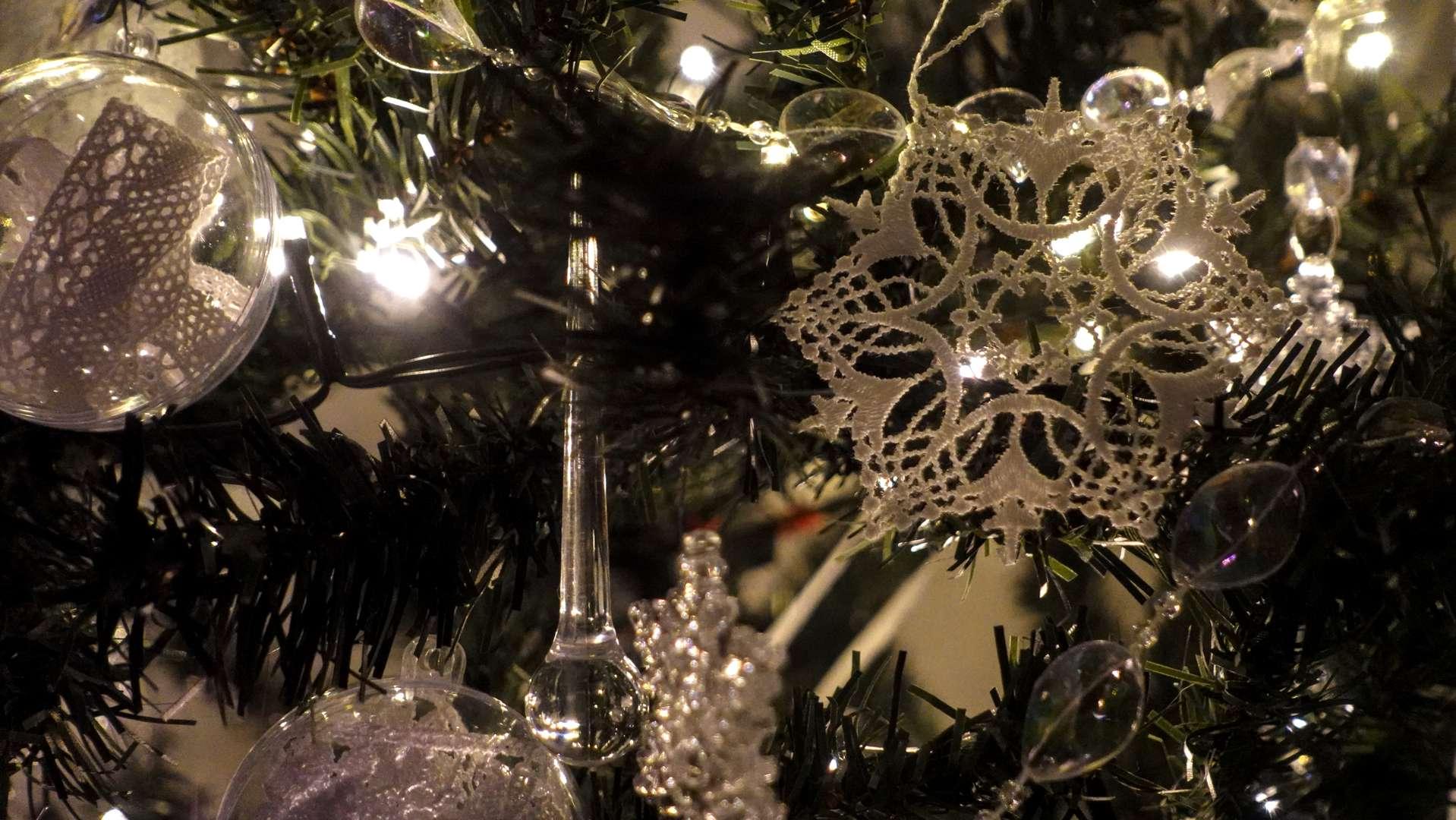
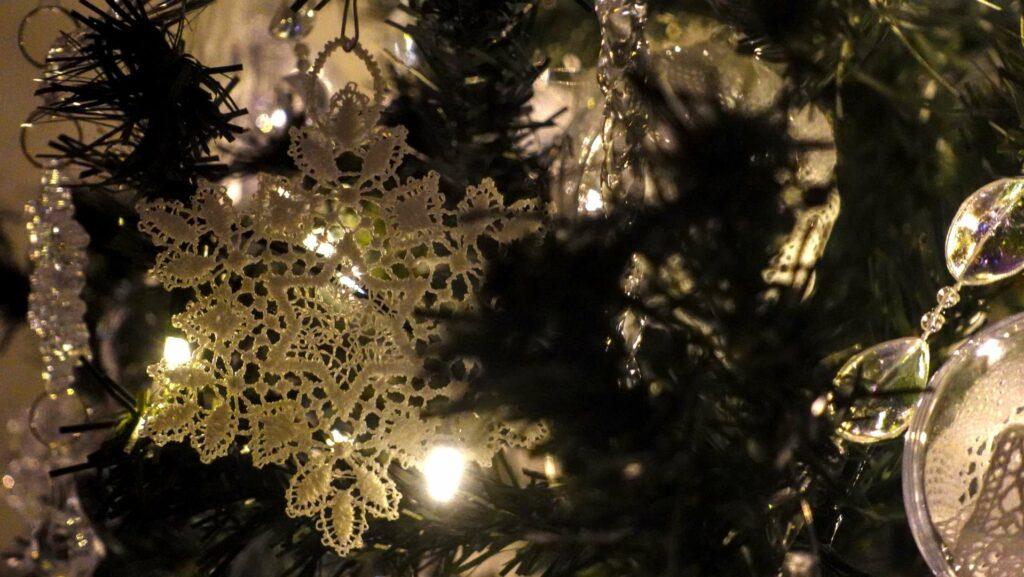
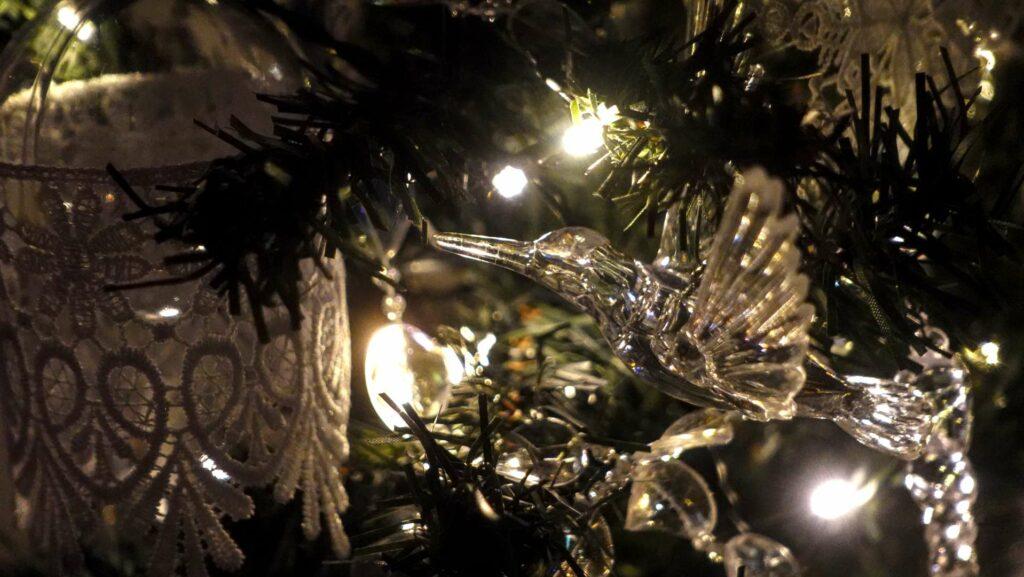
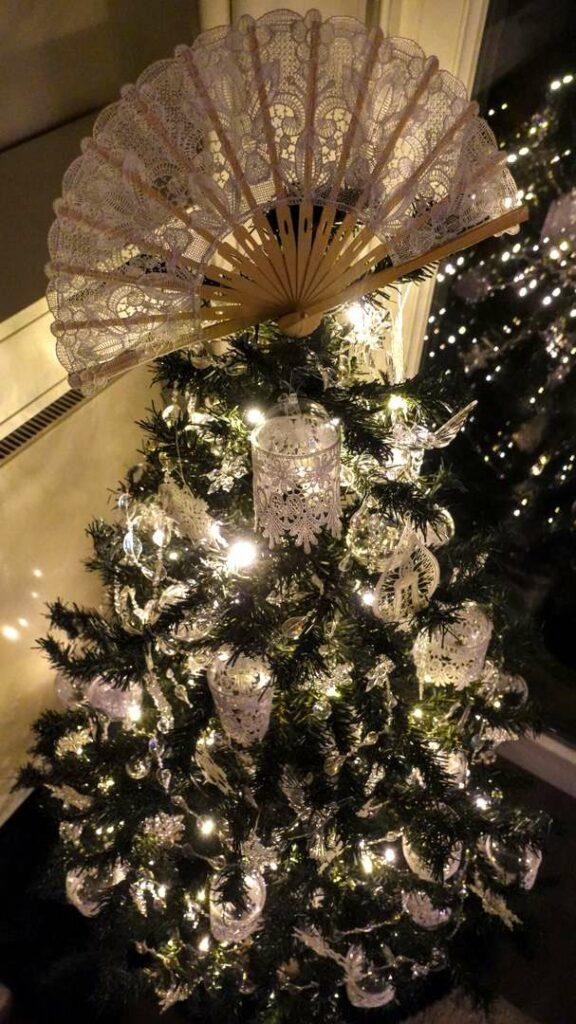
I knew that my tree would have to tell the story of a frosted evening under the snow, dressed in white lace and crystal ornaments that resemble ice—no color, no distraction. Just lace and glass, ice and thread. Each ornament goes on slowly: a lace medallion here, a clear bauble there, an icicle that dances when you breathe near it. The tree begins to look like something pulled from a winter dream, from one of those winter landscapes I stood before weeks ago—quiet, luminous, softly glowing.
And as a tree topper, I chose something different – a lace fan that stole my heart in that little shop in Bruges. Lace against evergreen. Crystal catching fairy lights.This is my winter wonderland: not loud, not bright, but intricate and true. A tree that asks you to come closer, to notice, to remember that beauty often lives in the smallest, most delicate things.


See you tomorrow, friends !

During the 2025 Advent season, each post on The Ritual of Reading was accompanied by a Daily Advent Letter, sent privately to subscribers. These letters echo the theme of the article, but take a more personal and reflective path — closer to the hesitations, intuitions, and emotions that accompanied the writing.
What follows is the Daily Advent Letter that was written alongside this post.
| December 13th |
| Dear Friend, Do you believe in signs? I ask because sometimes the world arranges itself in ways that feel too purposeful to be mere chance—little coincidences that make you stop and wonder if something unseen is gently guiding your steps. This happened to me at the end of September, on my first research journey for this year’s Belgian adventure. I was on the train to Brussels, and in my bag I carried Émile Zola’s Au Bonheur des Dames—The Ladies’ Paradise—which I was reading for an October article. I often read on trains; there’s something about that suspended time between destinations that makes stories settle deeper. At the Lace Museum, I wandered through the displays, filming and photographing, letting myself be mesmerized by the delicate geography of thread. And then I came upon it: a small tableau, almost like a dollhouse scene. A lady dressed in nineteenth-century fashion, surrounded by a profusion of lace bobbins and ribbons, and above her, a sign that read “Au Bonheur des Dames.” I registered it. I even filmed it. But I didn’t quite understand it yet. That understanding came later, on the train home, when I turned the page and there it was—Zola’s rapturous descriptions of lace counters in the first great department store of Paris. Brussels lace and Valenciennes lace spilling across mahogany tables. Women standing transfixed before such abundance, such impossible delicacy. The very same temple of commerce, the very same reverence for thread and beauty. And suddenly it felt inevitable—as if I was always meant to be reading that exact book on that exact train toward the temple of Belgian lace. As if the story and the journey were braided together long before I noticed the pattern. Maybe that’s what lace teaches us. That nothing is isolated. That everything connects if you look closely enough—thread to thread, moment to moment, book to museum to memory. That sometimes we’re following patterns we don’t yet see, and the design reveals itself only when we step back and let the light catch it just right. Until tomorrow, Alexandra |


Written by Alexandra Poppy
Writer, reader & curator of The Ritual of Reading
I’m Alexandra, the voice behind The Ritual of Reading. Somewhere between a stack of novels and a half-finished pot of tea, I keep finding traces of the life I want to live—slower, richer, filled with stories. The Ritual of Reading is where I gather what I love: books that linger, places with a past, and rituals that make ordinary days feel a little more meaningful. I write from Paris, where elegant bookshops and old-fashioned cafés offer endless inspiration—and I share it here, hoping it brings a spark to your own days, too.