
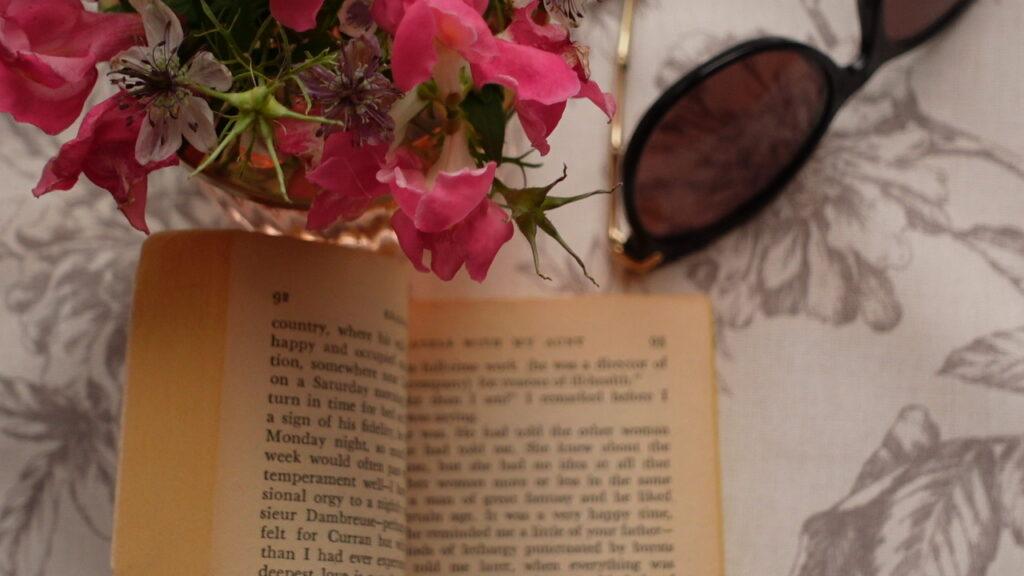
Why the Heat Makes Reading Feel Like a Chore
Last Tuesday afternoon, I read the same paragraph three times before realizing I hadn’t absorbed a single word. The heat had turned my brain to soup, and the ambitious novel I’d been saving for summer sat abandoned on my coffee table, its bookmark stuck stubbornly on page forty-three for a week.
This is summer for me—not the season of long reading hours and ambitious literary projects, but a time when my relationship with books requires renegotiation. While most people seem to thrive on a diet of sunlight and colorful salads, I find myself in survival mode from mid-July to the end of September. The heat is a real discomfort, and my body doesn’t let me forget it. I do my best to concentrate Monday to Friday, nine to five, but once I leave the office, I’m in conservation mode.
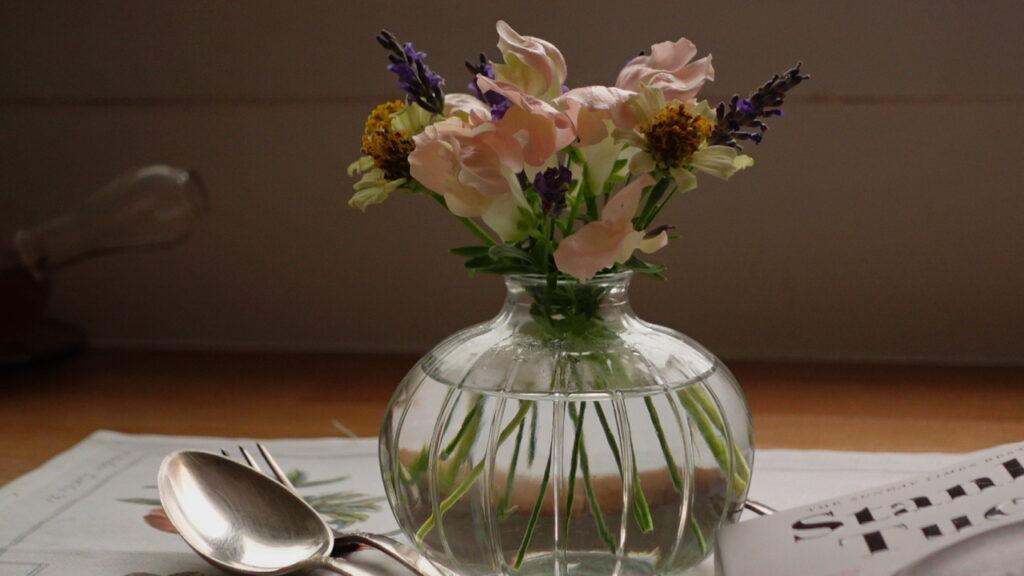
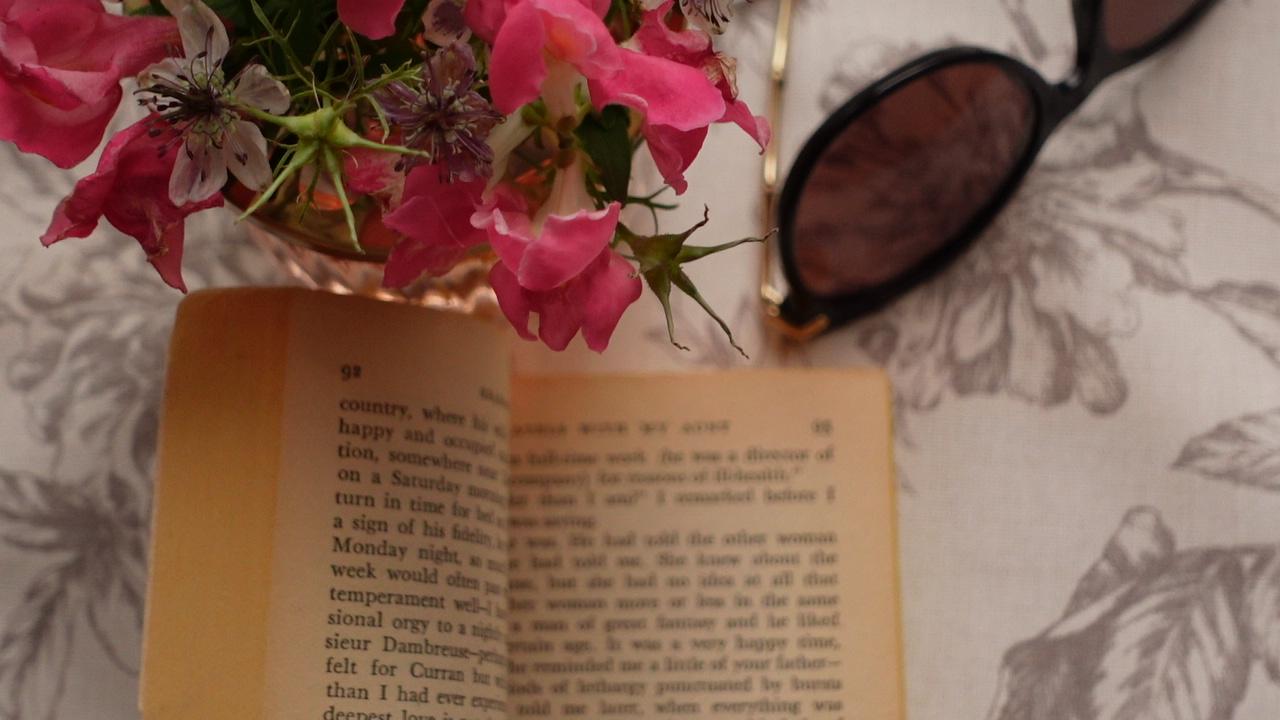
Caring for my mini flower garden becomes not only a way to switch from work day to relaxing time, but also a reminder that the sun stands for something more than my personal suffering. The moment when I get to make small arrangements from flowers I’ve grown myself is one of my most joyful summer memories. But reading? Reading requires a different approach entirely.
Summer brain and summer reading make for a unique blend of books on my coffee table. The brain fog gives me the attention span of a goldfish, so choosing my books becomes not only a question of mood, but also a bit of strategy. What I need are books that work with my diminished capacity rather than against it—stories that carry me along without demanding I keep track of complex plots or remember what happened three chapters ago. Books that offer the comfort of narrative without the exhaustion of heavy lifting.
This July, my selection was light and bubbly, chosen to bring a bit of freshness into my melting brain. Here’s what saved my summer reading life.
My Top 4 “Brain Fog” Book Recommendations
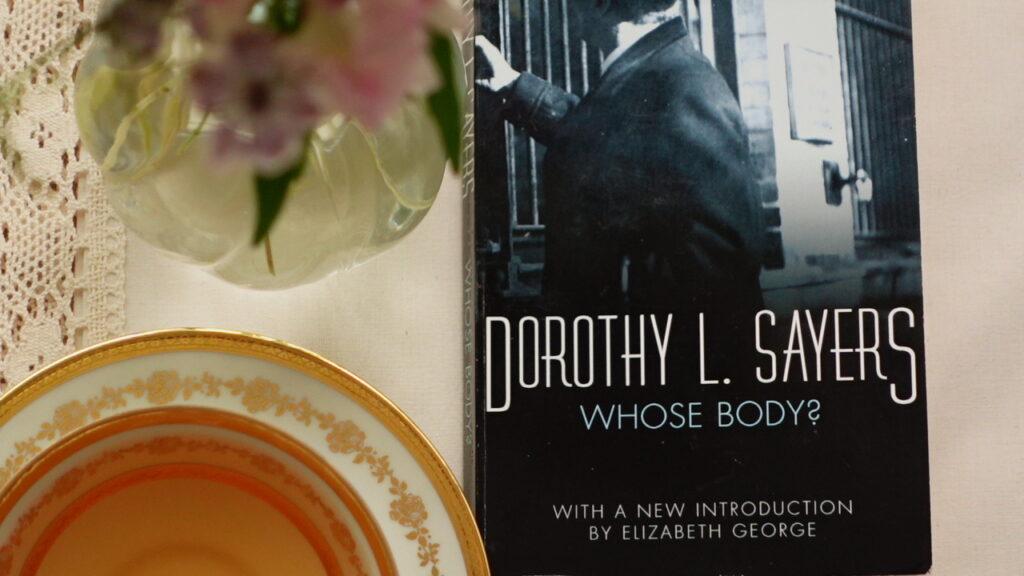
Dorothy L. Sayers – Whose Body?
A dead body wearing nothing but a pince-nez is found in the bath of a London flat—a case for the incomparable Lord Peter Wimsey and his trusted man, Bunter, to enjoy while sipping on a good cup of Darjeeling First Flush.
I’m not known for reading many mysteries, and usually I go straight to the Queen, Agatha Christie. So it was about time I took the advice of so many fellow readers and tried Dorothy L. Sayers. I started with her first published work, the 1923 Whose Body?, and must say I had a wonderful time.
Here’s why mysteries are perfect for brain fog: they give your mind something to do without overwhelming it. Each chapter offers a small puzzle, a manageable piece of information to process. You’re engaged but not exhausted. The forward momentum of the plot pulls you along even when your concentration wants to wander, and if you do lose the thread, the genre is forgiving—you can always flip back a few pages without feeling you’ve lost the soul of the book.
But Sayers offers something beyond the usual mystery comforts. Her writing is so witty and her characters so delightful that you cannot resist them. Lord Peter Wimsey isn’t just solving a crime; he’s doing it with style, humor, and a particular kind of English elegance that feels like a cool breeze on a hot day. The dialogue sparkles, the observations are sharp, and the whole thing reads like a conversation with a terrifically entertaining friend.
I imagine Wimsey enjoying this elegant infusion of the first few leaves grown after the plant’s winter dormancy—a light floral tea with slight astringency just hinting at the classic Darjeeling aroma. In my mind, this is exactly the kind of tea that Lord Peter Wimsey would pair with his investigations, and exactly the kind of refreshment that makes summer reading bearable.
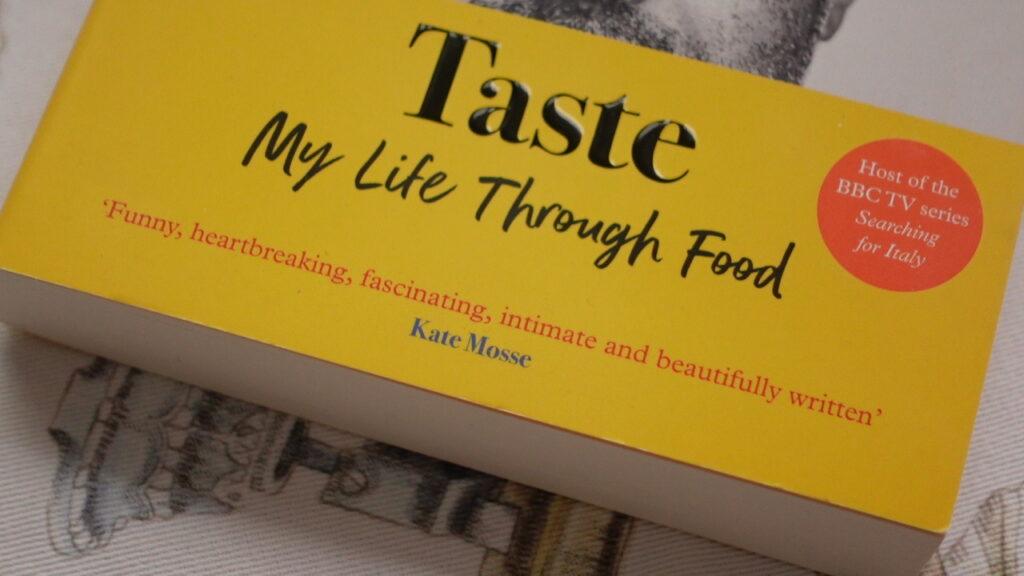
Stanley Tucci – Taste: My Life Through Food
From British tea to Italian pomodori. When I say Stanley Tucci, my mind immediately goes to Isabella Rossellini and the 1996 movie The Big Night. So it’s only appropriate to read the food memoir that brings me back to that atmosphere, and what do you know? He talks about the movie right from the introduction.
Food memoirs are another secret weapon against brain fog. They’re structured in small, digestible pieces—literally. Each chapter is its own complete experience, often built around a single dish or moment. You can read one, set the book down, and feel satisfied. There’s no cliffhanger anxiety, no complex plot threads to remember. Just story, memory, and recipes that ground you in the sensory world when your mind feels unmoored.
Stanley Tucci has that very cool kid attitude on screen, so I didn’t know what to expect in his book. After his CNN documentary series on Italian cuisine, we’ve all discovered a new side of him, but as always, a book gets to reveal pieces of a person that no other medium can. It reads so well—maybe even a little too fast for my taste, since I was sad to close the final page and turn away from it.
What makes this particularly good for summer is its relationship to appetite. When the heat makes everything feel effortful, Tucci’s enthusiasm for food is infectious without being overwhelming. His stories are personal, funny, sometimes heartbreaking, always grounded in the pleasure of eating and cooking. The charm of the recipes shared at the end of each chapter will certainly make me go back to it every once in a while, though I must confess I’m breaking several of Tucci’s laws of pasta as I write this.
For me, comfort comes from knowing I can make something delicious with whatever I have at hand. So here’s a sort of amatriciana, with the wrong pasta, the wrong guanciale, the right pecorino romano, and the next best thing in tomatoes after a San Marzano. But with the ritual of San Pellegrino sparkling goodness, a very long speared fork to grab the right amount of pasta, and a deep spoon to properly roll it in. The ritual of spaghetti is one of the great pleasures in life. So whatever you do, never break them before cooking!
One thing’s for sure: you cannot read this book without immediately putting together a quick plate of Italian deliciousness. And sometimes, when your brain is foggy, the best reading is the kind that reminds you that pleasure still exists in simple, tangible forms.
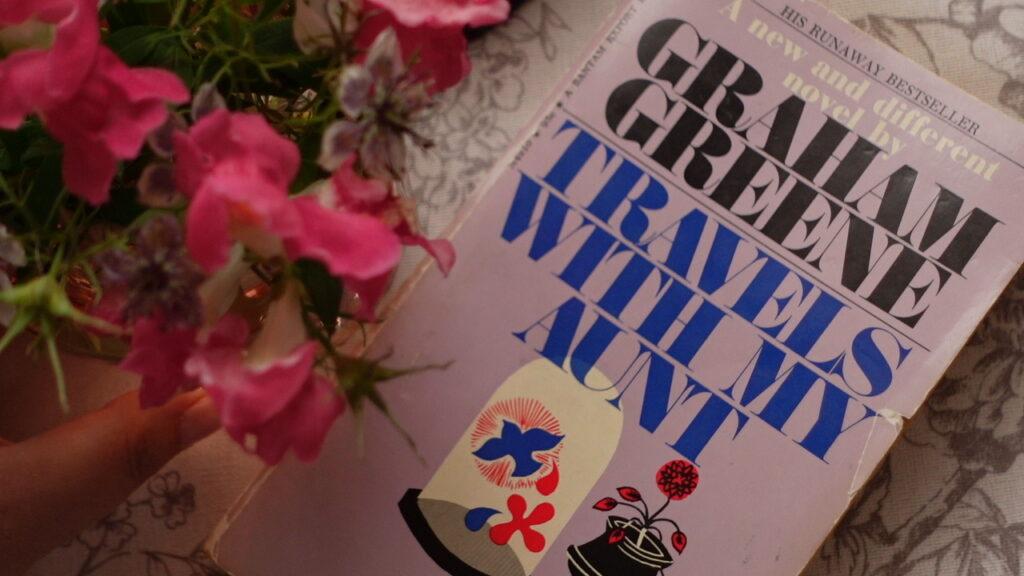
Graham Greene – Travels with My Aunt
This was an unexpected purchase from a thrift shop in the heart of Paris, where not many English books make it on the shelves, so when you find one you’re almost compelled to buy it. What an inspired move.
Graham Greene described this comedy as “the only book I have written for the fun of it,” and you certainly feel it while reading. Travels with My Aunt tells the story of Henry Pulling, a retired bank manager living a quiet, orderly life among his dahlias, until his eccentric Aunt Augusta arrives at his mother’s funeral and proceeds to shake up his small-town existence. She invites him on world adventures spiced up with just a little crime, a lot of unconventional moments, and the kind of characters you’d never dare invent if you were taking yourself seriously.
This is classic British humor at its best—dry, observant, affectionately mocking—set against exotic scenery from London to Istanbul, Paraguay to Brighton. The contrast between Henry’s careful respectability and Augusta’s gleeful disregard for convention creates comedy that never feels forced. Greene is having too much fun to be precious about it, and that lightness of touch is exactly what makes this perfect for brain fog.
The episodic structure helps too. Each adventure is its own contained story, which means you can pick up the book, read for twenty minutes, and set it down again without losing track. The pleasure is in the journey, not in remembering intricate plot details. Augusta’s outrageous stories layer on top of each other, building a portrait of a woman who has lived many lives, made many questionable decisions, and refuses to apologize for any of it.
There were so many laugh-out-loud passages that I found myself reading bits aloud to anyone who would listen. When your brain is tired, laughter is medicine, and Greene provides it generously.
Nora Ephron – Heartburn (The Audiobook Edition)
The last few weeks before going on holiday, I can barely concentrate on getting out of the house in the morning, so reading a physical book on my commute becomes a little too much for me. That’s when audiobooks come in handy, and what a fun time I had listening to Nora Ephron’s classic Heartburn read by the one and only Meryl Streep.
Let me say that again, for emphasis: read by Meryl Streep.
This autobiographical novel is based on Ephron’s second marriage and divorce, after finding out her husband was having an affair while she was pregnant with their second child. So this is basically not a happy story, but in true Nora Ephron fashion, it makes for a light and insightful meditation on power couples, sacrifices made by women, and the nervous breakdowns that end up building their infinite strength.
Audiobooks are perhaps the ultimate brain fog solution. You can listen while doing other things—cooking, walking, staring at the ceiling fan—and the narrator does the work of keeping you engaged. With Meryl Streep narrating Ephron’s sharp, funny, devastating prose, you get two brilliant women in conversation across time, both at the top of their respective crafts.
What I love about Ephron’s writing, especially in summer fog, is its clarity. She never overcomplicates. Her sentences are clean, her observations precise, her humor so natural it feels like she’s just talking to you. She takes painful material—betrayal, divorce, the collapse of a marriage—and somehow makes it not just bearable but entertaining. Not because she’s making light of serious things, but because she refuses to let pain have the last word.
The novel is also structured beautifully for scattered attention: short chapters, each one a complete thought or scene. And then there are the recipes scattered throughout—Ephron’s way of grounding emotional chaos in the practical comfort of cooking. When your mind is foggy, there’s something deeply reassuring about a recipe, a set of instructions that guarantee a good outcome if you just follow the steps.

Why These Books Work for Scattered Attention
Looking back at my summer reading, I realize these four books share more than just accessibility. They’re all, in their different ways, about pleasure. Dorothy Sayers takes pleasure in wit and puzzle-solving. Stanley Tucci finds it in food and family. Graham Greene discovers it in abandoning respectability. Nora Ephron insists on it even in the midst of heartbreak.
When your brain is foggy, when the heat makes everything harder, pleasure becomes a radical act. These books don’t demand that you be at your intellectual best. They meet you where you are, offering engagement without exhaustion, narrative momentum without anxiety, and the simple comfort of good company.
They also share a quality of voice—each author speaking directly to you, conversationally, as if you’re sitting together over tea or wine or pasta. There’s no literary posturing, no sense that you need a degree to understand what’s happening. Just people telling you stories in clear, vivid, entertaining ways.
Final Tips for Your Summer Reading List
That’s what I needed this summer, and what I’ll keep reaching for when the heat returns: books that remind me why I fell in love with reading in the first place. Not because it makes me smarter or more cultured, but because sometimes a good story, well told, is the most restorative thing in the world.
So if you’re struggling through summer with a foggy brain and a stack of abandoned books, be gentle with yourself. Find the stories that work with your diminished capacity rather than against it. Let mystery pull you forward, let memoir ground you in sensory details, let humor shake you out of heat-induced stupor, let audiobooks do some of the heavy lifting.
Your reading life doesn’t have to be on pause just because your brain is. It just needs to adapt, to find what feeds you in this season. And sometimes, that’s exactly enough.
Days in the Sun
How do you cope with summer reading when the heat makes concentration difficult? I’d love to hear what books have saved your foggy brain days.

Written by Alexandra Poppy
Writer, reader & curator of The Ritual of Reading
I’m Alexandra, the voice behind The Ritual of Reading. Somewhere between a stack of novels and a half-finished pot of tea, I keep finding traces of the life I want to live—slower, richer, filled with stories. The Ritual of Reading is where I gather what I love: books that linger, places with a past, and rituals that make ordinary days feel a little more meaningful. I write from Paris, where elegant bookshops and old-fashioned cafés offer endless inspiration—and I share it here, hoping it brings a spark to your own days, too.