Medieval Advent Calendar Day 24
Hello, dear friends, and Merry Christmas!
For this festive day, we’re boarding a train from Paris to visit the yearly Christmas market in the medieval town of Provins. You might remember we visited the Saint-Ayoul Priory here earlier this month for the Medieval Book Prize of 2024. Now we return for an even more enchanted escape—a journey not just through space but through time itself.
Provins is a small town just seventy-seven kilometers southeast of Paris. Though it sits today within the Île-de-France region—the greater Paris metropolitan area—in medieval times it belonged to the County of Champagne and stood as the most important market town in all of Medieval Champagne. Historical records place it as the third most significant city in the old Kingdom of the Franks, trailing only Paris and Rouen. An essential meeting place where merchants and people of all social backgrounds converged to trade goods, ideas, and news, Provins preserves the memory of its illustrious market past by organizing each year a festive weekend dedicated to the Christmas Market—but not just any Christmas market. This one commits entirely to its medieval heritage.
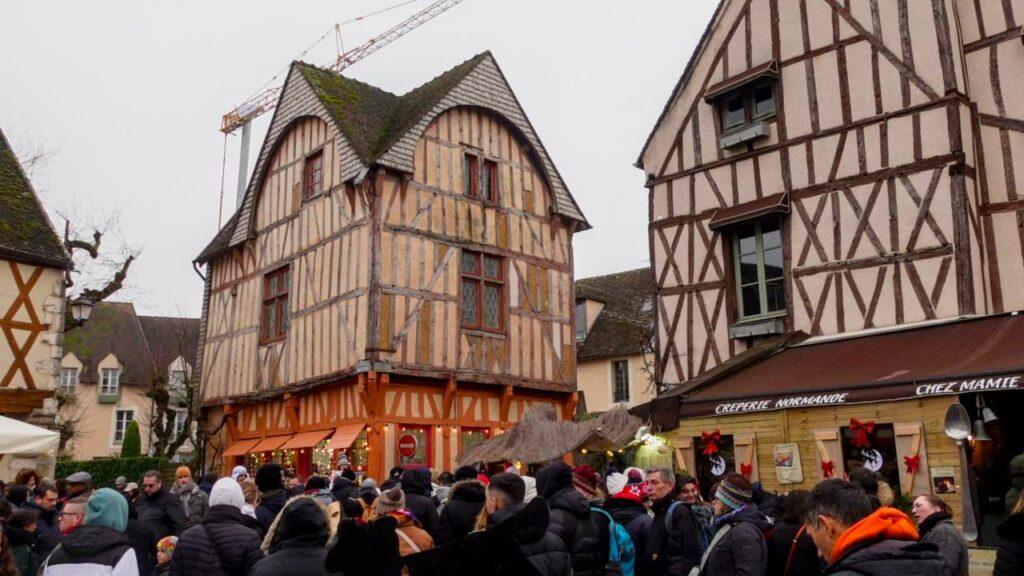
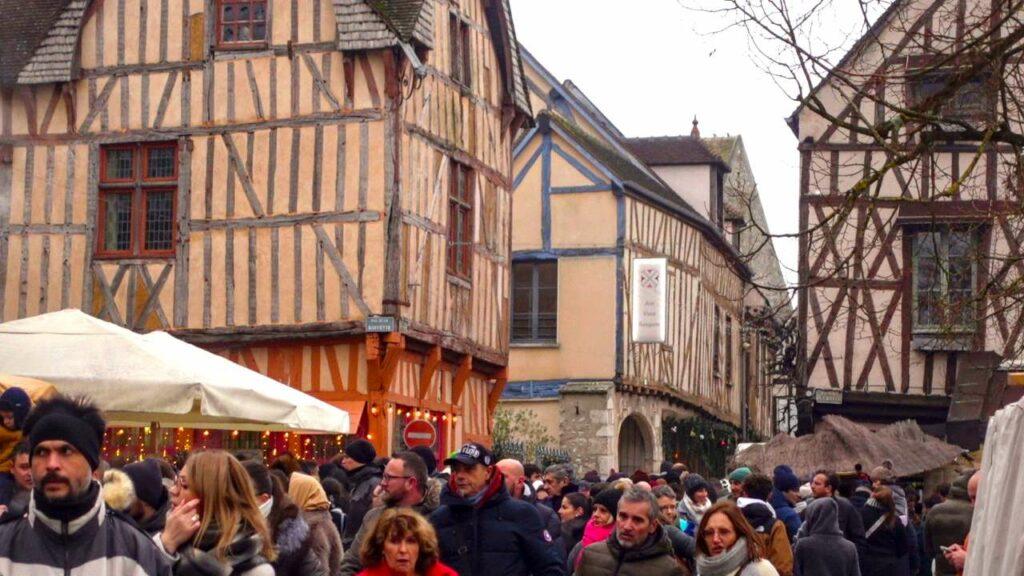
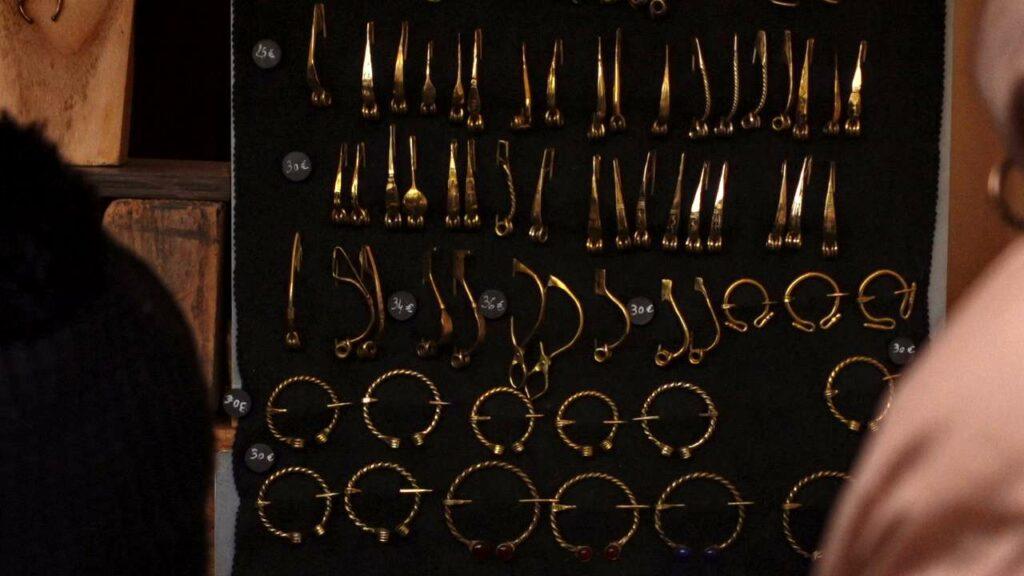
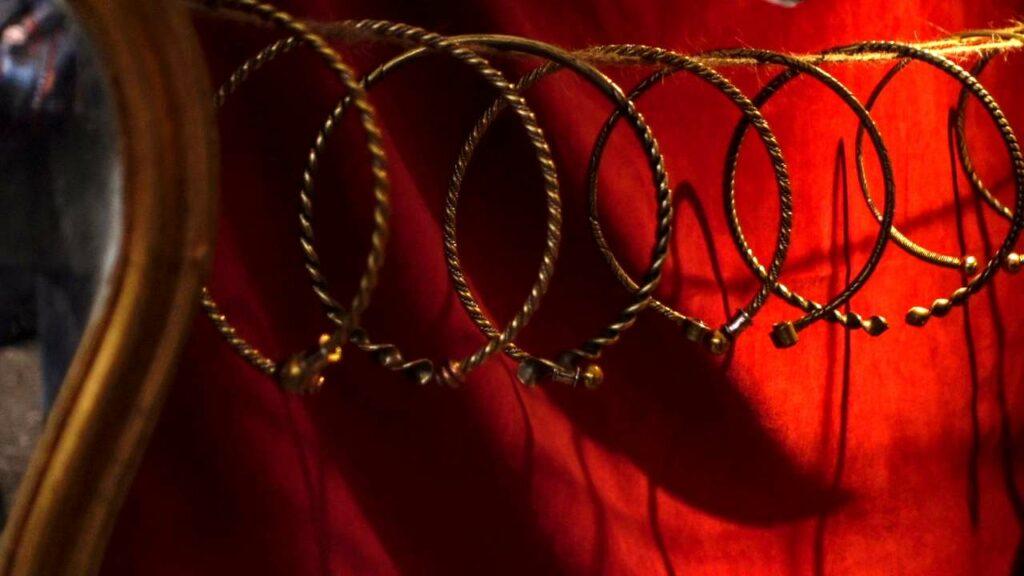
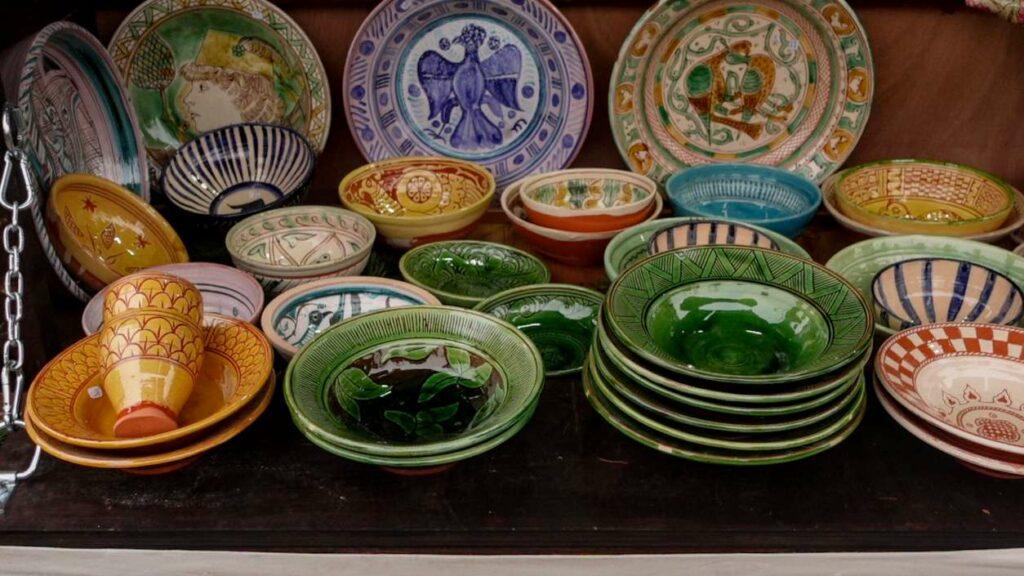
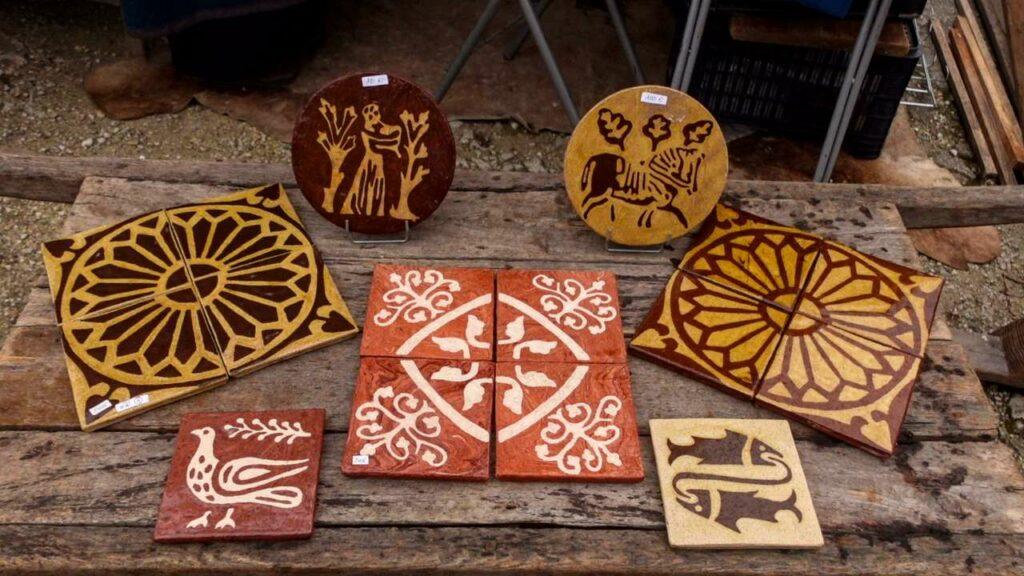
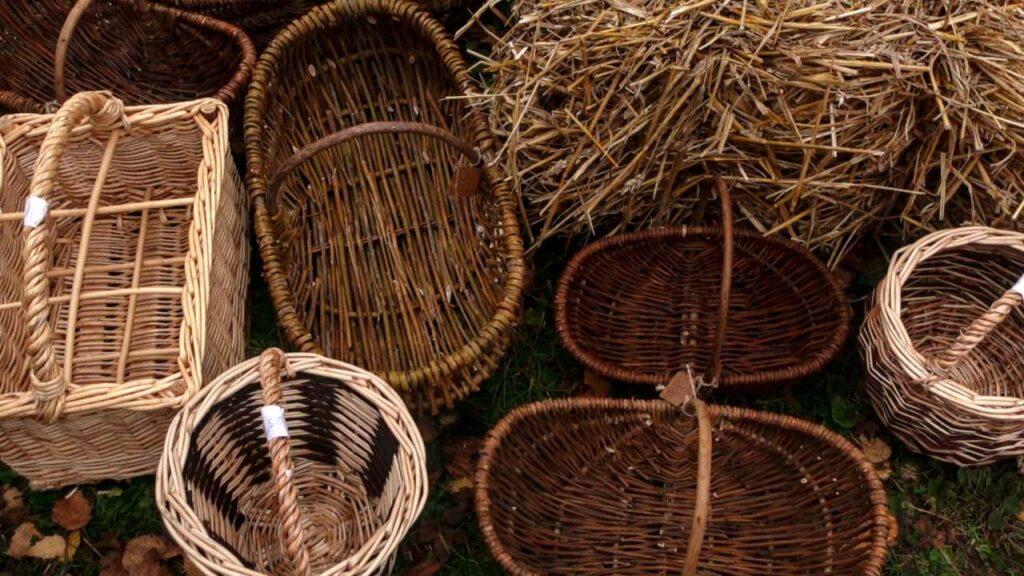
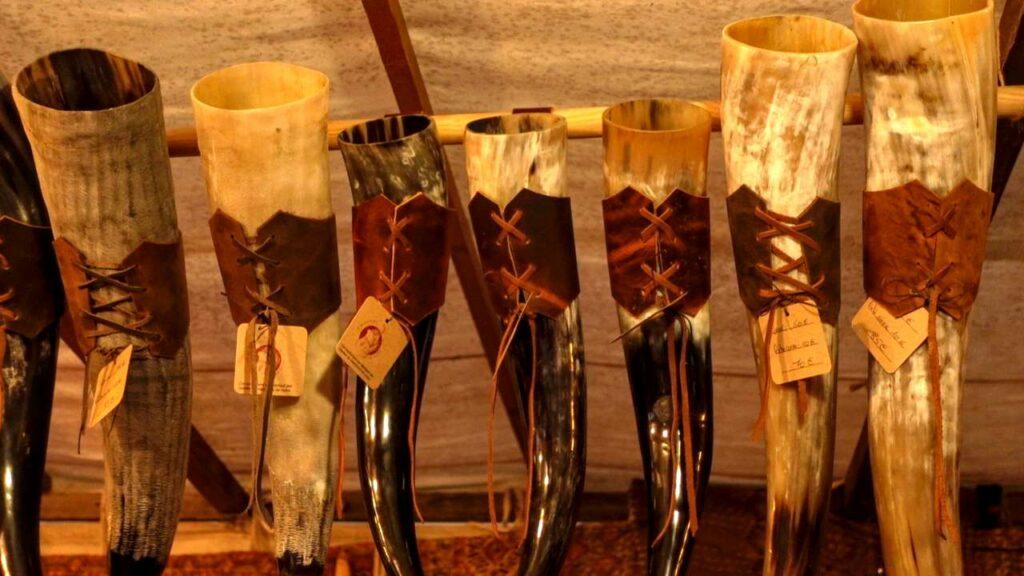
I consider myself a veteran of European Christmas markets, having visited dozens across the continent, yet even I found myself surprised by the atmosphere here. The commerce is themed entirely around medieval authenticity, and you can find everything from hand-thrown ceramics to intricately carved wooden objects, fine leather accessories worked using traditional techniques, stone garden ornaments that would suit a monastery courtyard, jewelry fashioned from methods that predate modern metallurgy, terracotta tiles, and even musical instruments—lutes, hurdy-gurdies, drums—to recreate authentic medieval entertainment.
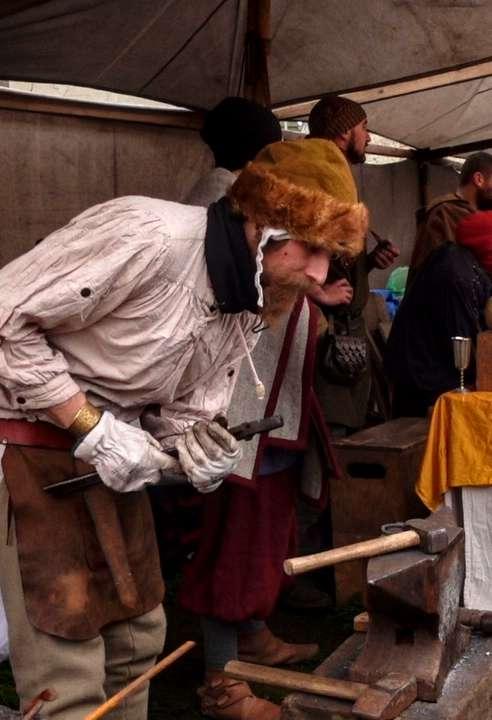
The blacksmith’s booth proved particularly captivating, as the smiths explain every step of their process with infectious enthusiasm. While I watched, they were crafting a bespoke buckle for a young woman, taking her design suggestions with utmost seriousness while simultaneously cracking jokes and engaging the gathered crowd. Their hammers rang against the anvil in rhythms that have echoed through centuries, sparks flying with each strike, the metal glowing orange then gradually cooling to its final form. This is living history—not merely demonstration but actual craft practiced as it would have been practiced seven hundred years ago.
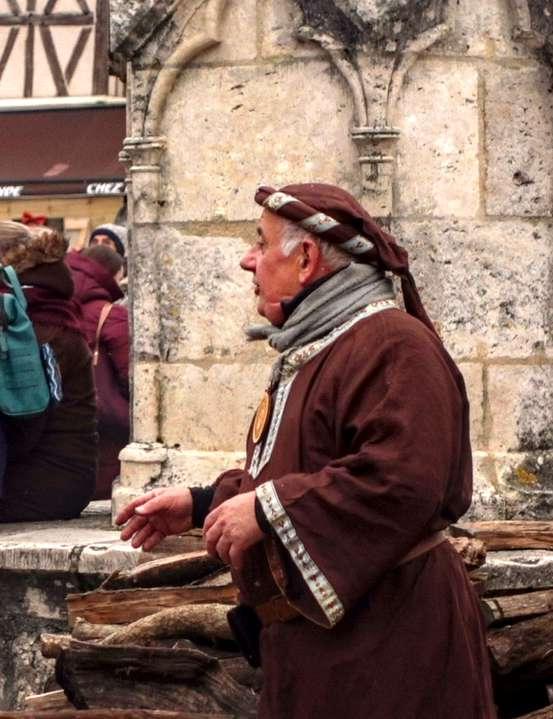
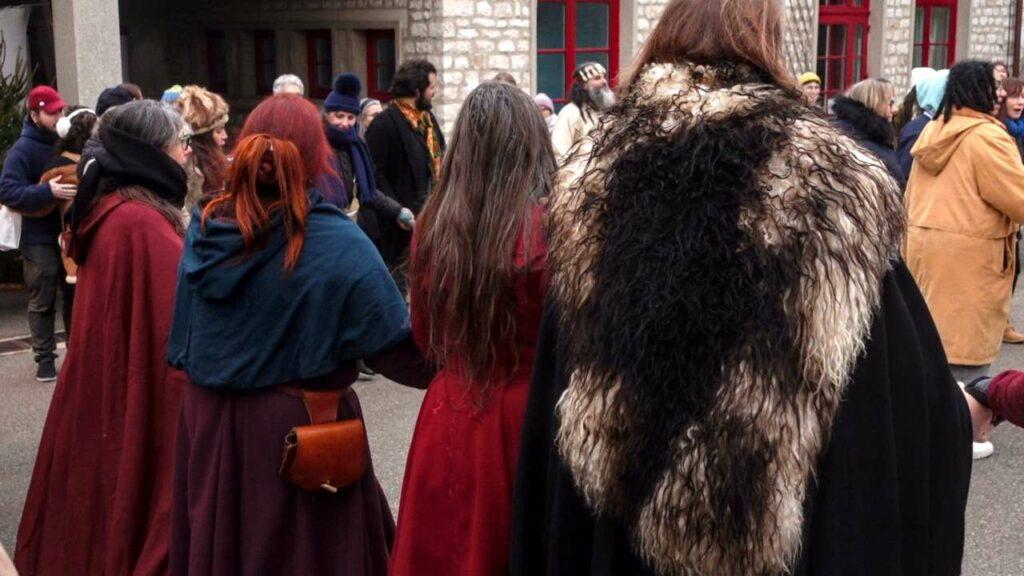
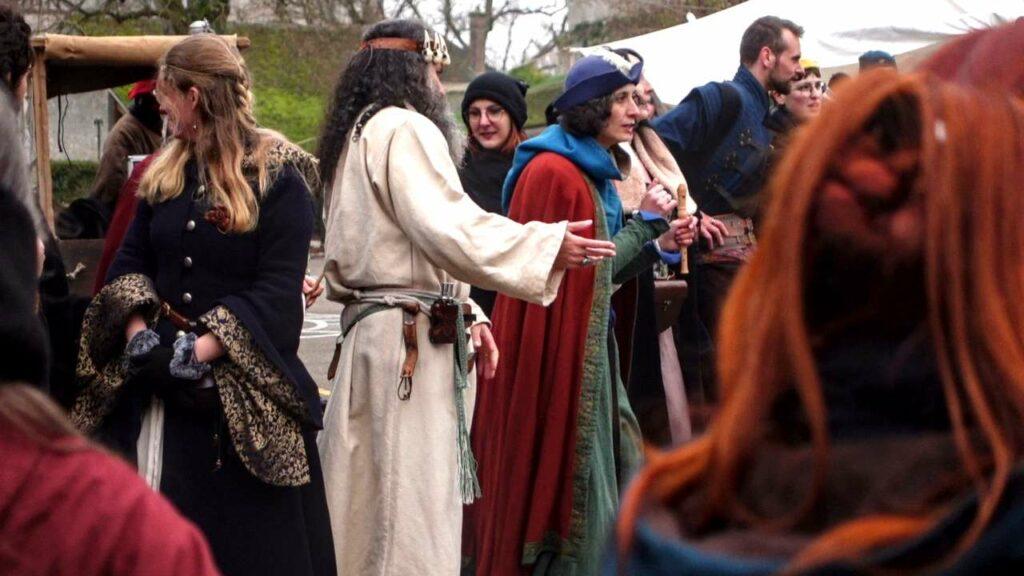
And speaking of the crowd—I was utterly astonished by the number of civilians, ordinary visitors like myself who came simply to experience the market and had no connection to the organizing committee, who arrived in period costume. Elaborate medieval dress: tunics and cloaks, wimples and circlets, leather boots and woolen hose. I felt as though I’d genuinely traveled backward through time and discovered an entire passionate community I’d had no idea existed—people devoted to historical recreation and the authentic revival of medieval life, not as academic exercise but as joyful participation.
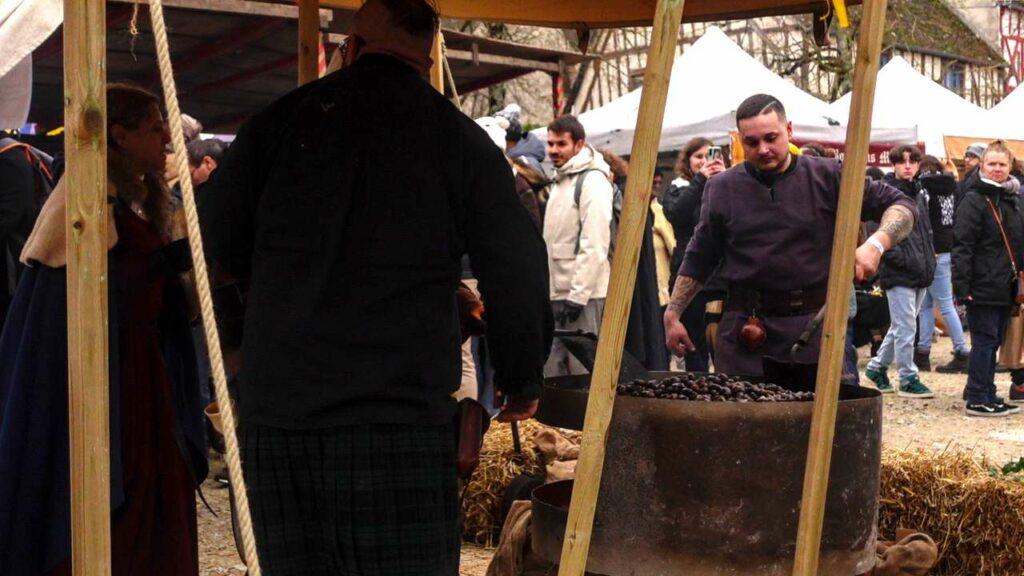
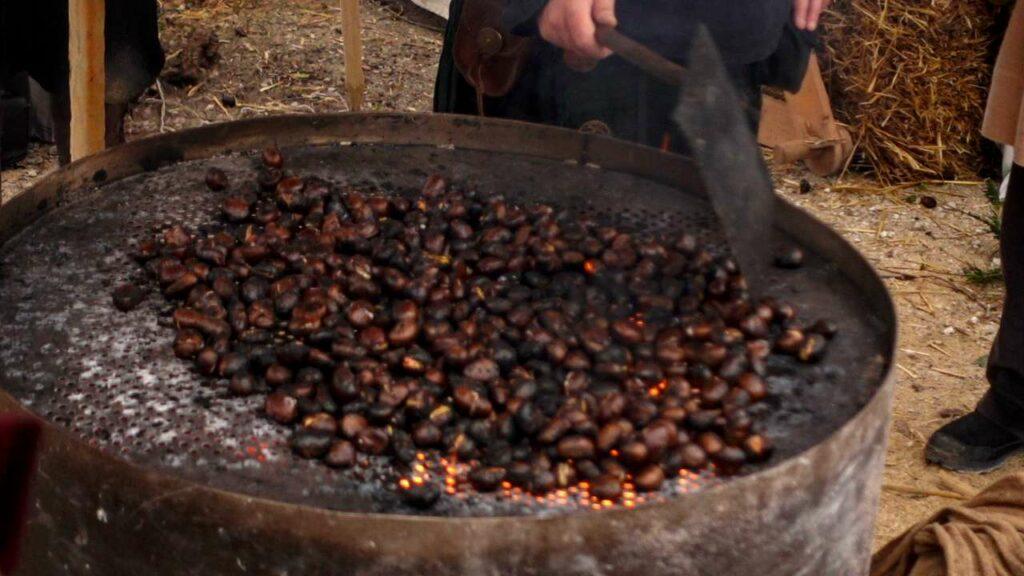
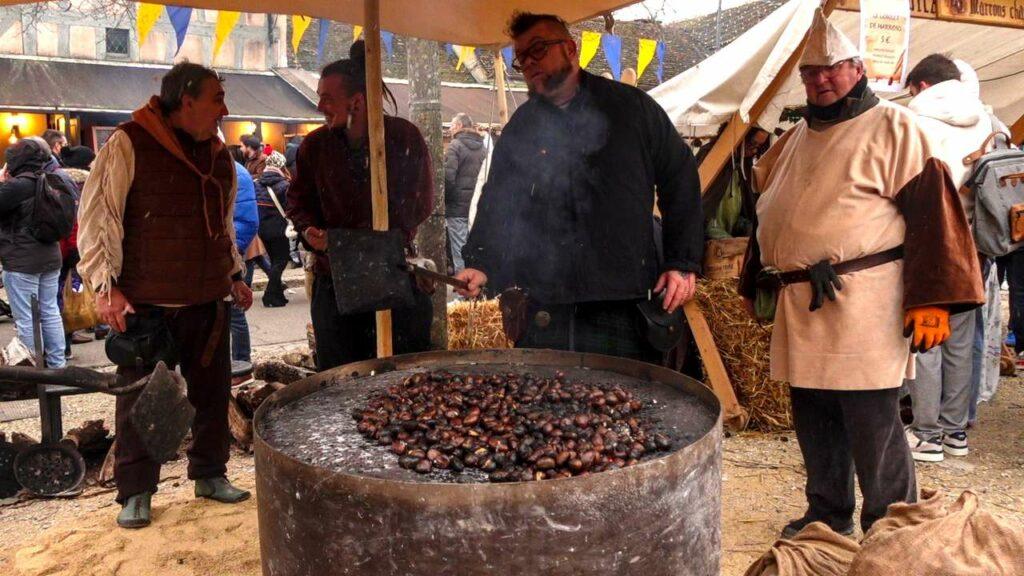
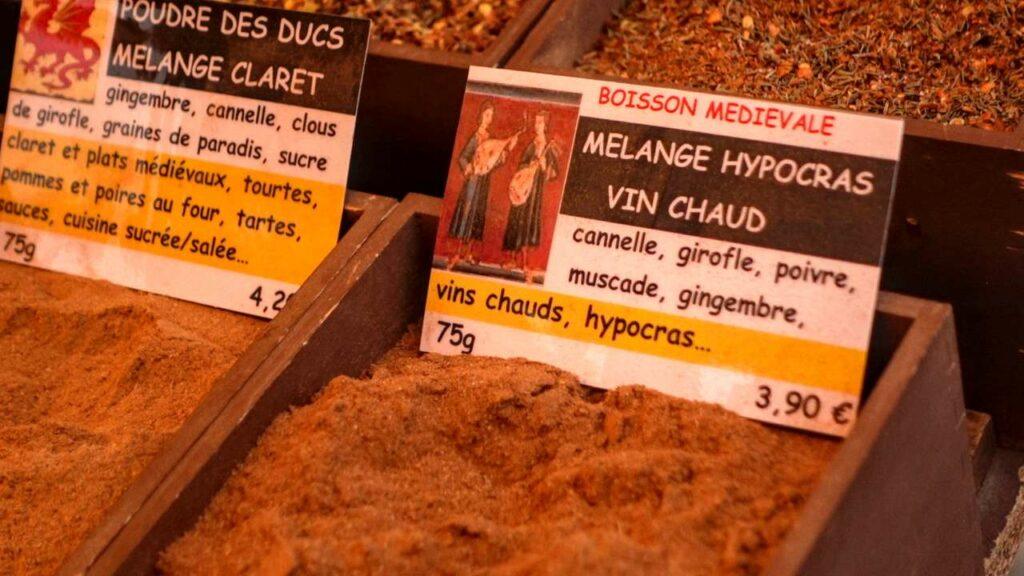
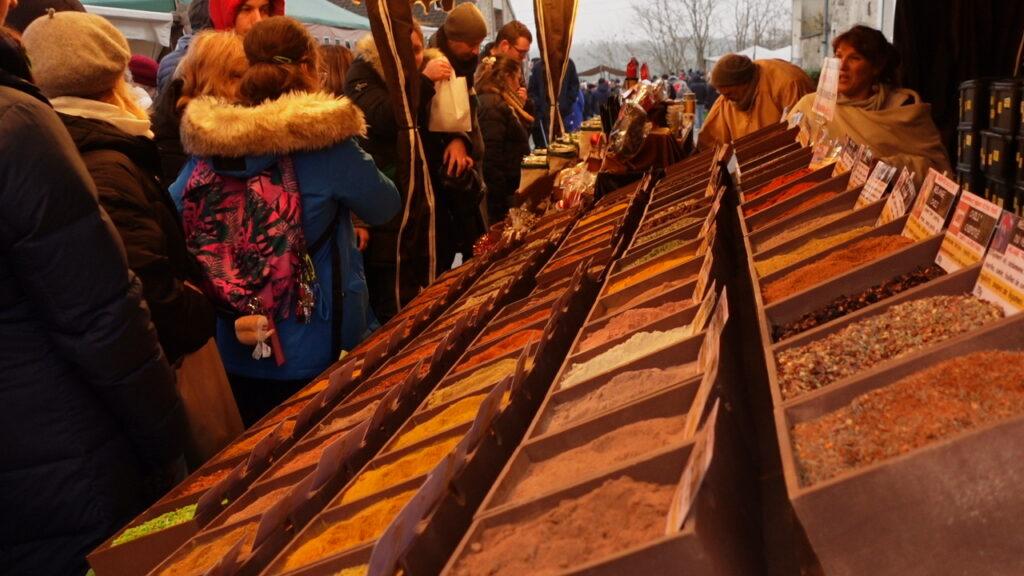
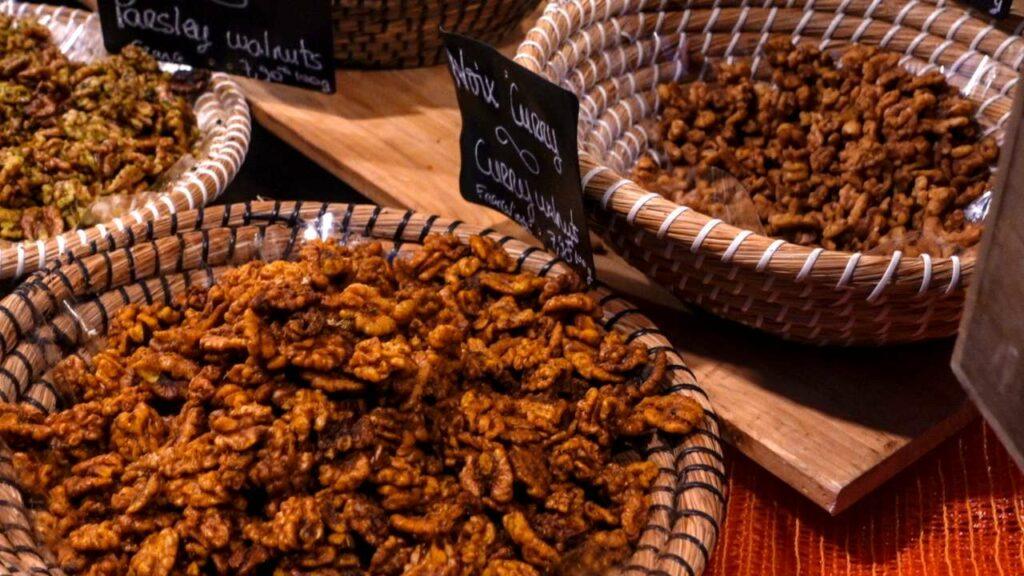
The food stalls were nothing short of mouthwatering. Roasted chestnuts and spiced walnuts filled paper cones. Baked goods that might not photograph beautifully for Instagram but are entirely authentic, as the bakers will enthusiastically explain—heavy rye breads, herb-studded flatbreads, dense cakes sweetened with honey rather than refined sugar. Grilled meats and sausages sizzled over open flames. Mulled wine, hypocras (the spiced medieval wine we made earlier this month), and hydromel—honey wine, also called mead—steamed in wooden cups. And of course, the enchanting spice merchant with his mysterious jars and exotic aromas, explaining how pepper was once worth its weight in gold, how saffron came from Persia along impossible trade routes, how each spice carried stories of distance and danger.
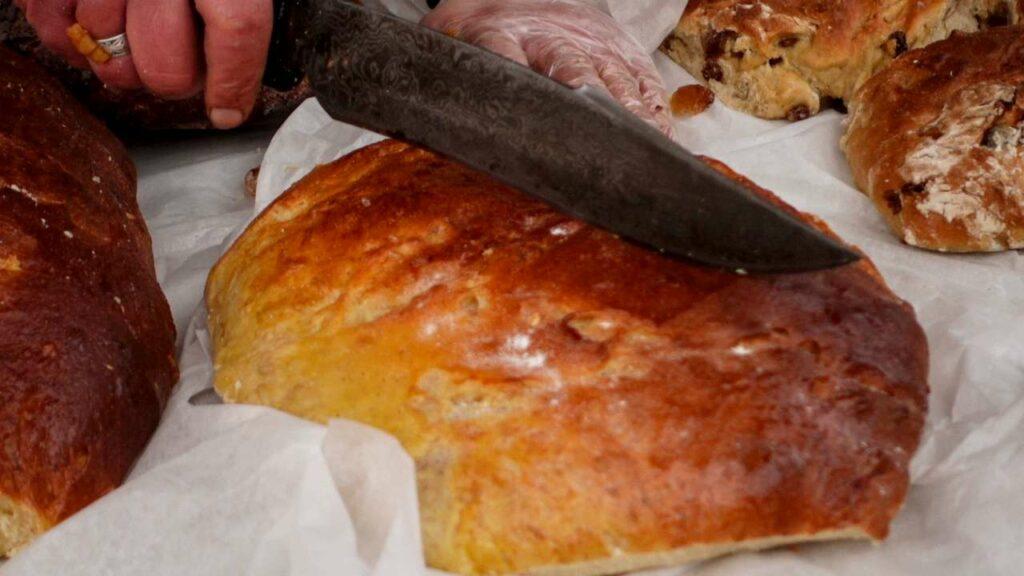
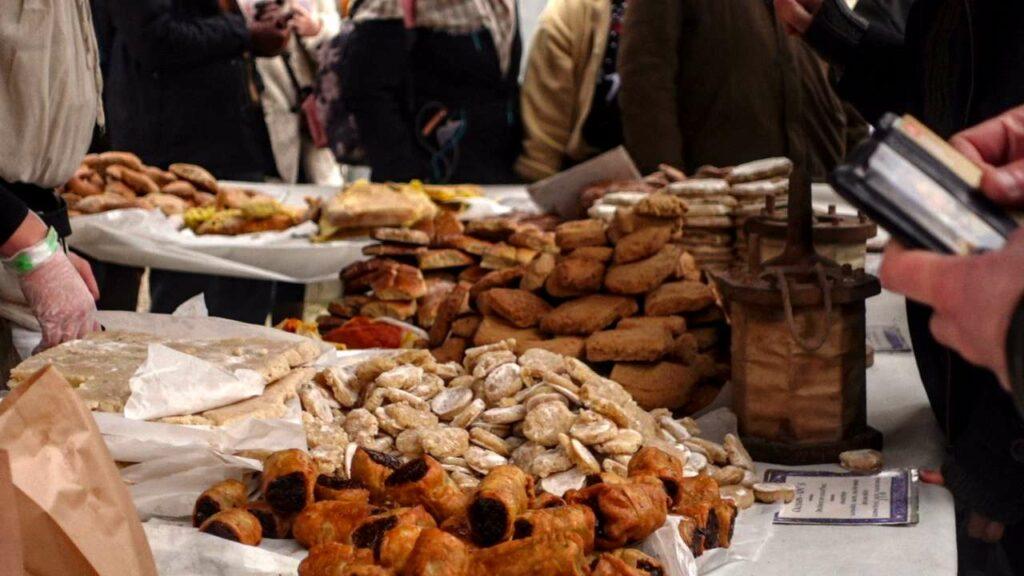
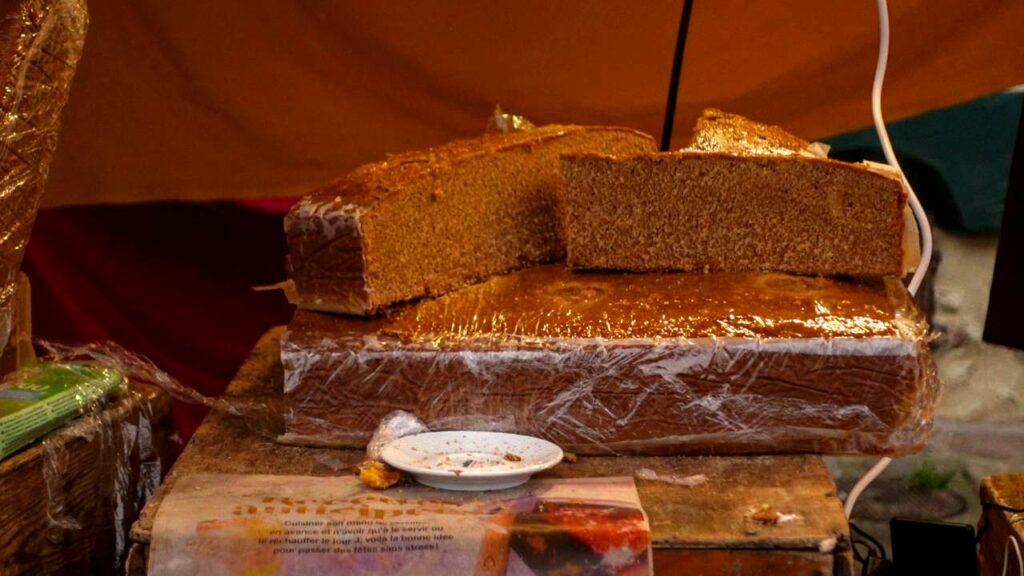
Enormous gingerbread cakes—proper medieval pain d’épices—infused the cold winter air with their warming aromas of cinnamon, cloves, and ginger. Despite a grey and freezing December day, you could feel the joy radiating from people as they passed, their breath visible in the cold air, their faces bright with pleasure and curiosity.
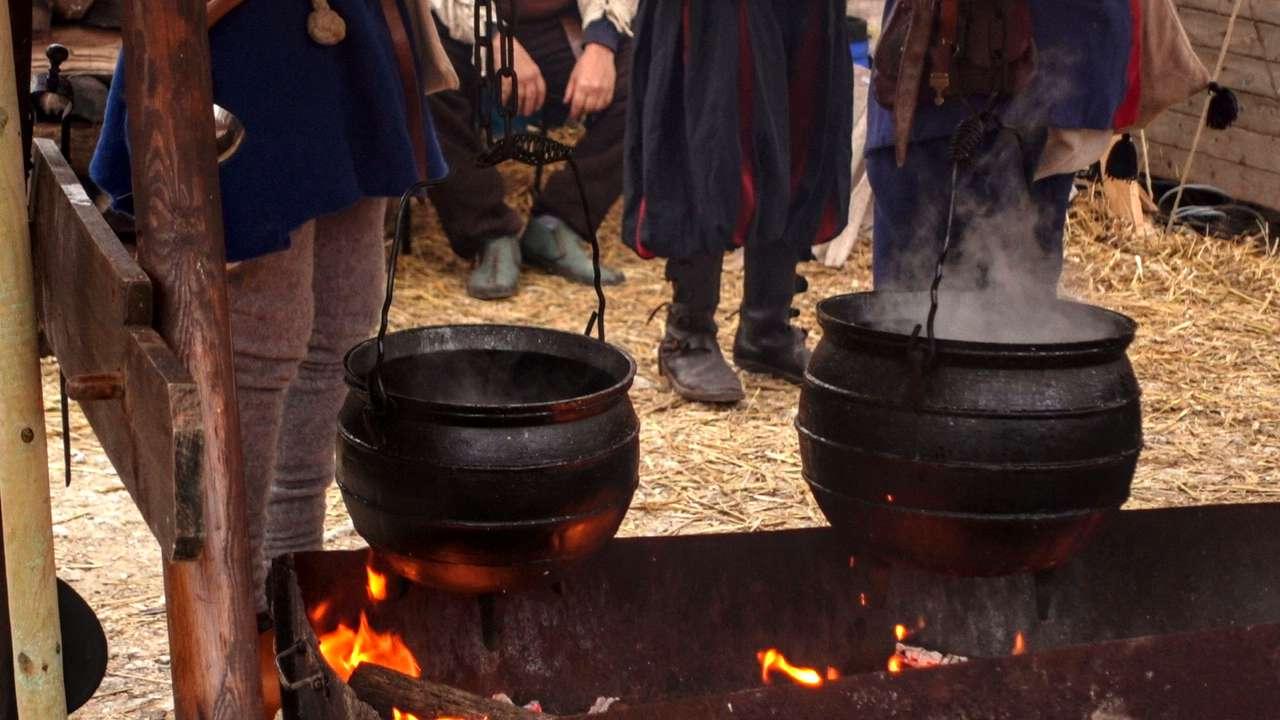
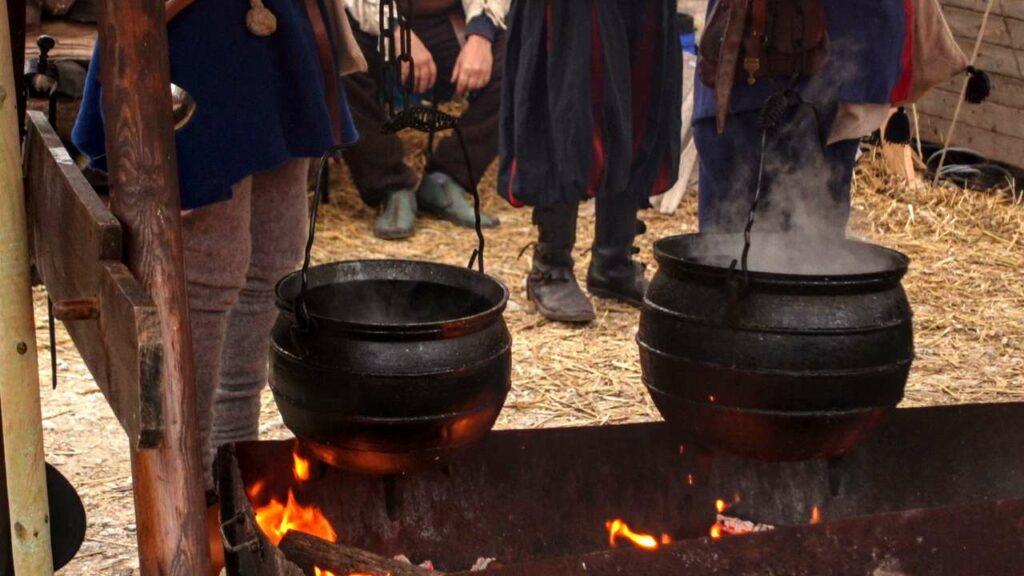
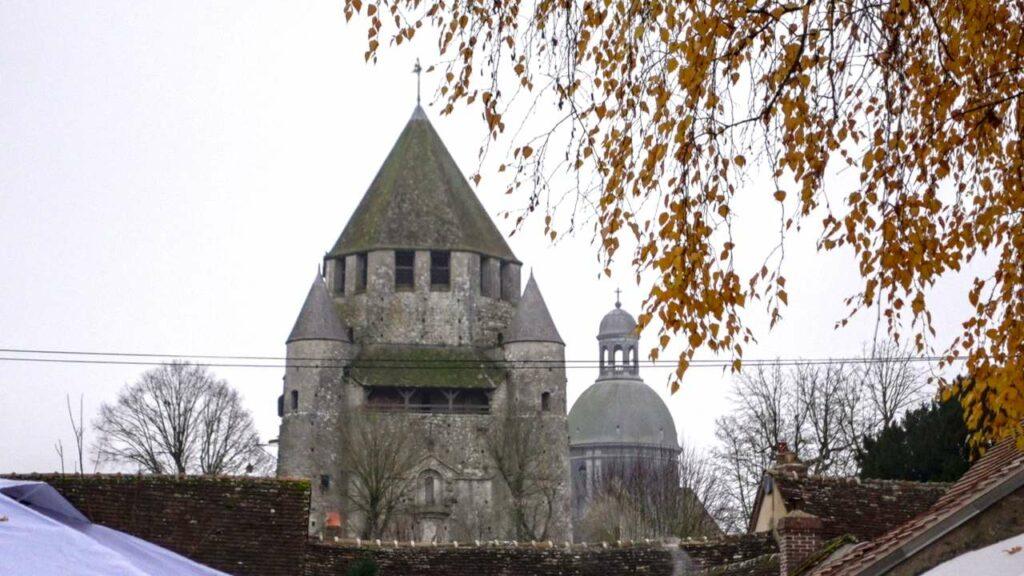
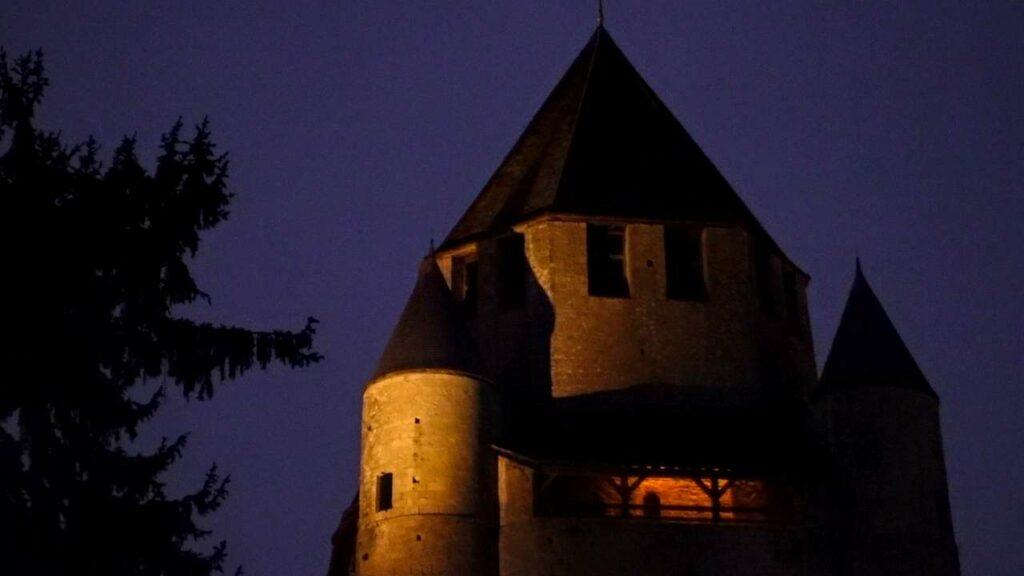
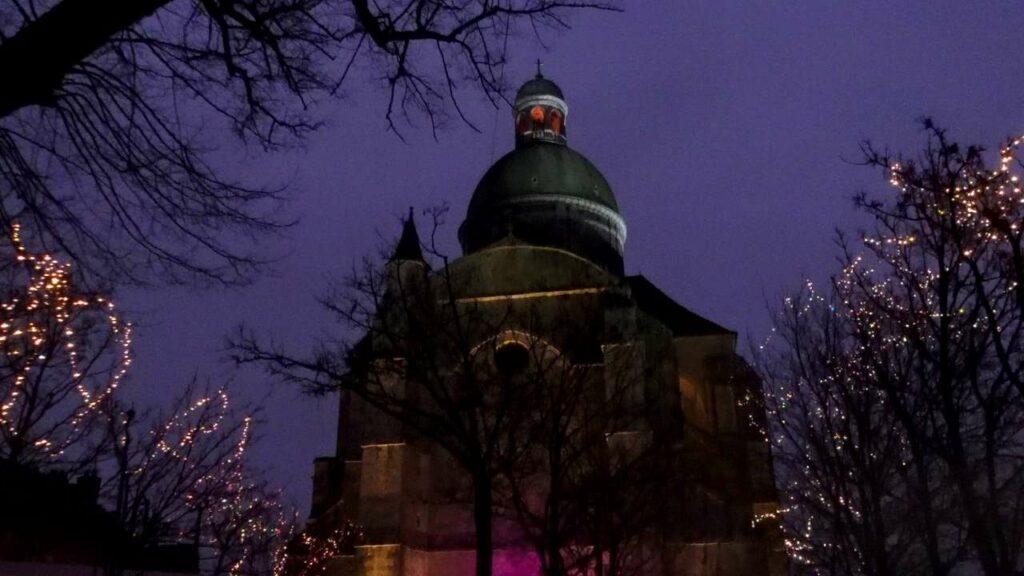
One of the most emblematic landmarks of medieval Provins is the César Tower, a unique architectural marvel: the only known octagonal keep built upon a square base, dating from the twelfth century. When night falls over the Christmas market, the tower becomes the north star by which you orient yourself in the crowd. Torches and braziers illuminate its stone walls, flames dancing against ancient masonry. The fires keep the mulled wine hot in iron cauldrons and make the entire evening sparkle with medieval charm—literally, as firelight catches on jewelry, on the metal fittings of leather goods, on the frost beginning to form on cobblestones.
This feels like the perfect place to conclude our Medieval Advent Calendar. After twenty-four days of time travel between novels and stone walls, unknown flavors and enchanting songs, we’ve explored the Middle Ages through twenty books, four museums, two cathedrals, and one abbey. We’ve tasted food and wine that made the distant past feel immediate and present rather than a thousand years removed. Our guide throughout has been a queen—Eleanor of Aquitaine, a woman whose strength and vision literally shaped the world we inhabit today. Reading about her life has been not merely a revelation about medieval existence but an inspiration for the present: to live boldly, to refuse limitations imposed by others’ expectations, to act as though failure were impossible.
Thank you for being my trusted travel companions on this journey. Your presence and enthusiasm for this fourth Advent Calendar I’ve created have been my greatest gift. Your comments, your shared memories, your willingness to explore unfamiliar territory with open minds and curious hearts—all of this has made the experience immeasurably richer than it would have been alone.
May your holiday season overflow with joy and warmth, with excellent books and wonderful companions to discuss them with. May you find magic in unexpected places and beauty in small ceremonies. May you carry forward something of what we’ve discovered together: that the past is never truly past, that beauty and meaning persist across centuries, that stories connect us across impossible distances of time and space.
From my heart to yours, dear friends—Merry Christmas, Joyeux Noël, and may the year ahead unfold with all the adventure and wonder you dare to imagine.
Until we meet again.


PROVINS MEDIEVAL CHRISTMAS MARKET GUIDE:
About Provins:
- Location: 77 km southeast of Paris, Seine-et-Marne department
- UNESCO Status: World Heritage Site (since 2001) for medieval architecture
- Historical Significance: Third most important city in medieval Kingdom of Franks (after Paris and Rouen)
- Medieval Role: Major Champagne Fair city, crucial trade hub connecting northern and southern Europe
- Population: About 12,000 (small town with enormous historical importance)
The Christmas Market:
- When: Usually one weekend in mid-December (check annual dates)
- Where: Throughout the medieval upper town (ville haute)
- Theme: Entirely medieval—authentic crafts, costumes, food, entertainment
- Size: Over 100 artisan stalls and vendors
- Atmosphere: Immersive historical recreation, not merely themed decoration
What Makes It Unique:
Total Medieval Immersion: Unlike most Christmas markets that add medieval elements to modern markets, Provins commits entirely to historical authenticity. Vendors dress in period costume, demonstrate medieval crafts using authentic techniques, and sell goods that would have been available in a medieval market.
Living History Community: Large percentage of visitors arrive in medieval costume—not as performers but as passionate historical recreation enthusiasts. Creates extraordinary atmosphere where you genuinely feel transported to another era.
Authentic Crafts & Demonstrations:
- Blacksmithing with audience participation
- Pottery thrown on traditional wheels
- Leatherworking using historical methods
- Woodcarving and carpentry
- Textile weaving and natural dyeing
- Illuminated manuscript techniques
- Jewelry made with period-appropriate methods
Food & Drink:
Medieval Specialties:
- Hypocras – Spiced medieval wine (recipe we made this month!)
- Hydromel/Mead – Honey wine, one of oldest fermented beverages
- Pain d’épices – Medieval gingerbread, intensely spiced
- Roasted chestnuts and spiced nuts
- Period-appropriate breads – Rye, barley, herb-studded
- Grilled meats – Cooked over open flames
- Medieval pastries – Sweetened with honey, flavored with exotic spices
Key Landmarks:
César Tower (Tour César):
- 12th-century keep, only known octagonal tower on square base
- Can be visited year-round (separate ticket)
- Offers panoramic views of town and surrounding countryside
- Becomes navigational beacon during evening market
- Dramatically lit during Christmas market
Saint-Ayoul Priory:
- Founded 996 (as we discussed earlier this month)
- Hosts Medieval Book Prize ceremony
- Beautiful Romanesque and Gothic architecture
- Often has special exhibitions during market weekend
Medieval City Walls:
- Exceptionally well-preserved 13th-century fortifications
- Can walk portions of ramparts
- Gates and towers integrated into market experience
Underground Passages:
- Network of medieval tunnels and cellars beneath city
- Sometimes open for tours during market (check schedule)
- Used historically for storage, defense, and commerce
Practical Information:
Getting There from Paris:
- Train: From Gare de l’Est, direct trains to Provins (about 1.5 hours)
- Car: A4 or N4 highway (about 1 hour 15 minutes)
- Organized tours: Some companies offer day trips from Paris during market weekend
Tickets:
- Market itself is free to wander
- Some demonstrations or workshops may have small fees
- Tower and other monuments require separate admission
- Combined tickets available for multiple sites
Best Times:
- Arrive early afternoon to explore in daylight
- Stay into evening for atmospheric torchlit experience
- Saturday tends to be more crowded than Sunday
- Book accommodations well in advance—limited options in small town
What to Bring:
- Warmest possible clothing – December in Provins is genuinely cold, outdoor market
- Sturdy waterproof boots – Cobblestones, potential rain/snow
- Cash – Many vendors prefer or only accept cash
- Large shopping bag – You’ll want to buy things
- Camera – Every corner is photogenic
- Open mind – Embrace the time-travel experience
Beyond the Market:
Year-Round Provins Attractions:
- Medieval festivals – Multiple throughout year
- Falconry shows – Eagles, falcons, medieval hunting demonstrations
- Les Aigles des Remparts – Professional falconry displays (seasonal)
- Medieval banquet dinners – Period food, entertainment (by reservation)
- Museum of Provins – Local history, medieval artifacts
Medieval Fairs Legacy: Provins was one of the Champagne Fair cities—international trade fairs that were among the most important economic events in medieval Europe (12th-14th centuries). Merchants from Italy, Flanders, England, and across Europe converged here to trade wool, cloth, spices, leather, and luxury goods. The fairs established credit systems and merchant law that formed foundations of modern banking and commercial law.
UNESCO Recognition: Provins earned World Heritage status for its exceptional preservation of medieval urban fabric—walls, towers, churches, houses, underground spaces—and for its historical significance as a Champagne Fair city that shaped medieval European economy.
MEDIEVAL ADVENT CALENDAR: A REFLECTION
Over these 24 days, we’ve journeyed through:
- Twenty books: From Chrétien de Troyes to Marion Zimmer Bradley
- Eleanor of Aquitaine’s world: Her courts, her marriages, her legacy
- Medieval architecture: Castles, cathedrals, abbeys, fortified towns
- Illuminated manuscripts: The art of the book in medieval culture
- Food and feasting: From troubadours’ capons to gingerbread
- Music: From Gregorian chant to troubadour songs
- Medicine and herbs: Hildegard of Bingen’s wisdom
- One central theme: That the Middle Ages were not “dark” but rich, complex, creative, and startlingly relevant to our modern lives
Thank you for traveling backward through time with me. May you carry forward Eleanor’s courage, Hildegard’s vision, and the medieval understanding that beauty and meaning are worth creating, preserving, and celebrating.

Written by Alexandra Poppy
Writer, reader & curator of The Ritual of Reading
I’m Alexandra, the voice behind The Ritual of Reading. Somewhere between a stack of novels and a half-finished pot of tea, I keep finding traces of the life I want to live—slower, richer, filled with stories. The Ritual of Reading is where I gather what I love: books that linger, places with a past, and rituals that make ordinary days feel a little more meaningful. I write from Paris, where elegant bookshops and old-fashioned cafés offer endless inspiration—and I share it here, hoping it brings a spark to your own days, too.