Medieval Advent Calendar Day 21
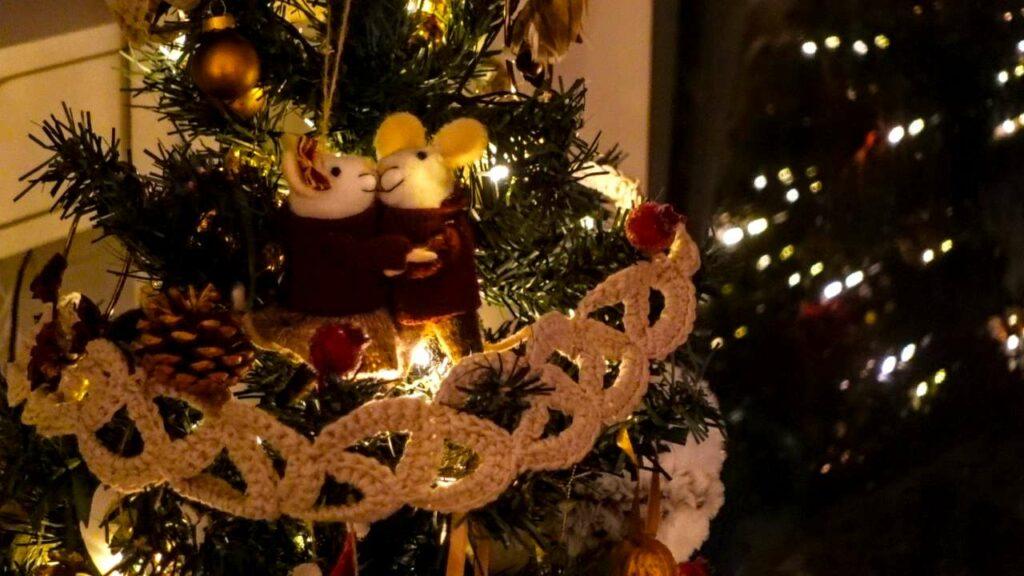
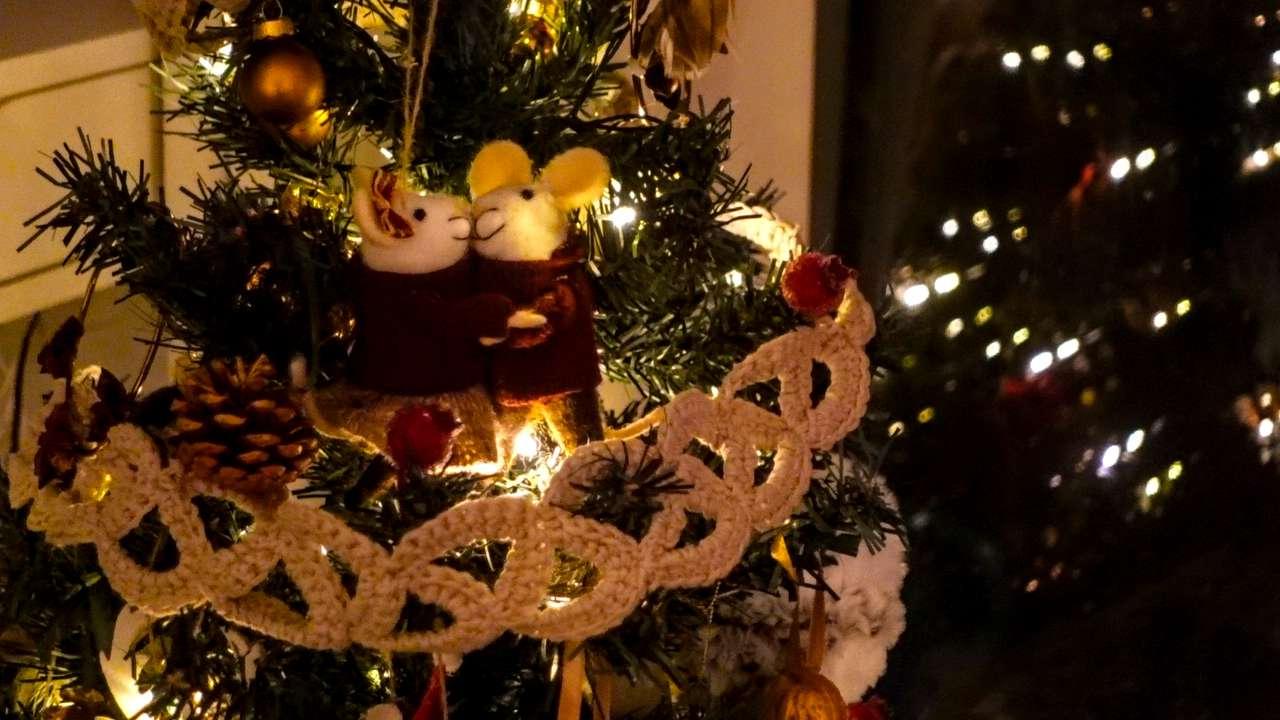
Hello, dear friends, and welcome to this year’s celebration of the winter solstice. The longest night of the year has summoned ceremony since ancient times, and in the Middle Ages, many pre-Christian rituals remained vividly present in European life. When I contemplate these symbolic rites of communion with nature—the fires lit against darkness, the evergreens brought indoors as promises of spring’s return—the image that rises most powerfully is that of the enchanted forest. And so I’ve placed it at the center of this year’s Christmas tree decoration.
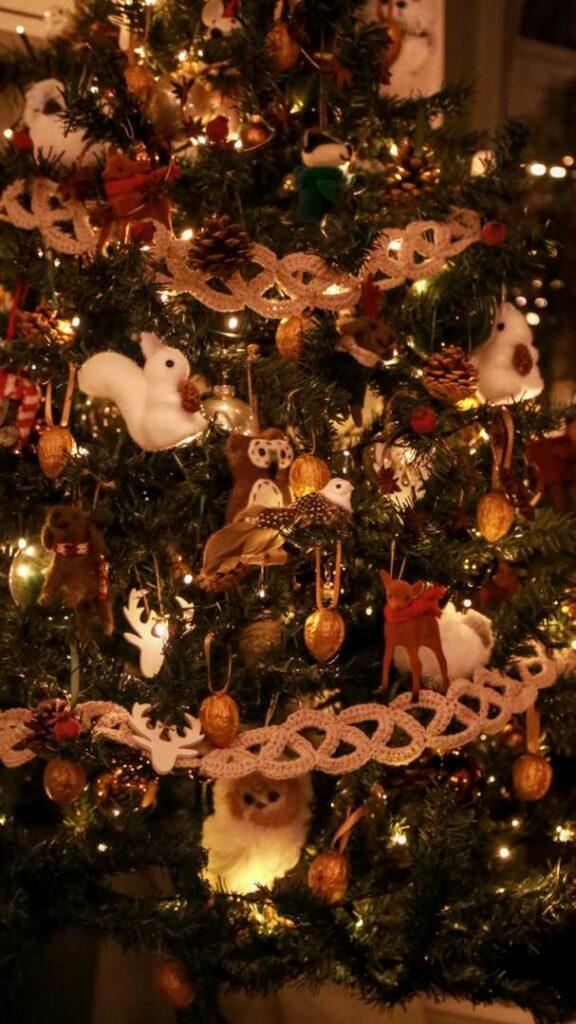
My magical woodland carries something of misty Avalon about it (a hint, perhaps, for tomorrow’s discussion), and I’ve chosen to combine carefully selected ornaments with elements of handmade charm. The result is neither strictly historical nor entirely fantastical, but rather something in between—which feels appropriately medieval in spirit.
The forest, after all, was the realm of beasts, and animals—both real and fantastic—occupied a central place in medieval imagination and art. Artists readily employed animal motifs alongside elaborate foliate designs as essential parts of their decorative vocabulary. Early medieval jewelry abounds with animal forms elongated and twisted into intricate interlaced patterns. Illuminated manuscripts often employ animal designs to enliven sacred texts, creatures prowling through margins and capitals with delightful irreverence.
The bestiary developed as a distinct literary form in twelfth-century Europe. Based on the Greek Physiologus from around the second century and enriched by Christian scholars like Saint Ambrose and Isidore of Seville, the bestiary presented a collection of animal descriptions that functioned simultaneously as natural history and moral instruction. Each creature—from the noble lion to the humble ant, from the phoenix to the manticore—carried allegorical meaning. The pelican feeding her young with her own blood became a symbol of Christ’s sacrifice; the unicorn represented purity and could only be captured by a virgin.
These texts were widely read throughout the Middle Ages and served as inexhaustible sources for artistic invention. Beyond familiar animals, bestiaries catalogued bizarre and sometimes loathsome creatures that populated the edges of the known world—or perhaps the edges of imagination. Many of these fantastic beasts appeared in medieval art, carved into church capitals, woven into tapestries, painted in manuscript margins.
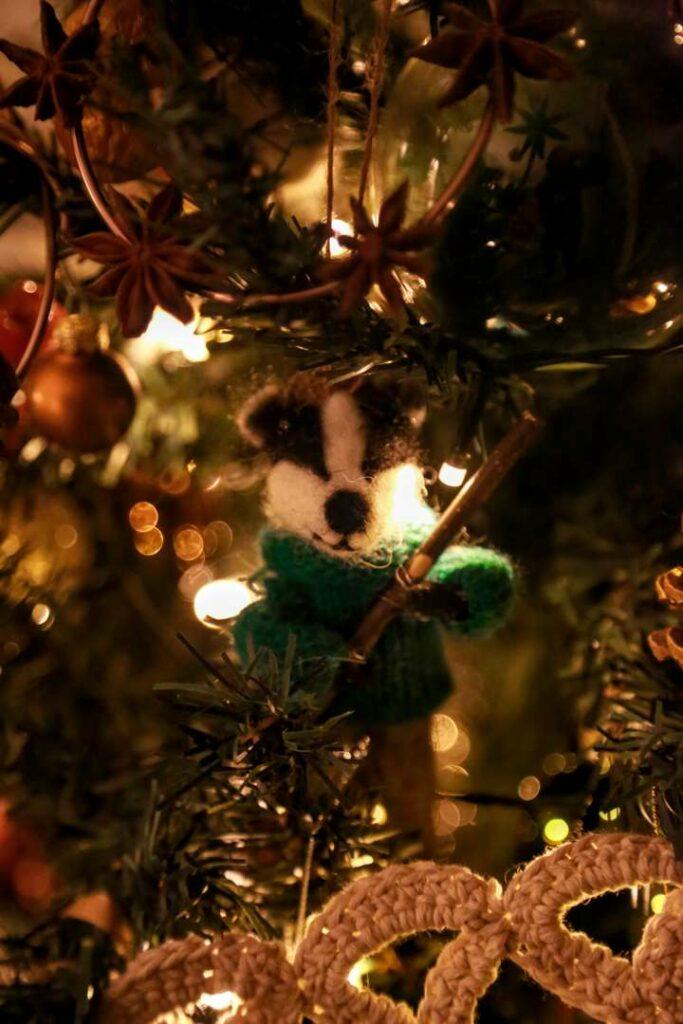
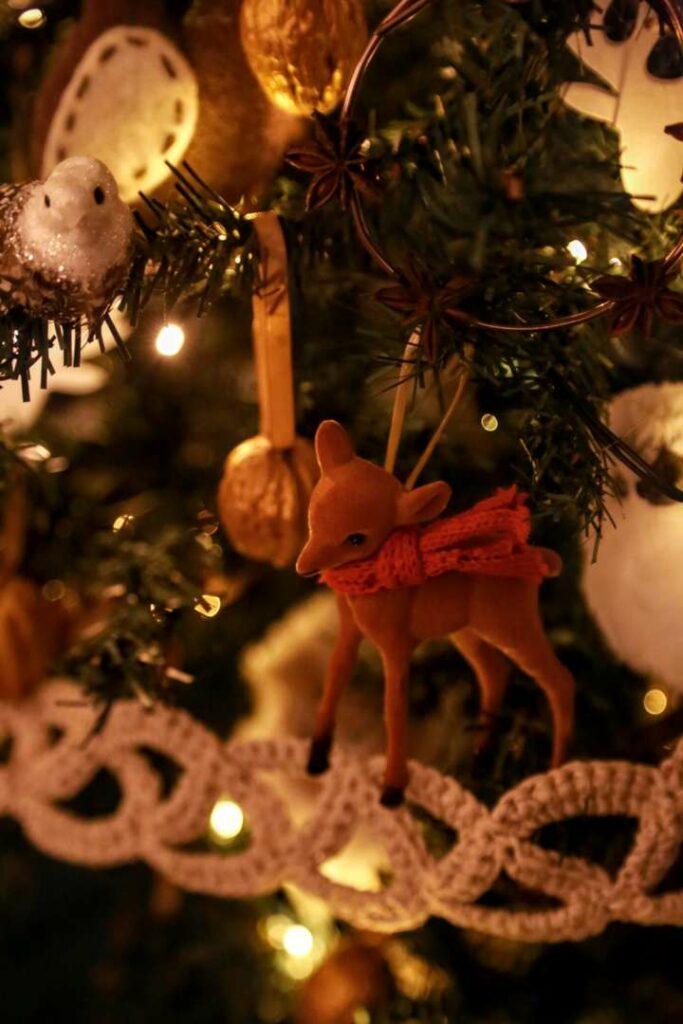
With this rich tradition in mind, I foraged through shops for animal figurines to populate my enchanted forest: deer and owls, foxes and dormice, creatures both humble and dignified. I’ve added natural elements—moss, pinecones, bare branches—to make them feel at home among the boughs. As I mentioned in our first video, Christmas trees as we know them today didn’t exist in medieval celebrations, so I’ve simply adapted the form to suit our theme.
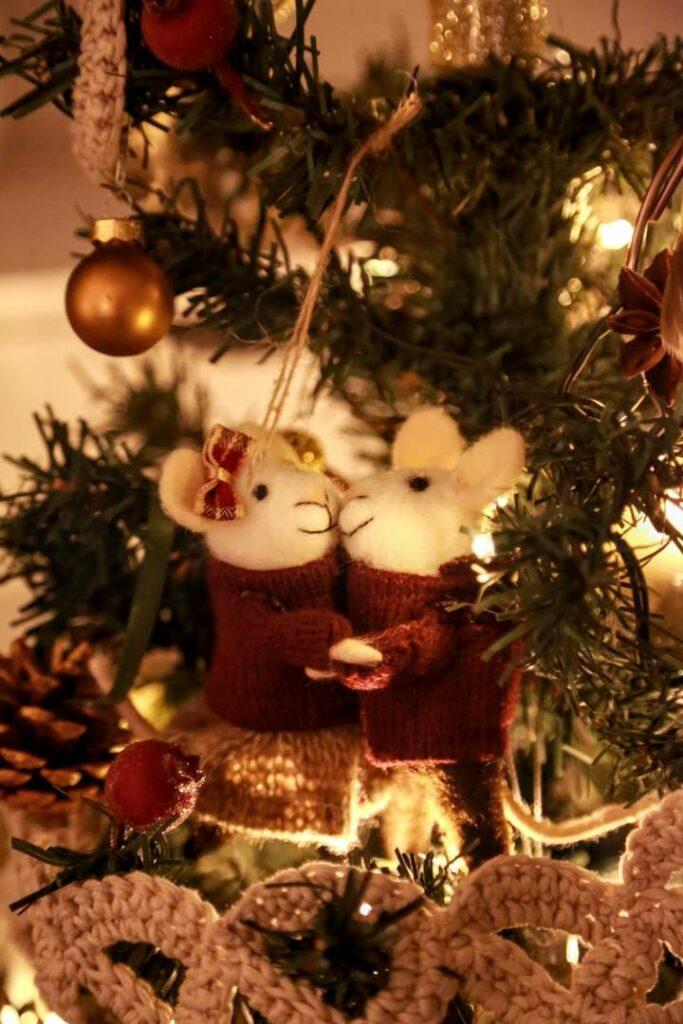

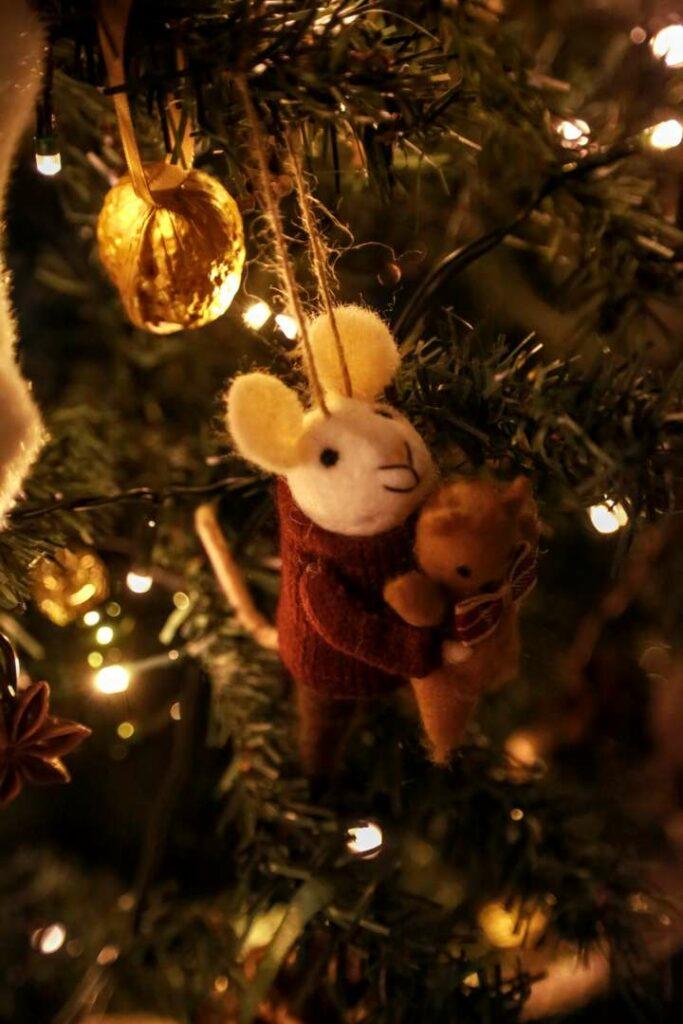

The garland draped through the branches became my winter companion during audiobook listening sessions—a pattern found online (linked below) that somehow captures that artisanal medieval quality. And the fairy lights? Simply squint slightly and they transform into fireflies that have gathered to celebrate the solstice with us. Medieval imagination was nothing if not flexible.
Reality and fiction possess a unique capacity to merge in the medieval worldview. Logic and wonder coexisted without contradiction; the natural world was simultaneously observable fact and divine symbol. Once I felt this particular magic rising from the pages of medieval texts, I decided to cultivate it deliberately in my own life. Critical thinking remains an essential skill for navigating our modern world, but alone it doesn’t nourish the soul particularly well. Fantasy, on the other hand—when guided and shaped with intention—can elevate imagination from the mundane toward the extraordinary.
This Christmas, my imagination takes me into the heart of the forest: to dance with the dormice, play gently with the deer, tuck another blanket around the sleeping badgers, and sit quietly contemplating the owl’s ancient wisdom. The enchanted forest isn’t merely decoration; it’s an invitation to dwell, however briefly, in a world where everything means more than itself.
Until tomorrow, dear friends—merry Advent, and may the returning light find you well.


Written by Alexandra Poppy
Writer, reader & curator of The Ritual of Reading
I’m Alexandra, the voice behind The Ritual of Reading. Somewhere between a stack of novels and a half-finished pot of tea, I keep finding traces of the life I want to live—slower, richer, filled with stories. The Ritual of Reading is where I gather what I love: books that linger, places with a past, and rituals that make ordinary days feel a little more meaningful. I write from Paris, where elegant bookshops and old-fashioned cafés offer endless inspiration—and I share it here, hoping it brings a spark to your own days, too.