
Belgian Advent Calendar – Day 22
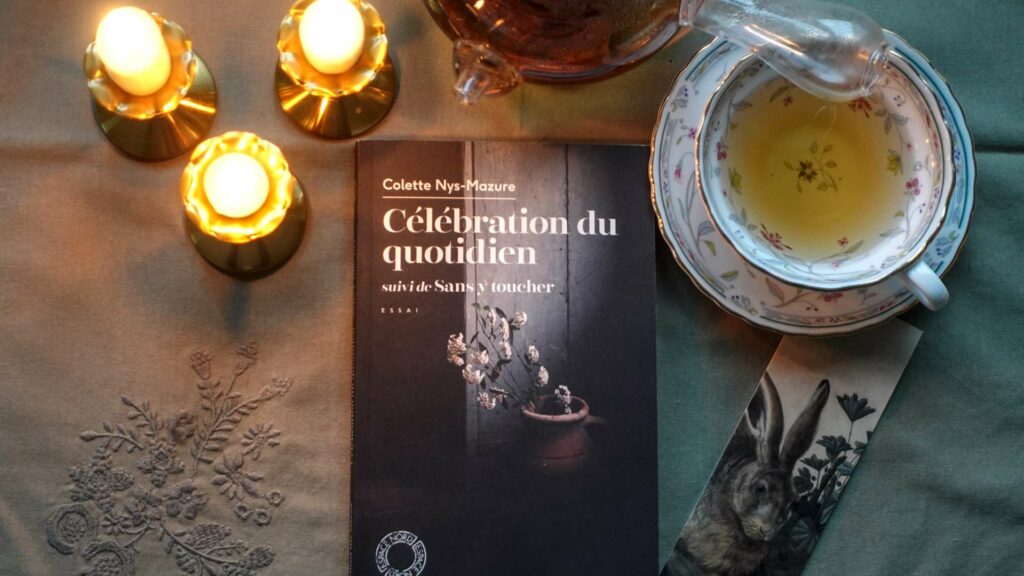
The ritual begins before the first sip—before the tea even touches the water. There’s the kettle, waiting for the right temperature. The leaves, measured carefully into the pot. The porcelain cup, chosen not for practicality but for the way it feels in your hands, thin enough to seem fragile, substantial enough to hold warmth. These small gestures matter. They’re the difference between gulping down caffeine and creating a moment worth inhabiting.
I’m making Oolong tea this afternoon—the kind that needs proper attention, proper temperature, the kind that asks you to slow down before you’ve even taken the first sip. And as I move through these motions, I’m thinking about presence, about the way certain rituals pull us out of our rushing minds and into our bodies, into the room we’re actually standing in, into the life we’re actually living.
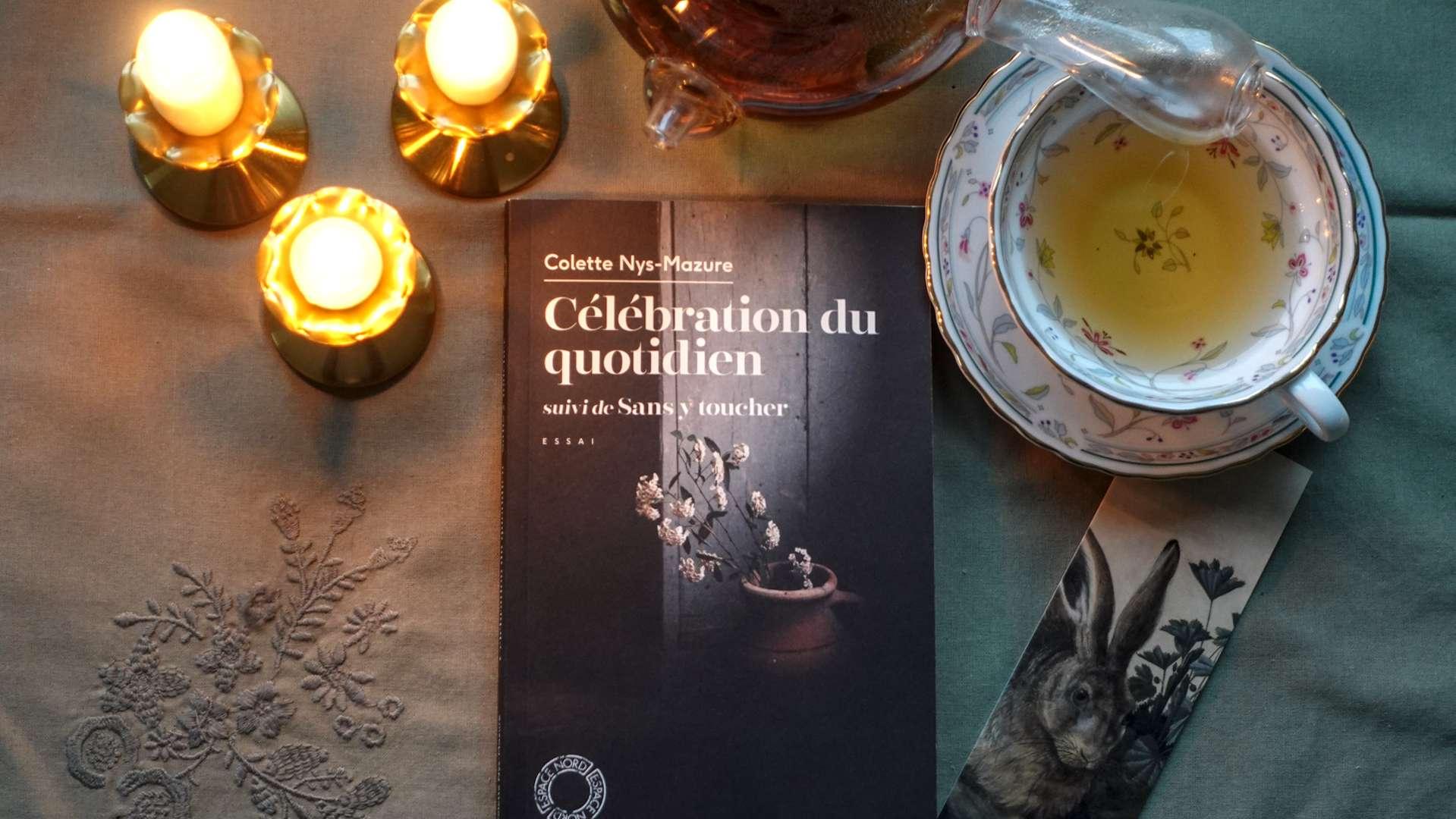
Today we’re talking about Colette Nys-Mazure, and specifically her collection Célébration du quotidien—translated into English as Celebration of the Everyday.
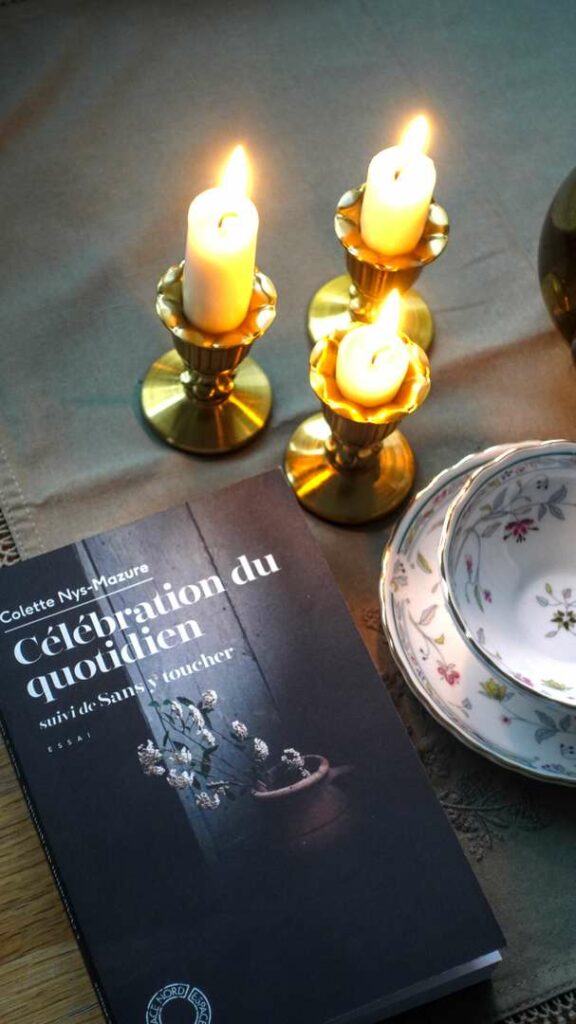
Colette Nys-Mazure is a Belgian poet and essayist, born in 1939 in Brussels, though she spent much of her life in Tournai. She’s written over eighty books—poetry, essays, children’s literature, spiritual reflections—and has become one of Belgium’s most beloved literary voices. Her work has this quality of luminous simplicity, the kind of writing that looks easy until you try to do it yourself and realize how difficult it is to speak about ordinary things without diminishing them, without flattening them into cliché or sentimentality.
Celebration of the Everyday is a collection of essays about common moments in our days. And when I say common, I mean it in the truest sense—the things we all experience but rarely pause to acknowledge. Making a cup of tea. The particular quality of morning light through a window. The sound of leaves moving in the wind. The texture of hand cream absorbed into skin. The weight of silence in a room. The warmth of a cat’s fur under your palm.
These aren’t essays about finding silver linings or forcing gratitude where it doesn’t naturally exist. Nys-Mazure isn’t asking us to perform happiness or to pretend that every moment sparkles with manufactured joy. What she’s offering is something quieter and more sustainable—an invitation to notice, to be present, to recognize that being alive means having access to sensory experience, and that this access itself is the miracle.
There’s a cup of tea in front of me now. Steam rising in patterns I’ll never see again. The pale amber-gold of the liquor catching the light. The smell—orange blossom, slightly sweet, complex in ways I don’t have language for. This moment will pass. It’s already passing. But right now, it’s here, and I’m here with it, and Nys-Mazure would say that’s enough. That’s the celebration.
I think we often misunderstand what it means when a book promises to celebrate the everyday. We hear “celebration” and imagine something performative, something that requires visible enthusiasm, outward expressions of delight. We think we’re being asked to be relentlessly positive, to transform ourselves into people who exclaim over every sunset and dance through grocery stores. And when we can’t sustain that—because of course we can’t—we feel like we’ve failed at something fundamental.
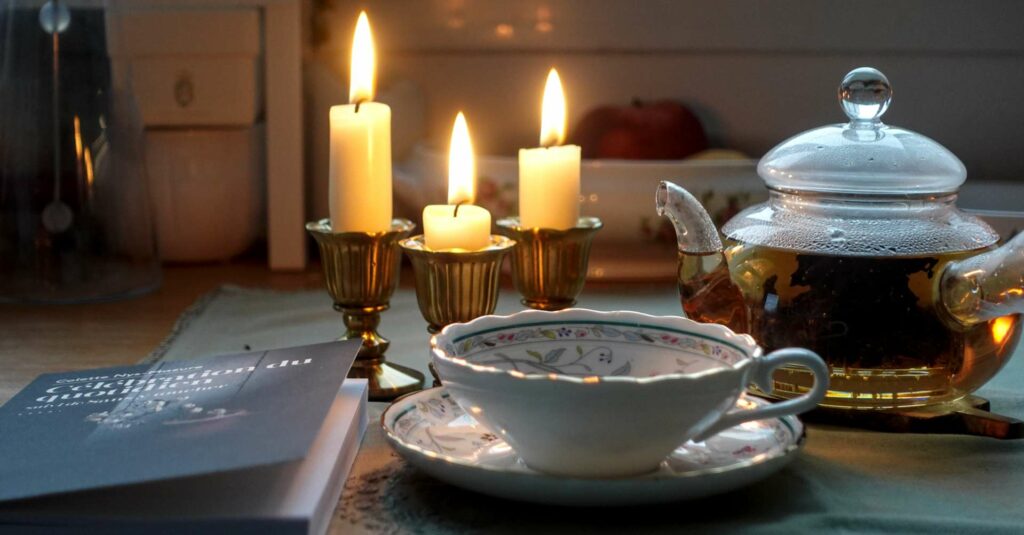
But this past month, reading Belgian authors and walking through Belgian cities and meeting Belgian people, I’ve been learning a different understanding of joy. There’s a certain consistency in the Belgian character that I find extraordinarily balanced. It’s not about emotional extremes or dramatic displays. It’s about a steady, reliable presence. A commitment to showing up fully to life without needing to announce it constantly. A kind of joy that doesn’t require volume.
Nys-Mazure embodies this perfectly. Her essays are quiet. They’re observant. They sit with experience rather than rushing past it toward some conclusion or lesson. She writes about silence not as something to fill or fix, not as the absence of sound but as its own kind of presence. She writes about winter light, about the ritual of buttering bread, about watching rain, about the particular pleasure of a book’s weight in your hands.
What makes this possible—what makes this collection feel like something other than a self-help book dressed up in literary language—is that Nys-Mazure writes as a poet. She has a poet’s attention to language, to rhythm, to the way a single word can open into unexpected meaning. She doesn’t explain or instruct. She shows. She places images beside each other and trusts you to feel what connects them.
Some of the essays take the form of letters, which made me smile when I discovered them—partly because I’ve been writing my own daily Advent letters for the past twenty-two days now, small reflections meant to arrive in someone’s inbox like a quiet moment of pause in the middle of everything else. There’s something about the letter format that creates intimacy, that makes the reader feel addressed directly rather than lectured at. Nys-Mazure understands this instinctively.
Reading these essays feels like spending time with someone who knows how to be quiet without being withdrawn, how to be fully present without being overwhelming. It’s the literary equivalent of sitting with a friend in comfortable silence, both of you watching the same view, not needing to narrate it to make it real.
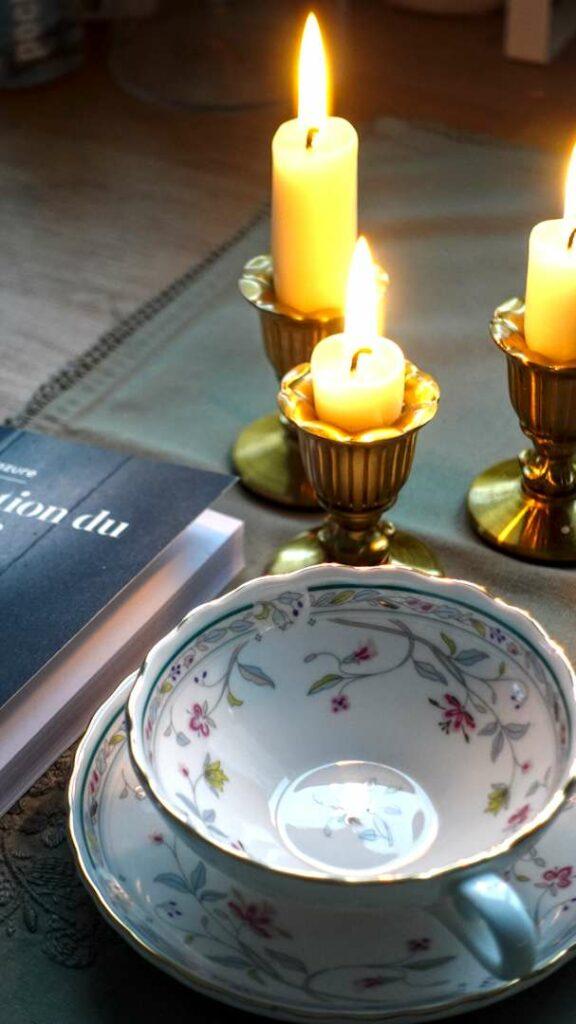
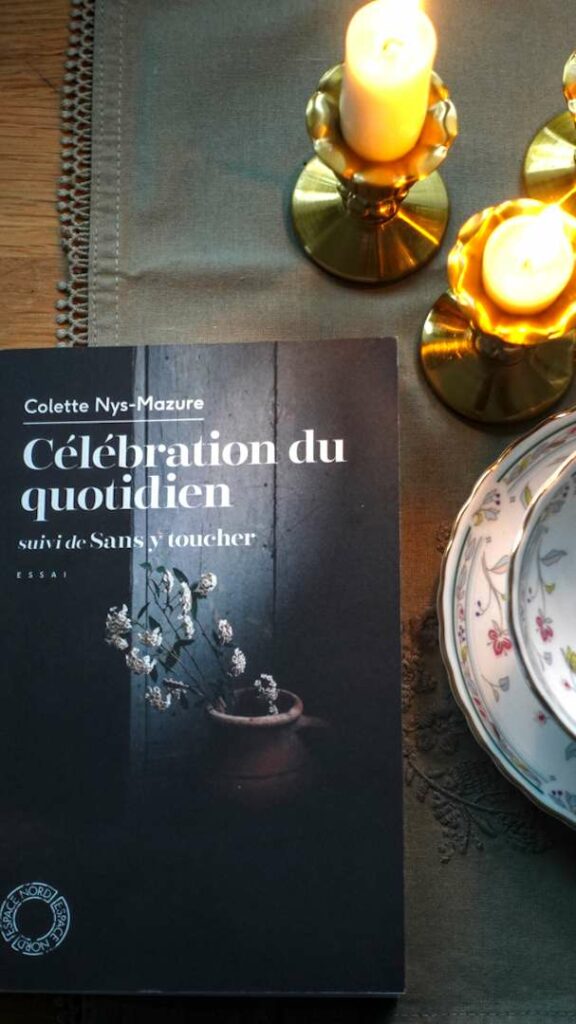
This is what Célébration du quotidien offers: permission to find sufficiency in what already exists. Not as a way to avoid working toward change or improvement, not as an excuse for complacency, but as a foundation. You can’t build anything lasting if you’re constantly convinced that life begins only after you’ve achieved or acquired or become something other than what you are right now.
So today, I’m inviting you to do what these essays ask of us: pause. Notice. Let your attention rest on something simple—the temperature of air on your skin, the sound of your own breathing, the way light changes throughout the day. You don’t need to feel anything in particular about it. You don’t need to transform it into content or meaning or lesson. You just need to be there with it, fully, for however long the moment lasts. This is, essentially, what Advent is all about. Whether you pause for religion or personal contemplation, it’s a time to get out of your ruminating mind, and contemplate the larger vision of our common existence that’s found in these ordinary moments.
See you tomorrow for one of our last Belgian treasures.
Until then, Merry Advent.

During the 2025 Advent season, each post on The Ritual of Reading was accompanied by a Daily Advent Letter, sent privately to subscribers. These letters echo the theme of the article, but take a more personal and reflective path — closer to the hesitations, intuitions, and emotions that accompanied the writing.
What follows is the Daily Advent Letter that was written alongside this post.
| December 22nd |
| Dear Friend, There’s a particular kind of silence that arrives in winter, one that feels thicker than the others. Not the awkward silence of a room where something has gone unsaid, but the kind that settles gently, as if the world itself has decided to speak more quietly for a while. I noticed it this morning while waiting for the kettle to boil. No music, no radio, no hurry. Just the low, almost imperceptible hum of heat building, the house still half-asleep. It struck me how rarely we allow silence to exist without immediately trying to fill it—with sound, with words, with explanations. As if silence were a problem to be solved rather than a presence to be welcomed. Reading Colette Nys-Mazure these past days has made me more attentive to these moments. She writes about silence not as emptiness, but as a container—something that holds experience rather than erasing it. The pause between gestures. The space around a thought. The way a room feels when no one is speaking, yet everything feels said. I think we’ve learned to associate silence with lack. No conversation means loneliness. No noise means boredom. No immediate reaction means disinterest. But there is another kind of silence, one that doesn’t diminish anything. A silence that allows sensations to come forward: the weight of a cup in your hands, the faint sound of breath, the subtle shift of light along a wall. This afternoon, as I poured tea and watched the steam rise, I realized that silence is often the condition that makes these small rituals possible. Without it, everything becomes performance. With it, even the most ordinary gesture gains depth. Silence doesn’t ask us to withdraw from life—it asks us to inhabit it more fully. Perhaps this is why Advent feels so closely tied to silence. Not as restraint or deprivation, but as preparation. A way of clearing space. Of learning to listen again—not only to others, but to the quiet undercurrent of our own lives that’s always there, waiting. Tonight, I hope you allow yourself a moment of silence that feels generous rather than empty. A silence that asks nothing of you except that you stay with it for a little while. Until tomorrow, Alexandra |

Written by Alexandra Poppy
Writer, reader & curator of The Ritual of Reading
I’m Alexandra, the voice behind The Ritual of Reading. Somewhere between a stack of novels and a half-finished pot of tea, I keep finding traces of the life I want to live—slower, richer, filled with stories. The Ritual of Reading is where I gather what I love: books that linger, places with a past, and rituals that make ordinary days feel a little more meaningful. I write from Paris, where elegant bookshops and old-fashioned cafés offer endless inspiration—and I share it here, hoping it brings a spark to your own days, too.