
Belgian Advent Calendar – Day 21
The winter solstice is one of the most meaningful moments of the year for me. There’s something about this particular threshold—the longest night, the promise of returning light—that puts me deeply in tune with the rhythms of nature. I find myself ready to embrace the soft hibernation, the reflective season of living indoors, of making plans for the rebirth that spring promises to bring.
For each Advent Calendar, I try to find a tradition or concept in the culture I’m exploring that honors this season, that speaks to what it means to turn inward when the world outside grows dark and cold. And in Belgium, my research opened up a whole world I didn’t even imagine. Looking closely into Flanders, I discovered what feels to me like the essence of the Belgian winter solstice—a way of being that transforms the hardship of winter into something not just bearable, but beautiful.
There’s a Flemish and Dutch word that seems to resist easy translation, but that defines life in Flanders better than perhaps any other: gezelligheid. I’m butchering the pronunciation, I’m sure, but stay with me because this concept is worth understanding.
Depending on context, gezelligheid can mean conviviality, coziness, or fun—but it’s really all of these at once and something more besides. It’s used to describe time spent with loved ones, catching up with friends, a general togetherness that gives off a warm feeling. It sounds exactly like what we’re all searching for at Christmas, doesn’t it? That elusive sense of rightness, of being exactly where you’re meant to be, with exactly who you’re meant to be with.
But here’s what fascinates me: gezelligheid isn’t reserved for special occasions. It’s woven into the everyday fabric of Flemish life, a philosophy of creating warmth and connection even—especially—when the world outside is grey and cold and inhospitable.
And the best place to experience gezelligheid in its purest form? A traditional Flemish brown café.
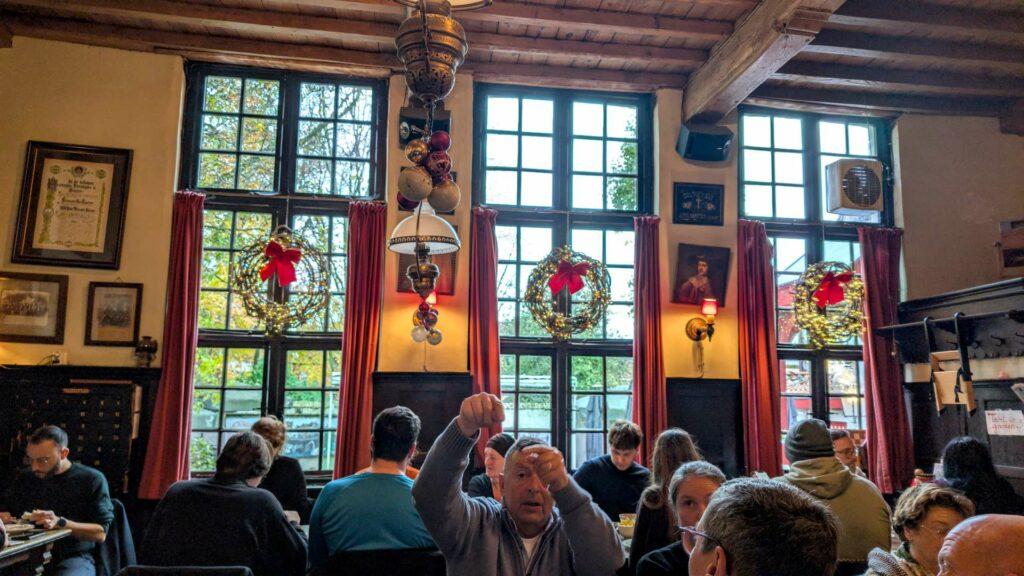
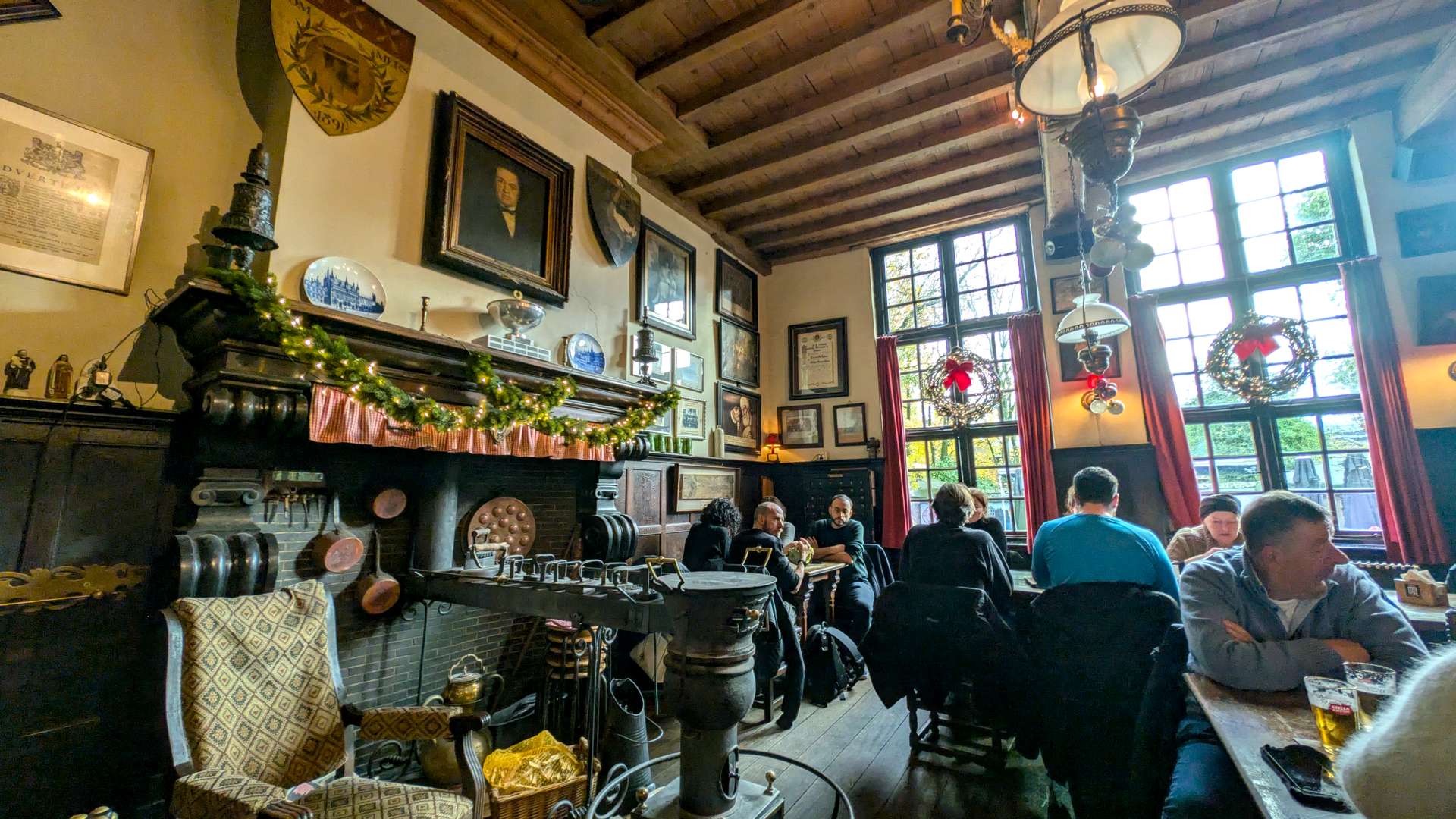
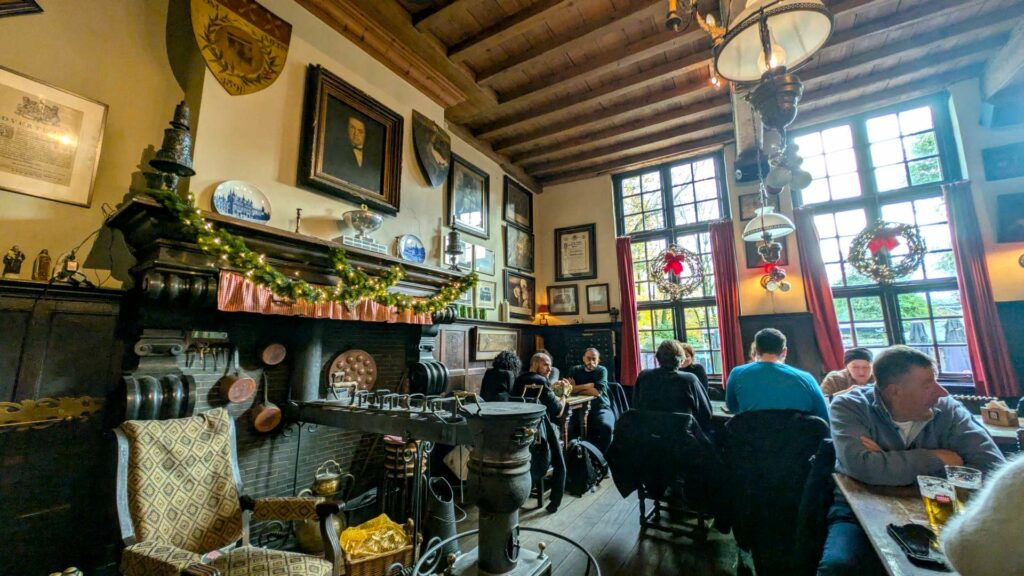
I’ve come to one of the oldest in the country: Café Vlissinghe in Bruges. These types of cafés—named for the dark, tobacco-stained wood that lines their walls—were seen as an extension of your own living room. A place where you would catch up with friends and family, share a pint or two, relax after a hard day’s work, and connect with your local community. Not a destination for a special night out, but a second home you’d visit as naturally as you’d return to your own hearth.
Café Vlissinghe has been serving that role since 1515. Think about that for a moment—over five centuries of neighbors gathering, of stories shared, of warmth offered against the Flemish winter. The building itself seems to hold all those years in its bones: low ceilings darkened by centuries of pipe smoke, worn wooden tables marked by generations of elbows and beer glasses, windows that look out onto a garden that has seen more history than most museums.
I don’t know many pubs that have printed out a book on their own history, but then again, not many pubs can trace their lineage back more than 500 years. Reading through that history, I discovered small, perfect details—like Germaine Absolon, who owned the café in the 1950s. On Christmas Eve, she would attend midnight mass together with her customers, and upon returning, cold and contemplative, she would serve everyone her famous sweet pea soup. Can you imagine? The whole community moving together through the rituals of the season, the café owner feeding her customers as naturally as you’d feed your own family.
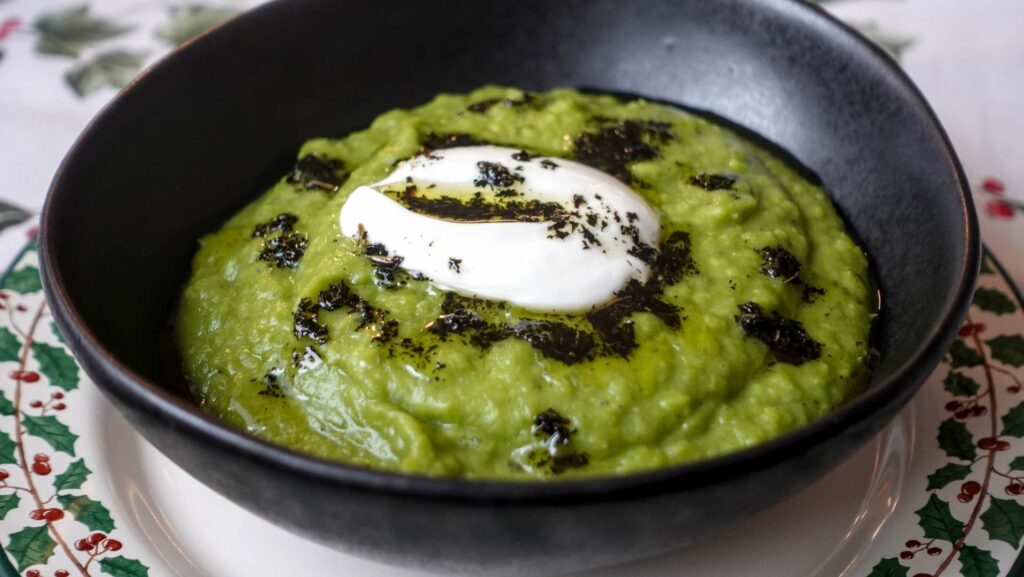
So in honor of Germaine, I’m preparing my own version of a pea soup to serve on Christmas Eve. My homemade chicken stock is the hidden trick, and the fried mint olive oil topping is the gem of the recipe—I’ve written everything down for you over on the Reader’s Table section, you’ll find it HERE.
When I visited Vlissinghe almost a month ago, I chose a very traditional Flemish lunch: meatballs and mash in a dark beer sauce. Absolutely memorable. The kind of simple, staple recipe you would usually find in a brown café—nothing fancy, nothing trying to impress, just honest food done exactly right. This is simplicity in its most delicious form, the kind of meal that reminds you that comfort doesn’t need to be complicated.
The fire was roaring inside the most original little log burner, dating back to the 19th century. I was already pretty tired from walking through Bruges all morning, so I drank a local alcohol-free beer. But we cannot end the Belgian Advent Calendar without speaking of beer, can we?
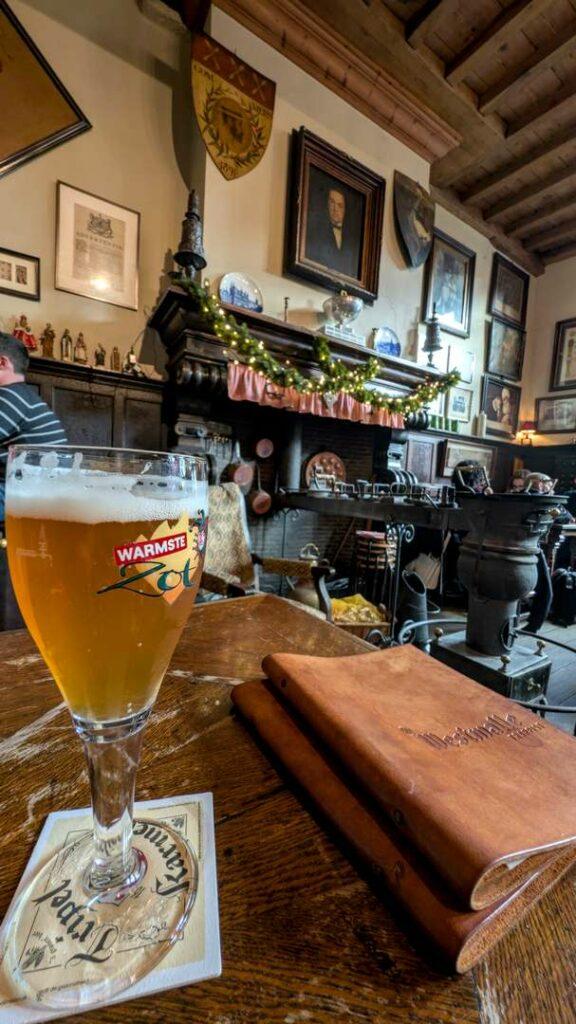
Belgium’s relationship with beer is something that goes far beyond what most of us think of when we hear the word “beer culture.” This is a country with over 1,500 different beers, brewed in an astounding variety of styles that have been refined over centuries. Unlike the mass-produced lagers that dominate much of the world’s beer market, Belgian beers are often compared to wines for their complexity, their terroir, their individual character.
There are the Trappist beers, the saisons, the strong golden ales, the dubbels and tripels, the wheat beers spiced with coriander and orange peel. Belgium has turned beer-making into an art form, with each region, each brewery, each style telling its own story about the land and the people who’ve lived there.
And then there’s my personal favorite: the Kriek Lambic.
Lambic beer is somewhat of a miracle—a beer in which yeast is not added by the brewer but collected from the air itself. The lambic undergoes spontaneous fermentation, with wild yeasts naturally present in the air of the Senne Valley, just west of Brussels. It’s an act of faith, really, opening your brewing vessels to the atmosphere and trusting that the right microorganisms will find their way in.
Lambic has by far the longest fermentation process in all of Belgian brewing. Where other types like lagers, Trappists, or saisons might take anywhere between four weeks to four months, lambic has an average fermentation period of three years. Three years of patient waiting, of slow transformation, of flavors deepening and mellowing in oak barrels.
And coincidentally—or perhaps not coincidentally at all—the Senne Valley is also where you find vast orchards of Morello cherries. These sour cherries are added to the lambic during the fermentation process, adding flavor, tartness, and a little sweetness. The result is kriek: a beer that tastes like nothing else in the world. This is nothing like those beer cocktails with added syrups you might have tried. This has real depth of flavor, a unique character that tells the story of Belgian innovation and tradition, of a specific place and its particular gifts.
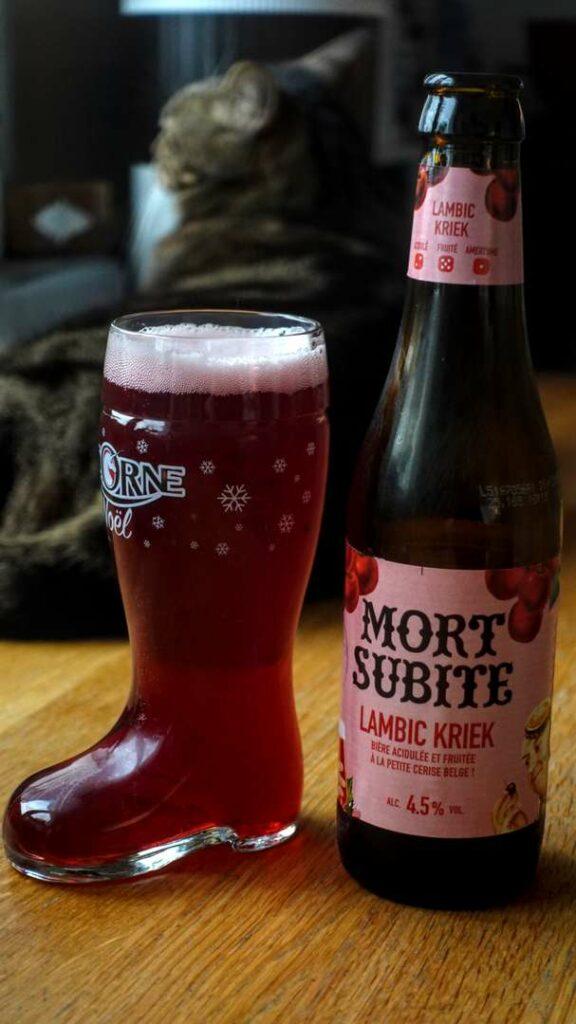
But no matter whether you choose the pea soup or the meatballs, the kriek or the alcohol-free pint, the real experience of sitting in a brown café goes deeper than what you’re eating or drinking. It’s about understanding the essential role these places have played for communities that knew how to keep their spirits high during hardship, through wars, through occupation, through simply the grinding reality of bad weather and long winters. These cafés became repositories of gezelligheid—places where warmth was not just a matter of temperature but of human connection.
For this long threshold between darkness and light, when our spirits are challenged by difficult thoughts, sometimes even fear or regret about the year that’s ending, let us remember that coziness awaits. That conviviality is not conditional on seasons or circumstances. That winter might actually be our best chance to reconnect with the warm feeling of togetherness.
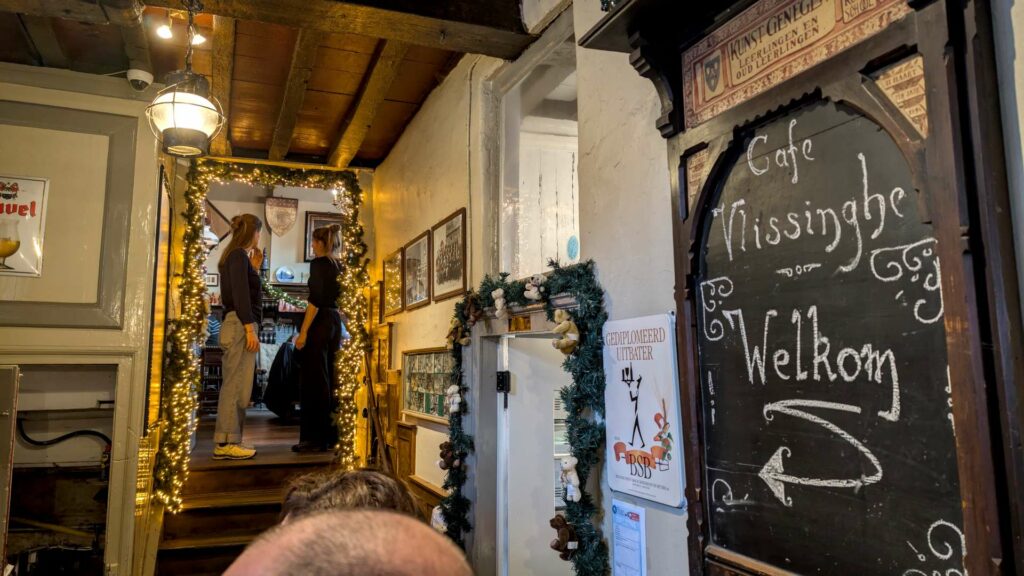
This might look like the Flemish gezelligheid, surrounded by loved ones in a brown café with a fire roaring and good beer flowing. But you can also make it your own. The coziness of your own interior, carefully tended. The togetherness you feel when reading an author who feels like a kindred spirit. The coming-back-home you cultivate with each solitary, mindful moment you spend in your own company.
Gezelligheid isn’t just about being with others—it’s about creating spaces, internal and external, where warmth can flourish. Where you feel fundamentally safe and seen and at home. Sometimes that’s a centuries-old café in Bruges. Sometimes it’s your own reading chair with a good book and a cup of tea.
May this winter solstice be your ritual of togetherness with all that brings peace and serenity into your life. Tomorrow, the light will start to return, little by little, and you will have a new perspective on what it means to go through winter with gezelligheid—that untranslatable feeling that somehow makes the darkness beautiful.
Until tomorrow, happy Advent and a merry winter solstice!

Written by Alexandra Poppy
Writer, reader & curator of The Ritual of Reading
I’m Alexandra, the voice behind The Ritual of Reading. Somewhere between a stack of novels and a half-finished pot of tea, I keep finding traces of the life I want to live—slower, richer, filled with stories. The Ritual of Reading is where I gather what I love: books that linger, places with a past, and rituals that make ordinary days feel a little more meaningful. I write from Paris, where elegant bookshops and old-fashioned cafés offer endless inspiration—and I share it here, hoping it brings a spark to your own days, too.