
Belgian Advent Calendar – Day 16
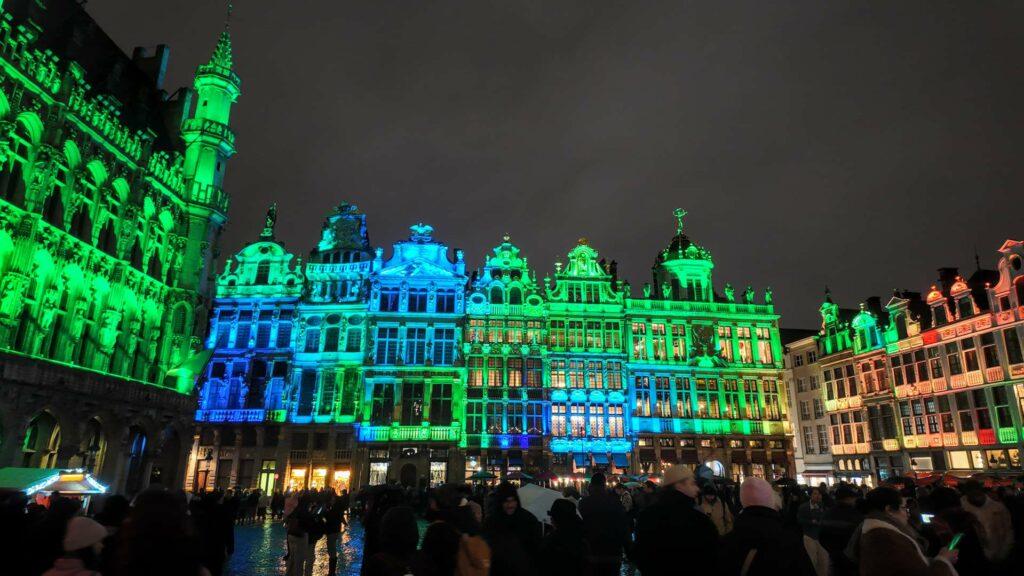
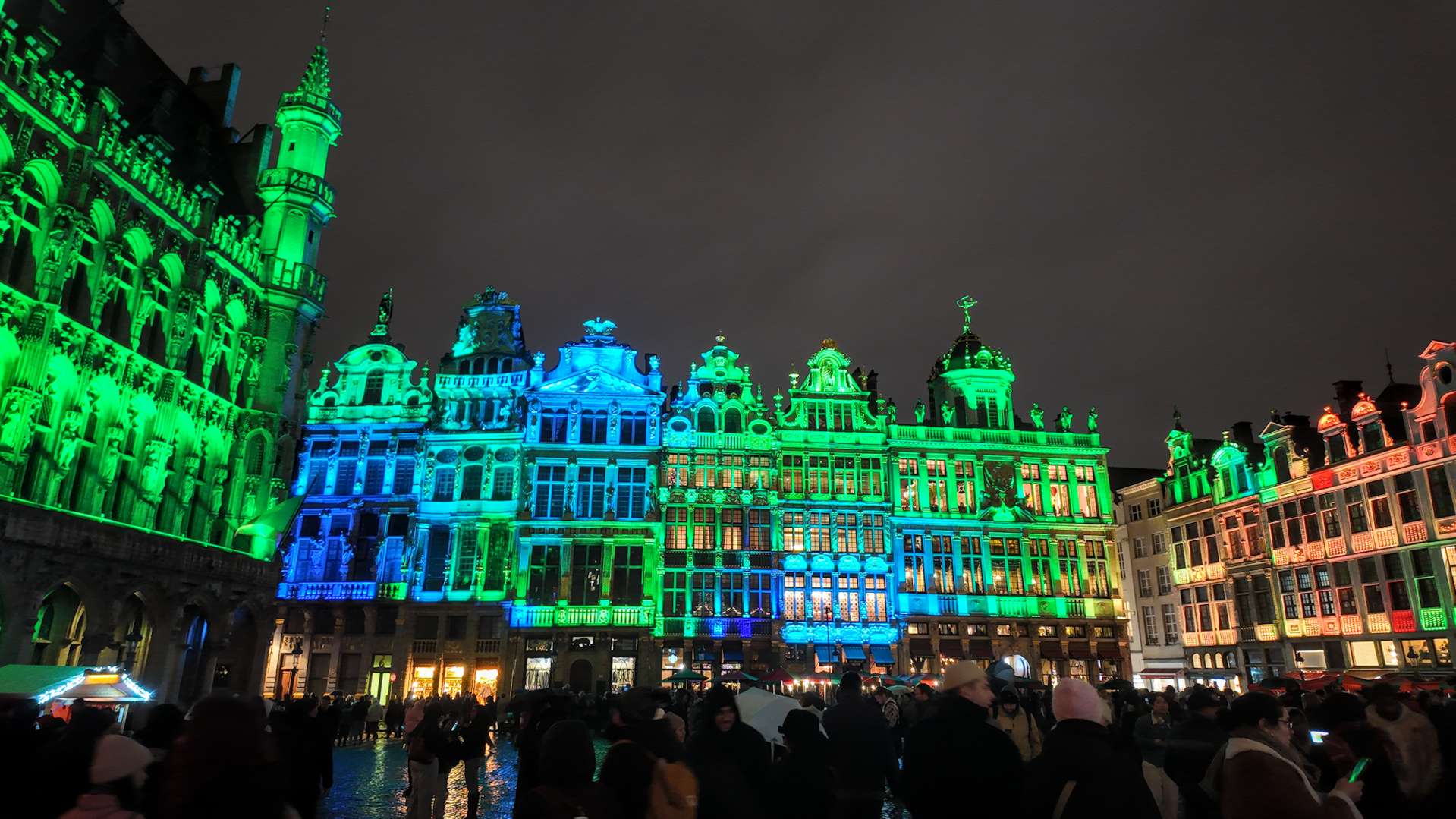
When the sun sets over Brussels in December, the city doesn’t retreat into darkness—it transforms. The cold descends, sharp and bracing, and suddenly the Grand-Place becomes something else entirely: a theatre of light, a dreamscape projected onto centuries-old stone.
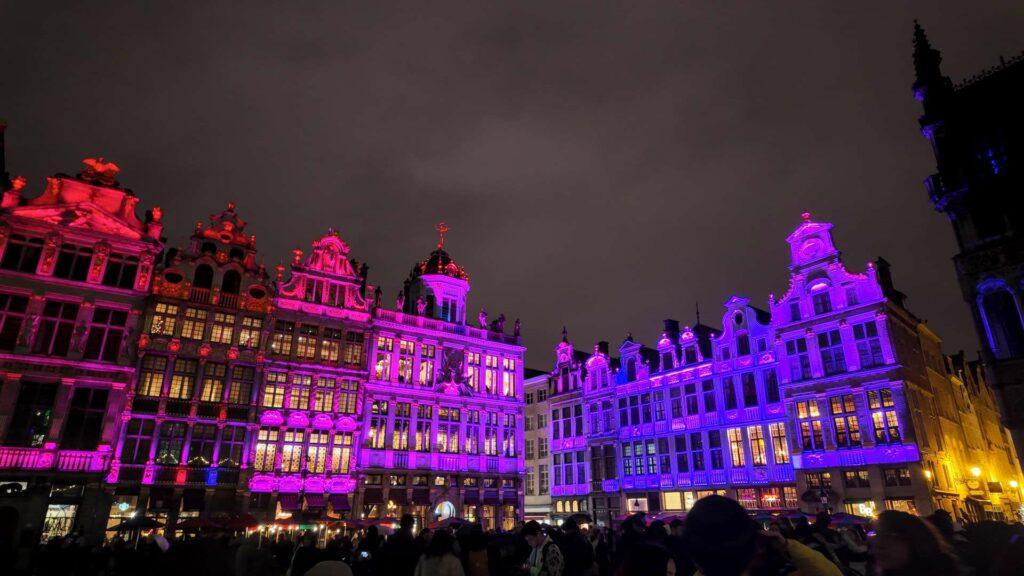
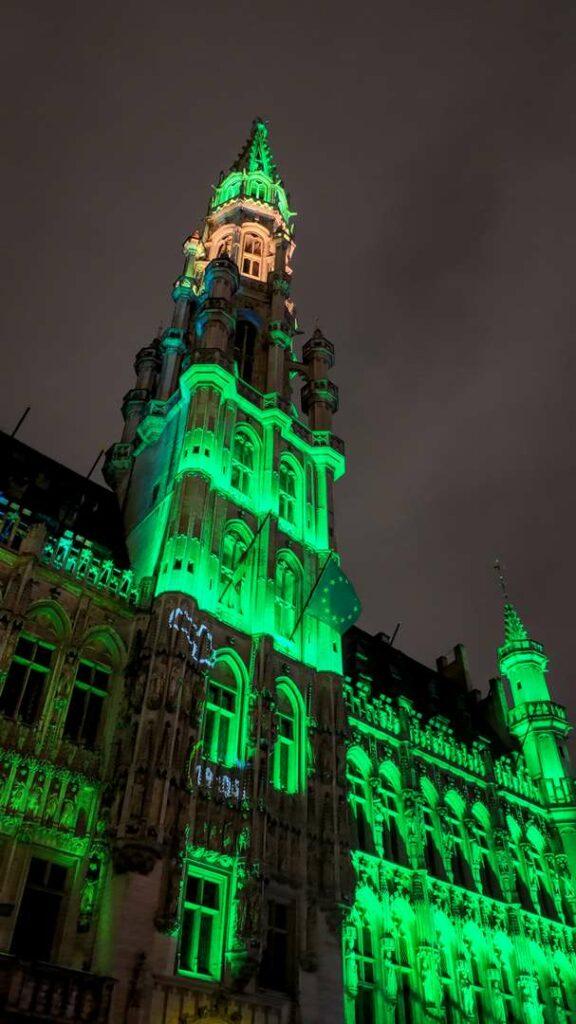
I went to see the famous light show, the one that draws crowds year after year, that makes visitors tilt their heads back in wonder as animations dance across the façade of the Gothic Town Hall. This year, though, the magic was imperfect. Technical difficulties meant half the façade remained stubbornly green, motionless—a reminder that even our most carefully orchestrated spectacles are vulnerable to the whims of wiring and weather. But somehow, this made it more Brussels. Not quite polished, not quite seamless, but undeniably charming. The other buildings of the square glowed brilliantly, their gilded details catching the light, and I found myself thinking: perhaps this is the real attraction. Not the market stalls or the choreographed projections, but simply standing in this medieval square at night, wrapped in winter air, watching stone and light converse across the centuries.
Many visitors don’t realize that for Bruxellois, the illuminated Grand-Place is the true heart of the Advent season—more than any Christmas market, more than any commercial spectacle. It’s the square itself, dressed in light, that captures something essential about December here. I stood there for a while, letting the cold settle into my bones, watching families gather and couples lean into each other for warmth. There’s something about winter nights that strips a city down to its essence—no distractions, no softening light of summer. Just stone, cold air, and the people who choose to be there anyway. And in that stillness, I found myself thinking about another presence that haunts this city after dark.

Brussels by night has always had another kind of light—one that sings from within, melancholic and fierce. I’m speaking, of course, of Jacques Brel.
Brel was not born in Brussels, but he became its troubadour, its conscience, its most eloquent ghost. His songs are saturated with the city’s spirit: its grey skies and golden hearts, its capacity for both tenderness and devastation. When you walk through Brussels at night, especially in winter, you can almost hear him—not the recordings, but the voice, that raw, theatrical urgency.
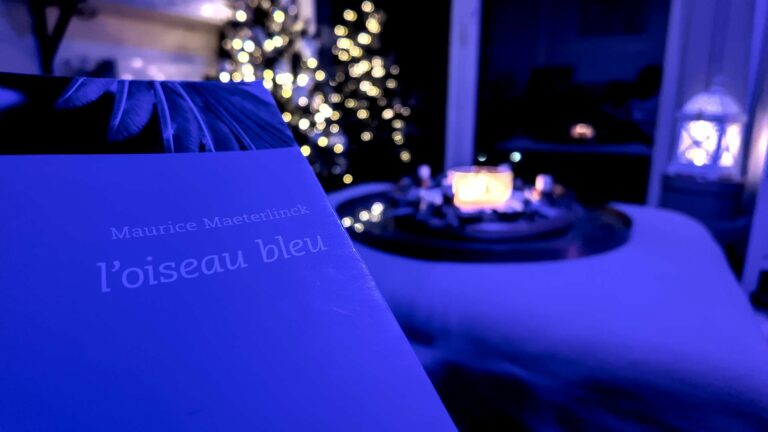
I brought along my French edition of his lyrics, published as poetry, which is exactly what they are: exquisite, unflinching, alive. Brel wrote about longing and loss, about the flat light of the north, about love that arrives too late or leaves too soon. And somehow, reading his words in the cold, in a city he both loved and fled from, they felt closer than ever.
Here is a Best Of playlist with Jacques Brel songs, this is the perfect Belgian ritual to accompany your winter evenings.
Check it out by clicking here.
There’s a particular ache to Brel’s Brussels—a city of departures and returns, of grey mornings and golden evenings in smoky cafés. Standing in the Grand-Place that night, I understood it a little better. This is a city that doesn’t announce itself loudly, doesn’t compete for your attention. It simply exists, with all its imperfections and its quiet dignity, and either you feel it or you don’t.
By the time I left the square, my fingers were numb and my cheeks burning from the cold. Which is precisely when Brussels offers its sweetest consolation. Because this is their land, and because even melancholy needs sugar, there are the waffles.Not just any waffles—the Gaufre de Bruxelles, the Brussels waffle, which is an entirely different creature from its Liège cousin.
The Brussels waffle is light, airy, almost delicate. It’s made with a liquid batter of milk, eggs, butter and flour, which gives it that characteristic crispness on the outside and cloudlike softness within. The pockets are deep, designed to cradle toppings: whipped cream, strawberries, chocolate, powdered sugar dusted like fresh snow.
The Brussels waffle is meant to be eaten with a knife and fork, often at a café, as a moment of quiet indulgence. It’s more refined, more composed—less a street snack than a small ceremony. At the winter fair, though, ceremony gives way to joy: a waffle in hand, steam rising into the night, sweetness cutting through the cold.
I bought mine from a small stand near the square, the vendor’s hands moving with the practiced efficiency of someone who’s made thousands. The first bite was exactly what I needed—warmth, sweetness, simplicity. A small kindness after the cold. It struck me then that this is what Brussels does best: it gives you beauty and melancholy in equal measure, then offers you something sweet to carry you home.
Brussels by night in winter is all of this at once: light shows and timeless squares, the ghost of a singer whose voice still echoes, and the simple pleasure of warm dough and sugar under a dark sky. It’s a city that doesn’t try too hard to dazzle, but somehow—through accident, through history, through heart—it does.
Join me tomorrow for another literary discovery of Belgian charm.
Until then, Merry Advent!

Written by Alexandra Poppy
Writer, reader & curator of The Ritual of Reading
I’m Alexandra, the voice behind The Ritual of Reading. Somewhere between a stack of novels and a half-finished pot of tea, I keep finding traces of the life I want to live—slower, richer, filled with stories. The Ritual of Reading is where I gather what I love: books that linger, places with a past, and rituals that make ordinary days feel a little more meaningful. I write from Paris, where elegant bookshops and old-fashioned cafés offer endless inspiration—and I share it here, hoping it brings a spark to your own days, too.