Belgian Advent Calendar – Day 1
Welcome back, dear friends, to the fifth edition of our Advent Calendar—a tradition that has become one of the great joys of my year, and one I’m deeply grateful to share with you. After wandering through Christmas Classics, Scandinavian winters, Austrian elegance, and the mysteries of the Middle Ages, this year we turn our attention to Belgium: a country of quiet complexity, layered histories, and remarkable cultural richness that has, I confess, remained too long at the margins of my reading life.
What better way to remedy this than a month-long immersion into Belgian literature, art, customs, and those culinary delights for which the country is justly celebrated?
Nestled between France, Germany, and the Netherlands, Belgium has long been misunderstood—dismissed as a smaller France or a lesser Holland. Yet its history tells a different story: one shaped by Spanish rule, Austrian governance, Dutch dominance, and French influence. From this convergence of powers emerged something singular: a cultural diversity that defies easy categorization. The country’s genius lies precisely in this complexity, in its refusal to be simply one thing.
Nowhere is this more evident than in Belgium’s linguistic landscape. The northern region of Flanders speaks Flemish, close kin to Dutch, while the southern territory of Wallonia converses in French. A small German-speaking community anchors the east, and Brussels itself exists as a bilingual capital, constantly negotiating between two linguistic worlds. This is a nation that lives in translation—from railway station screens to elevator safety notices, Belgium is structured as a conversation between languages. And this duality, naturally, shapes its literature as well. Throughout this series, we’ll move between French-speaking and Dutch-speaking authors, discovering what distinguishes their voices and what binds them together.
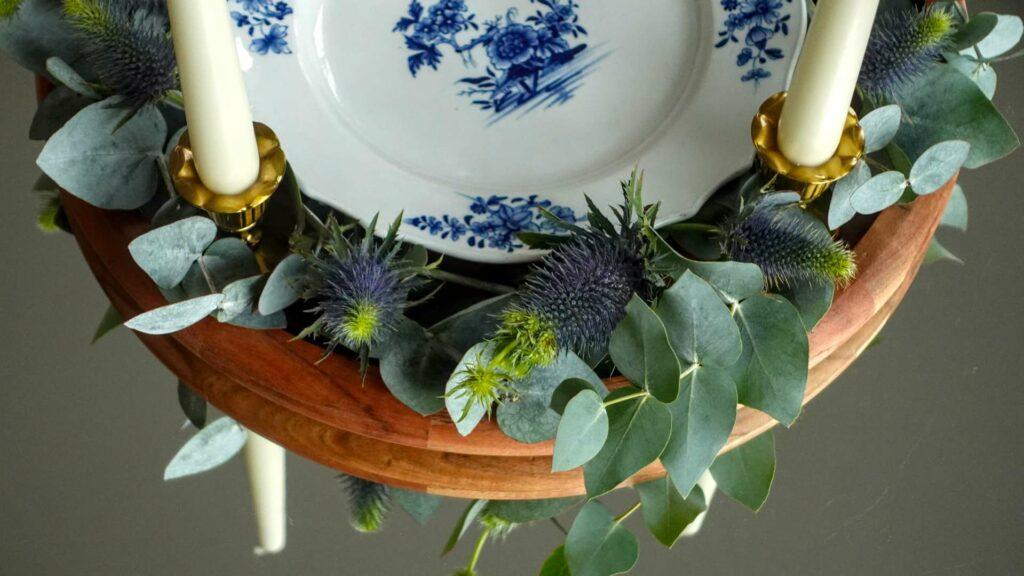
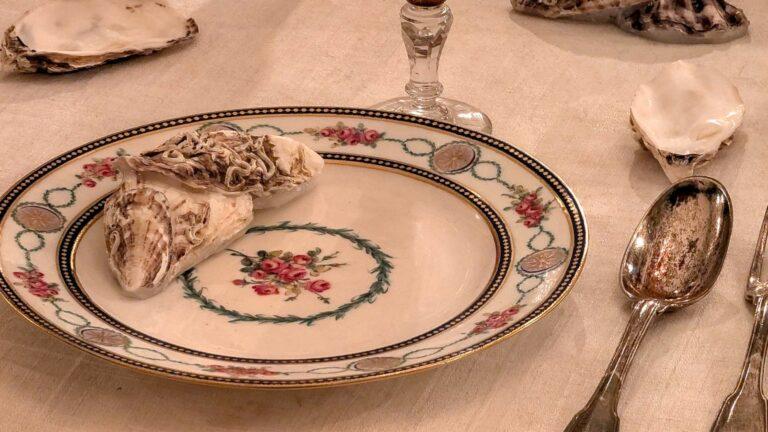
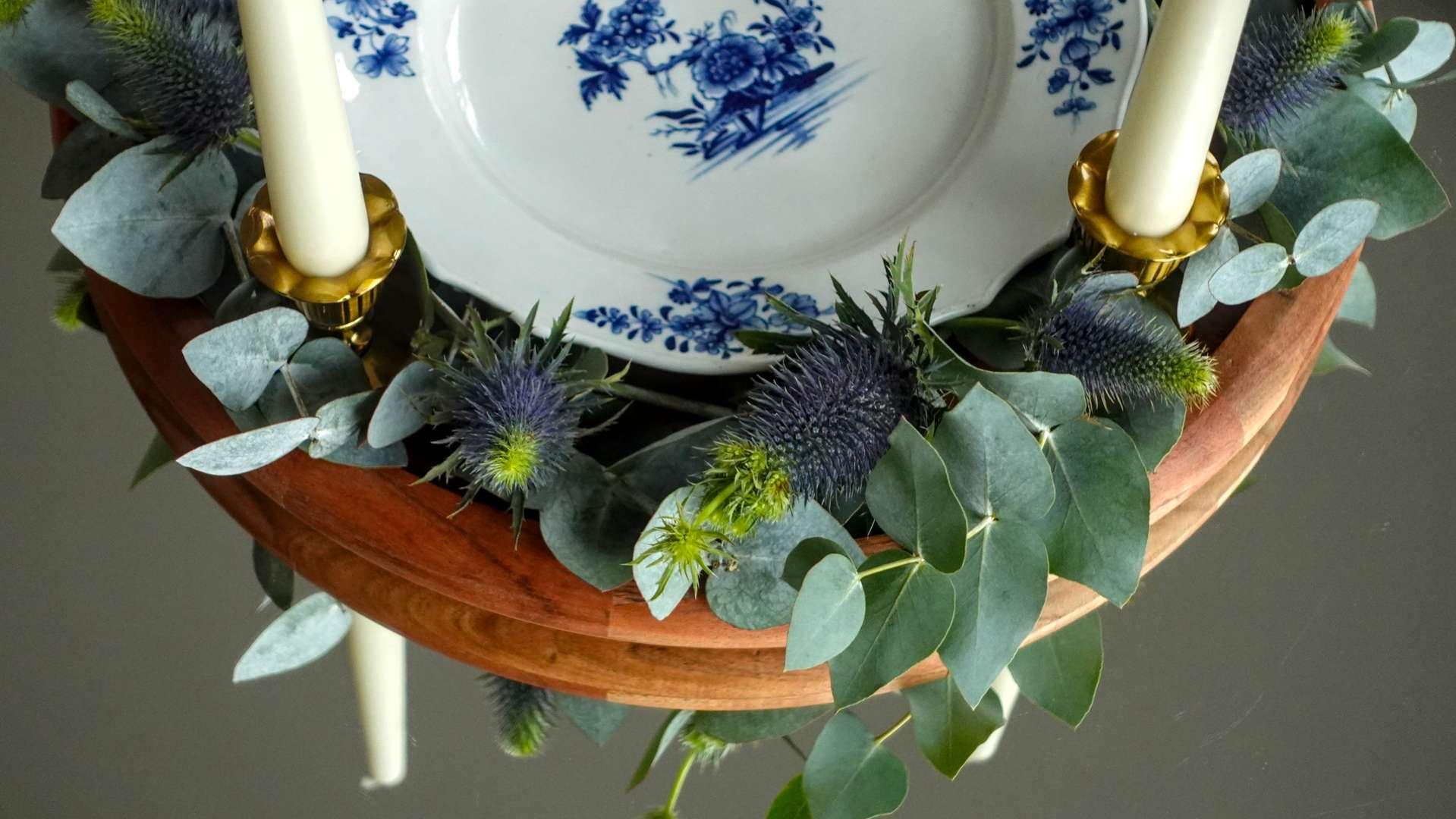
But let me begin where all good things begin: with an object that has captured my imagination and will anchor our journey through this season. Before me sits a late eighteenth-century Tournai porcelain plate, a recent and cherished addition to my collection. The Tournai manufactory, which flourished from 1751 to 1890 in the southern Belgian city of the same name, was the country’s most important producer of bone china. Drawing inspiration from French techniques developed at Chantilly and Sèvres, the Tournai workshops democratized porcelain, making these once-exclusive luxuries accessible across social boundaries.
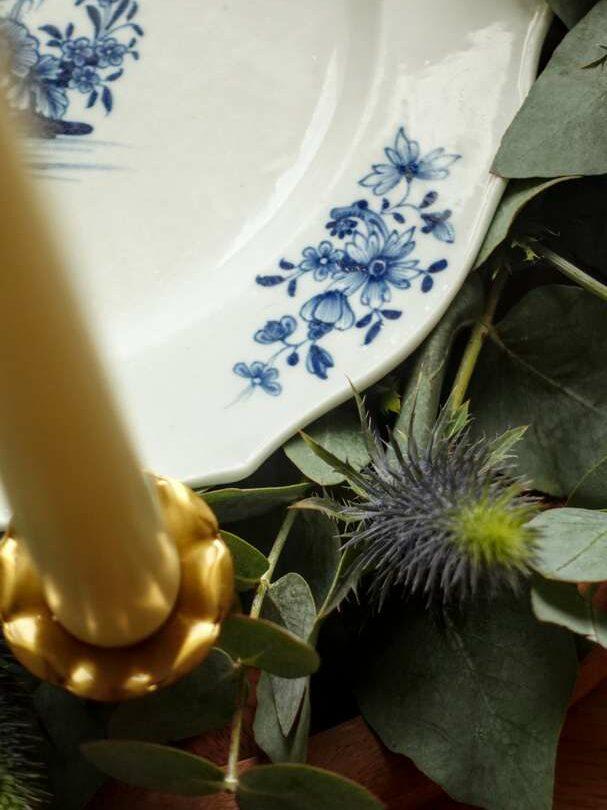
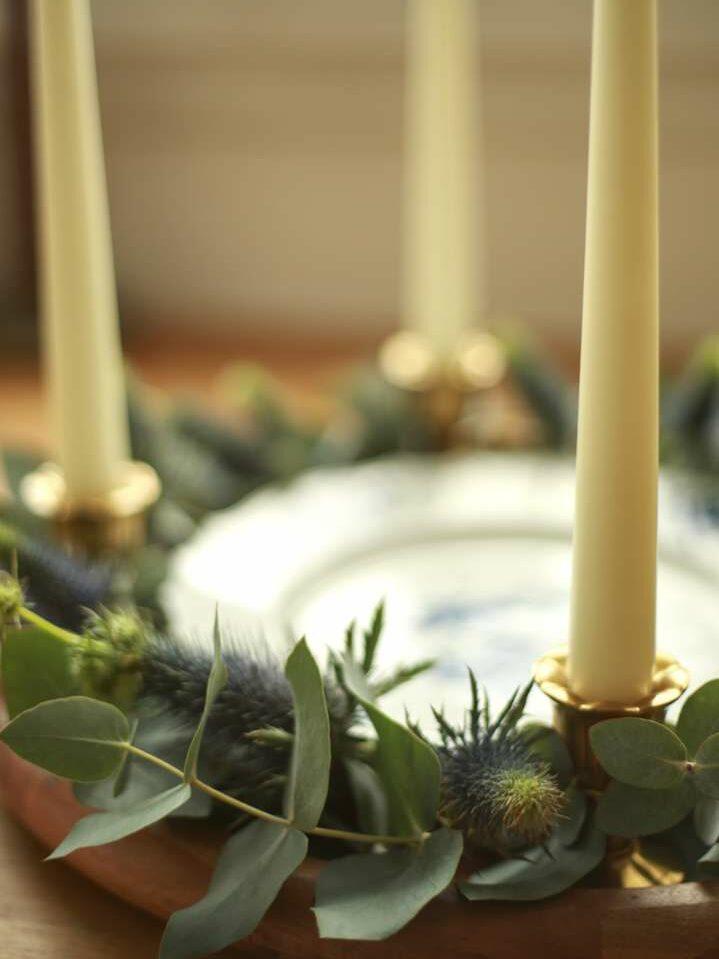
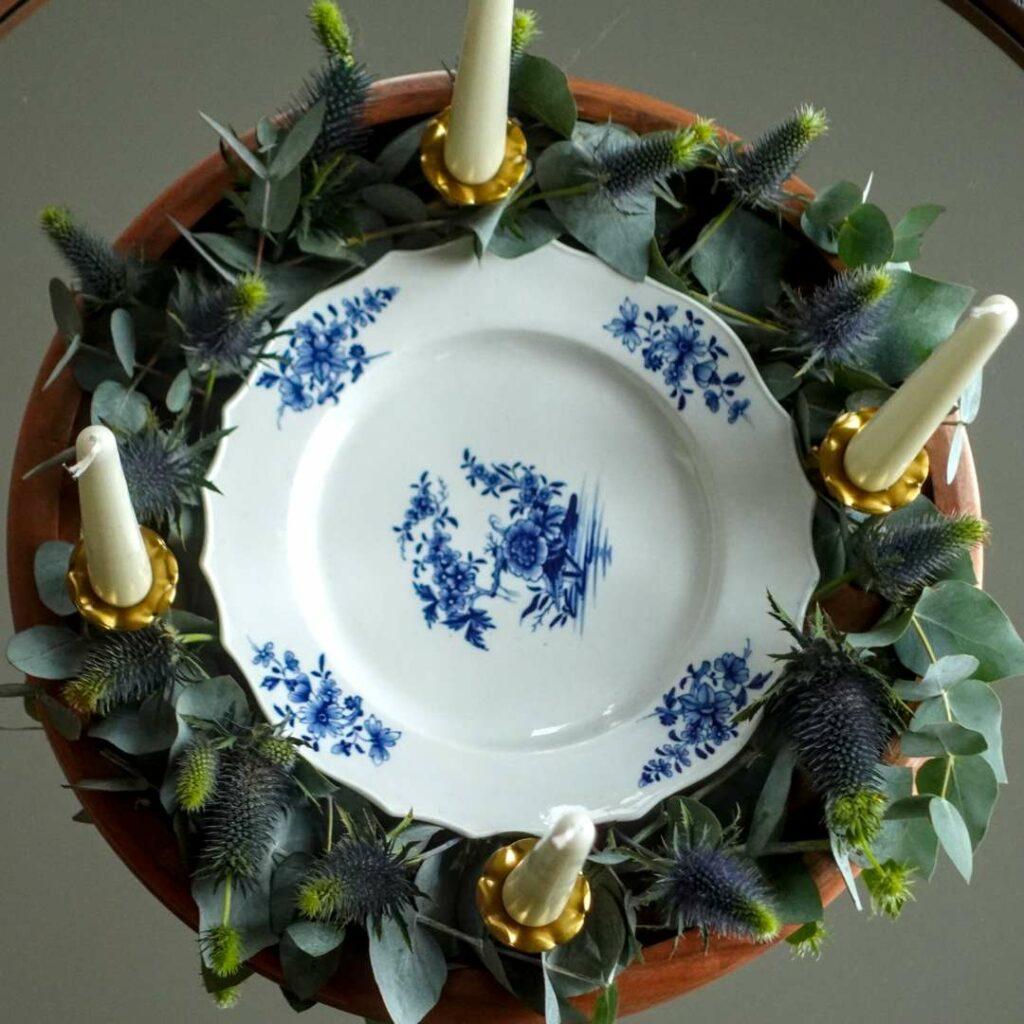
This particular plate bears the Ronda pattern—a classic eighteenth-century design of blue-and-white florals, hand-painted in underglaze cobalt blue on soft-paste porcelain. At its heart blooms a spray of flowers dominated by a single rose, while the rim carries four smaller bouquets, evenly spaced like cardinal points on a compass. The deep cobalt blue seemed to call for something different this year, so I’ve built my Advent wreath directly upon the plate itself, choosing elements that would both complement its coloring and evolve beautifully as the weeks unfold.
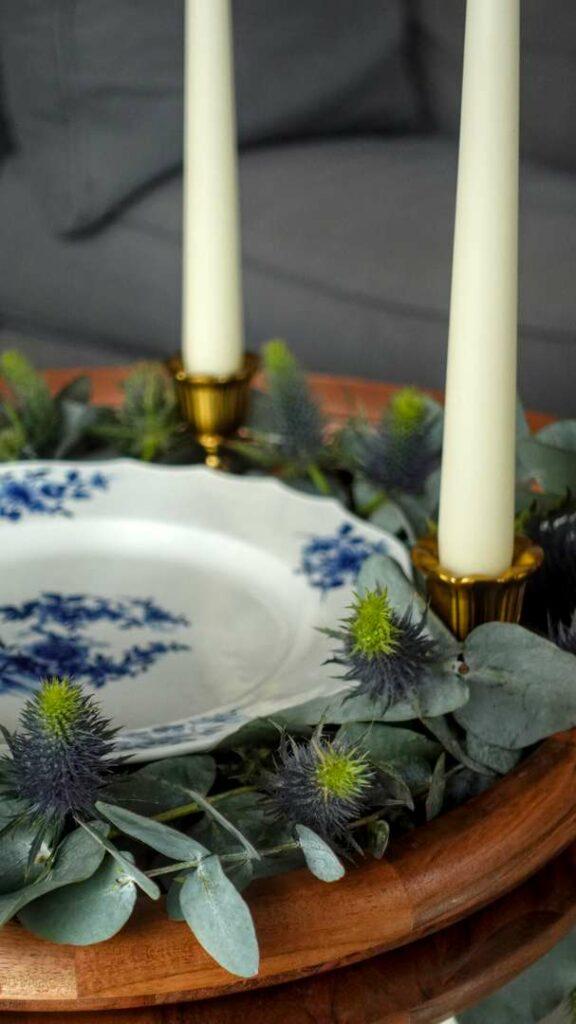
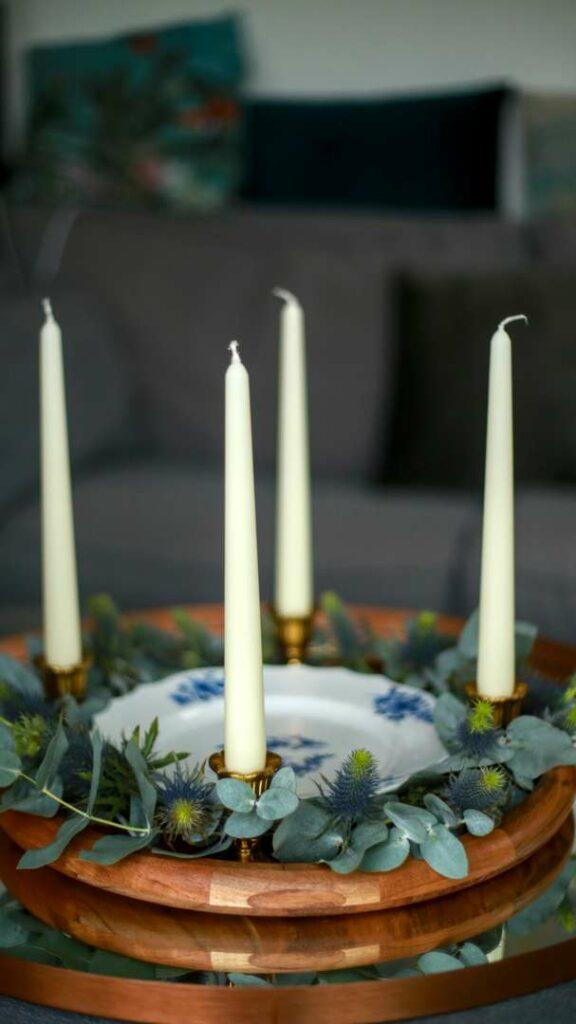
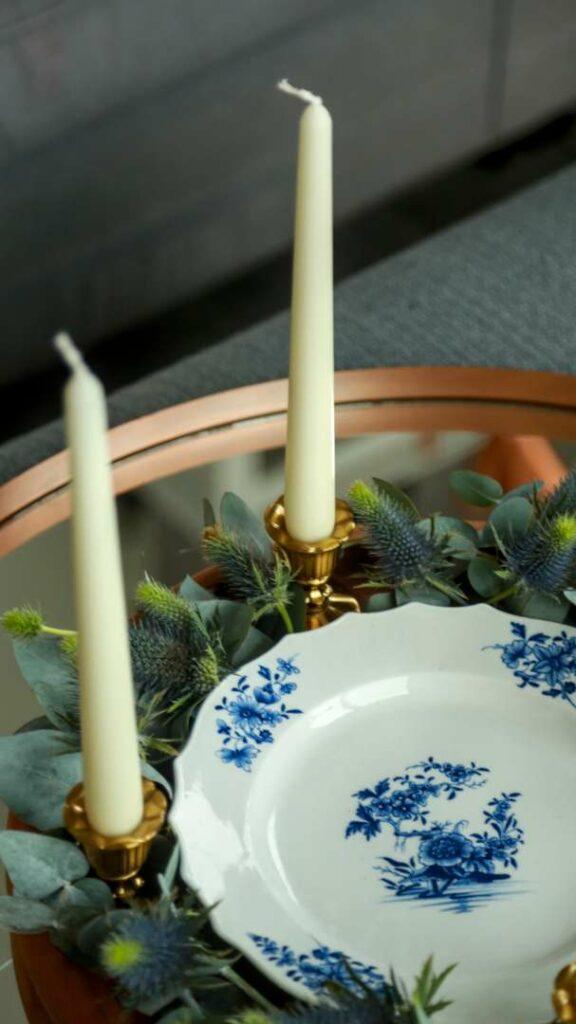
Blue thistle and eucalyptus meet in quiet harmony—one born of strength, the other of healing. Together they speak of resilience and renewal, of calm endurance through winter’s hush, carrying the breath of hope toward the coming light.
And so we begin. Each evening, I’ll share a corner of Belgium’s soul with you: novels and chocolate, museums and Christmas markets, the particular magic of a country that has mastered the art of being many things at once without losing itself. I cannot wait to discover it alongside you.
Merry Advent, dear friends. Until tomorrow.

During the 2025 Advent season, each post on The Ritual of Reading was accompanied by a Daily Advent Letter, sent privately to subscribers. These letters echo the theme of the article, but take a more personal and reflective path — closer to the hesitations, intuitions, and emotions that accompanied the writing.
What follows is the Daily Advent Letter that was written alongside this post.
| December 1st |
| Dear Friend, I’ve been scrolling through listings of Tournai porcelain for weeks now, the way I do each year when choosing the anchor piece for my Advent wreath. The factory closed in 1890, so every plate, every cup carries the weight of its own small history. When this one arrived—the Ronda pattern in that deep cobalt blue—I held it up to the light and saw them: fine scratches traced across the glaze where knives and forks have met porcelain through decades, perhaps a century, of meals. I found myself wondering about its previous lives. Whose table did it grace? What conversations unfolded above its painted roses? There’s something fitting about beginning our Belgian journey with an object that has lived so many winters already, that bears the quiet evidence of use and care. It feels less like studying a country and more like being introduced to it by someone who was there. This evening, I’ll tell you more about Belgium, about language and literature and the complexity of a place that refuses to be simply one thing. But for now, I wanted you to know: we’re beginning with something real, something that has stories of its own. Come sit with me and the blue plate tonight. Until then, Alexandra |

Written by Alexandra Poppy
Writer, reader & curator of The Ritual of Reading
I’m Alexandra, the voice behind The Ritual of Reading. Somewhere between a stack of novels and a half-finished pot of tea, I keep finding traces of the life I want to live—slower, richer, filled with stories. The Ritual of Reading is where I gather what I love: books that linger, places with a past, and rituals that make ordinary days feel a little more meaningful. I write from Paris, where elegant bookshops and old-fashioned cafés offer endless inspiration—and I share it here, hoping it brings a spark to your own days, too.