
Belgian Advent Calendar – Day 23
There are dishes that don’t just feed you—they tell you stories about place, about accident and adaptation, about the kind of stubborn regional pride that makes neighbors claim the same recipe as their own birthright. Chicons au gratin is one of those dishes. Let me tell you the story while I prepare it.
In Belgium, they call them chicons. In northern France, endives. In Wallonia, where this dish lives most comfortably on winter tables, it goes by chicons au gratin—the regional name for endive clinging to the recipe like frost to windowpanes. The French call it endives au jambon, naturally, because heaven forbid the Belgians get full credit for something this good. The truth? Both claim it. Both serve it in their bistros and brasseries when the weather turns grey. Both are probably right, in that maddening way that food doesn’t respect borders drawn on maps.
But let’s be clear about one thing: the endive itself is thoroughly, unapologetically Belgian.
The story goes like this—and like all good food origin stories, there are several versions, each one slightly drunk on its own mythology. Sometime in the 1830s, during Belgium’s revolution no less, a chicory farmer discovered something remarkable in his Brussels cellar. He’d stored chicory roots there—they were being cultivated everywhere back then, thanks to Napoleon’s 1806 blockade that cut off coffee imports and turned half of Europe into desperate chicory-roasting experimenters. But this farmer’s roots, buried under a layer of earth and left in the dark dampness of the cellar for weeks, had sprouted something unexpected: pale, tightly furled leaves, cream-colored and tender, with a bitterness that somehow tasted like promise.
Another version credits François Breziers, chief gardener at the Brussels Botanical Garden, with perfecting the process around 1850. Either way, by 1846, Brussels market stalls were selling this peculiar new vegetable—witloof, they called it in Flemish, meaning “white leaf.” The Belgians, with their gift for understatement and their understanding of treasure, nicknamed it “white gold.”
They weren’t wrong. Growing endive is an act of faith and precision—a two-stage process that feels almost alchemical. First, you grow the plant in fields during spring and summer, developing that crucial taproot. Then, at season’s end, you harvest the roots, remove the leaves, and store them in cold, dark conditions. In that forced winter darkness, deprived of light, the roots sprout again—but this time, they produce something entirely different from their dandelion-like first growth. The heads that emerge are dense, pale, slightly bitter, impossibly elegant. The darkness isn’t just practical; it’s transformative. Expose them to light, and they turn green, more bitter, less sweet. The magic only happens in the dark.
As for the gratin itself—that moment of genius when someone decided to wrap these bitter beauties in ham, smother them in béchamel, and bake them until golden—that likely emerged in the mid-20th century, an adaptation of classic French gratin technique meeting Belgian ingredients. Who did it first? Does it matter? The dish exists now in that comfortable overlap between cultures, served in family kitchens and brasseries on both sides of the border, warming hands and hearts through the cold months when fresh vegetables are scarce and comfort is currency.
The Béchamel Sauce: A Small Sermon
Before we go any further, let’s talk about béchamel, because this is where so many people stumble, and it’s too important to get wrong.
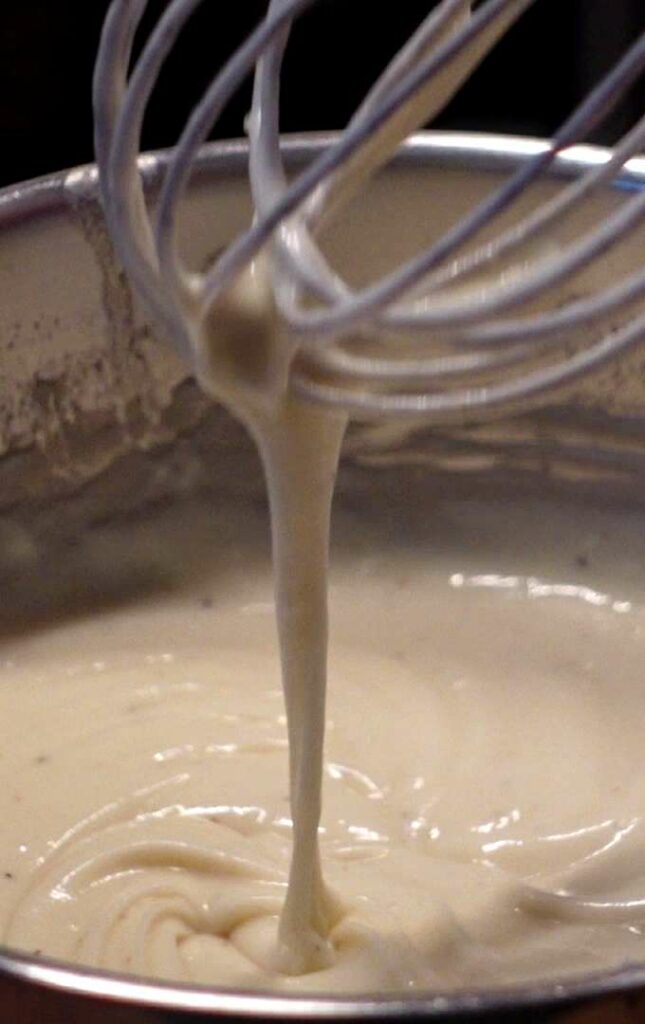
Béchamel is one of the French mother sauces, but don’t let that intimidate you. It’s three ingredients—butter, flour, milk—and patience. That’s it. Start with equal parts butter and flour, melt the butter over medium heat, add the flour, and stir until you’ve got a paste that’s just starting to turn golden—this is your roux, and it needs a minute or two to cook out that raw flour taste.
Then comes the milk, added gradually—some do it a splash at a time, I prefer pouring it in two batches, stirring constantly. Then you add the nutmeg. Fresh-grated if you can, I had some good quality powdered and it was perfect.
The Ritual of Cooking
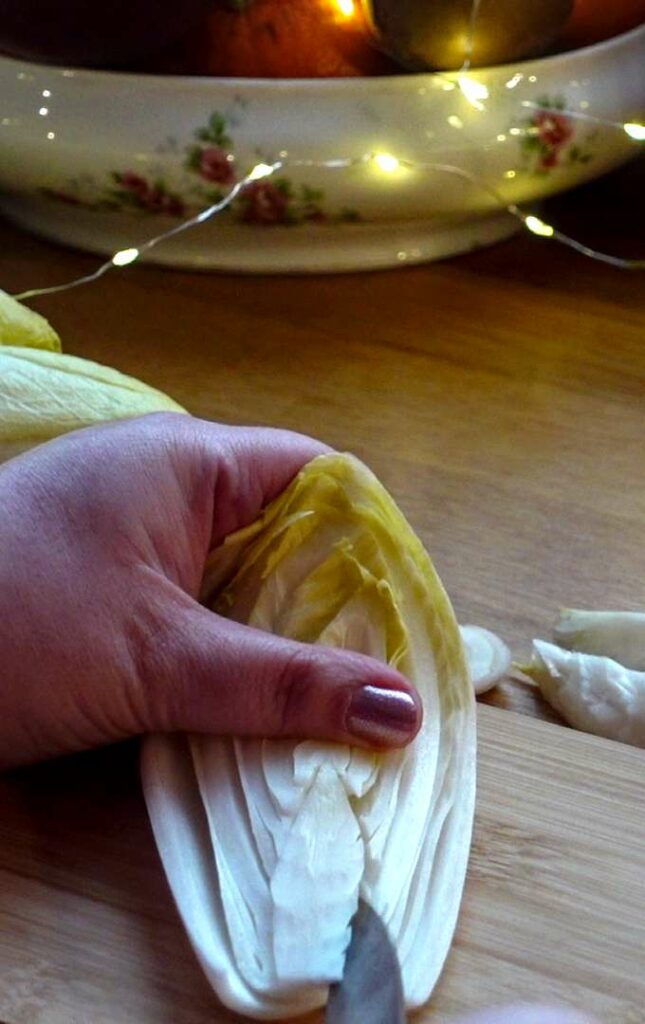
Chicons au gratin isn’t a quick weeknight dinner, and that’s precisely the point. This is cooking as meditation, as an act of care. You parboil the endives in salted water – here’s my personal touch to the recipe, I cut them in half and remove the core that holds most of the bitterness. Yes, they lose their shape during boiling, but you can easily recompose them after draining, and once they’re wrapped in ham no one can tell the difference.
While they cook, you make your béchamel. Roux, milk, patience, nutmeg. The kitchen fills with that particular warm, slightly nutty aroma of butter-and-flour meeting milk, becoming something greater than its parts.
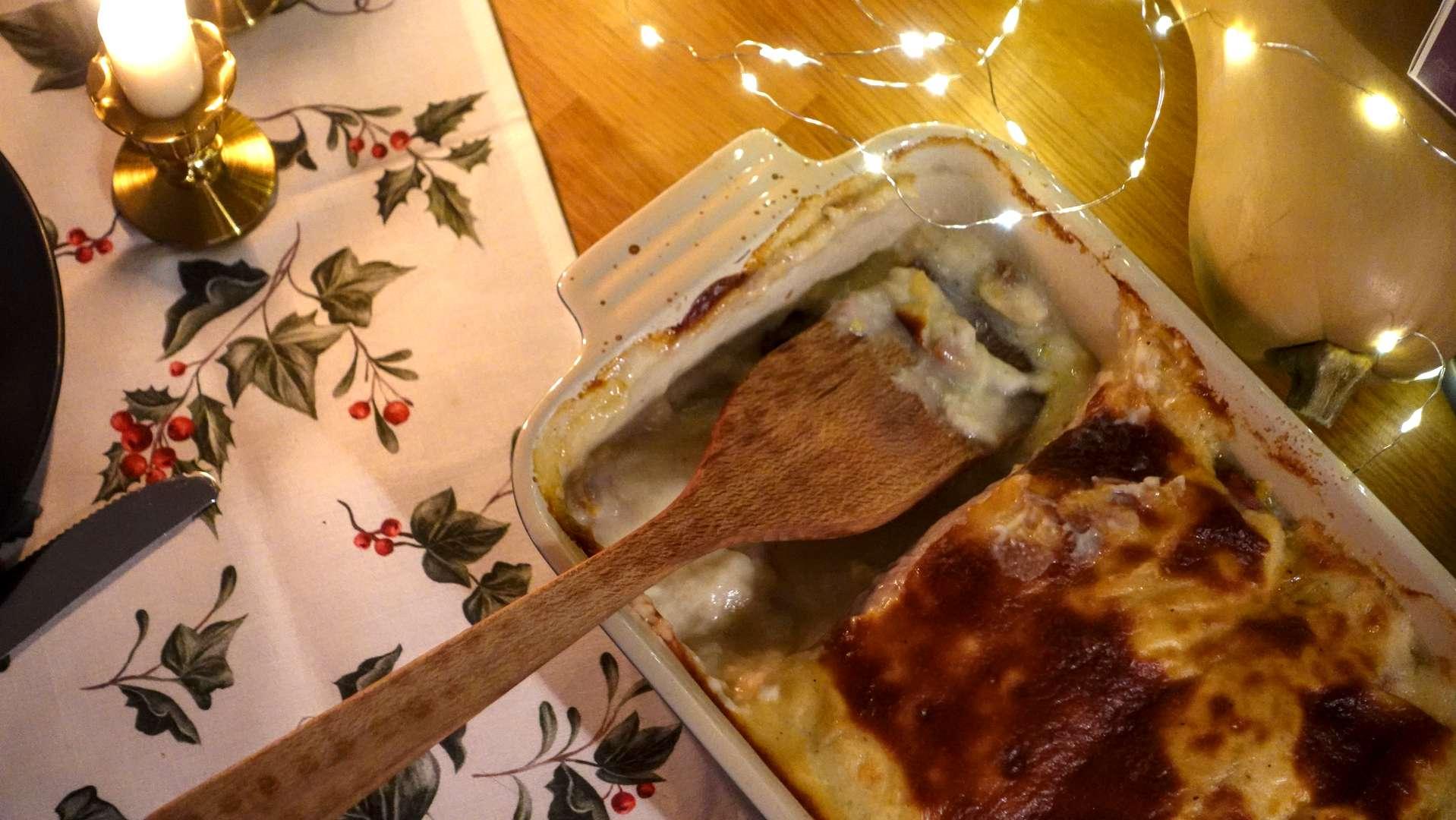
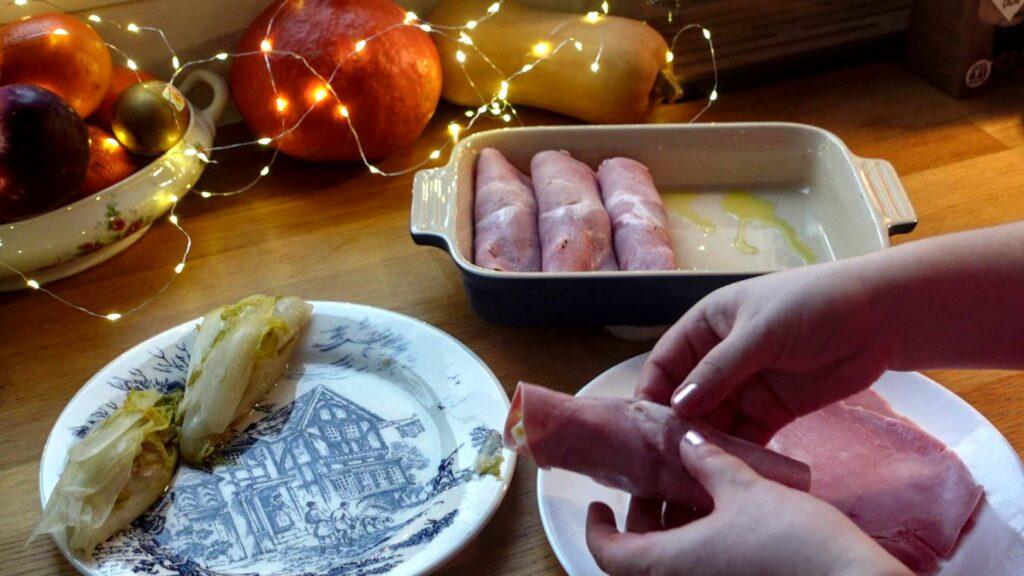
Then you drain the endives carefully and wrap each one in its blanket of ham. You arrange them in your baking dish like you’re tucking children into bed. You pour the béchamel over everything, generous and thick. You slide it into the oven and wait for that moment when the top turns golden and the edges bubble.
This is the kind of cooking that won’t be rushed. Very Belgian, really. Very much like those cellar-grown endives themselves—good things happen in the dark, in the waiting, in the slow transformation of ordinary ingredients into something that tastes like home.
When you pull it from the oven, bubbling and bronzed, you’ll understand why two countries claim it. Some things are just too good to belong to only one place.
If you want the step-by-step recipe with precise measurements, you’ll find it in the Reader’s Table section by clicking HERE. For now, just know this: chicons au gratin is winter comfort in its purest form. It’s the taste of a vegetable that only exists because someone waited in the dark. It’s the kind of dish that makes grey days feel like exactly where you want to be.
Until tomorrow, friends. Stay warm.

Written by Alexandra Poppy
Writer, reader & curator of The Ritual of Reading
I’m Alexandra, the voice behind The Ritual of Reading. Somewhere between a stack of novels and a half-finished pot of tea, I keep finding traces of the life I want to live—slower, richer, filled with stories. The Ritual of Reading is where I gather what I love: books that linger, places with a past, and rituals that make ordinary days feel a little more meaningful. I write from Paris, where elegant bookshops and old-fashioned cafés offer endless inspiration—and I share it here, hoping it brings a spark to your own days, too.