
Advent Calendar Day 4
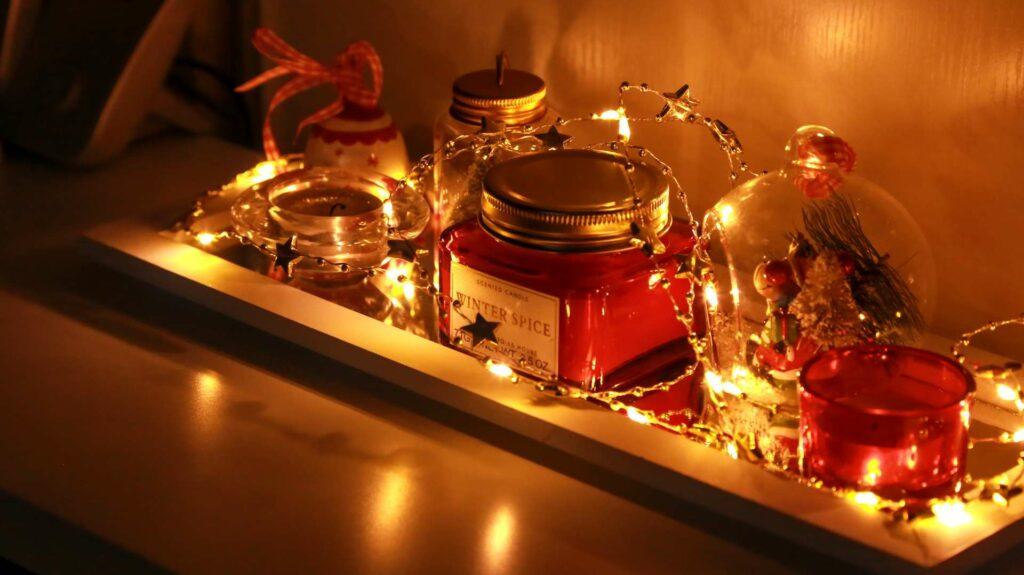
There’s a particular satisfaction that comes from making your own Christmas decorations—something about the rhythm of creating with your hands, the tangible progress, the knowledge that what adorns your tree or wraps around its base came from your own effort and imagination. As I draw closer to the moment when I’ll trim my tree, this is the time to prepare whatever new ornaments or accessories the season calls for. This year, I decided to challenge myself with two traditional crafts: a crocheted tree skirt and salt dough ornaments.
A Crocheted Tree Skirt
I’ve always found tree skirts elegant, whether concealing the stand of a natural tree or softening the base of an artificial one. They provide that finishing touch that makes the whole presentation feel intentional and complete. The pattern I chose is surprisingly straightforward—even for someone whose crochet skills are more enthusiastic than expert.

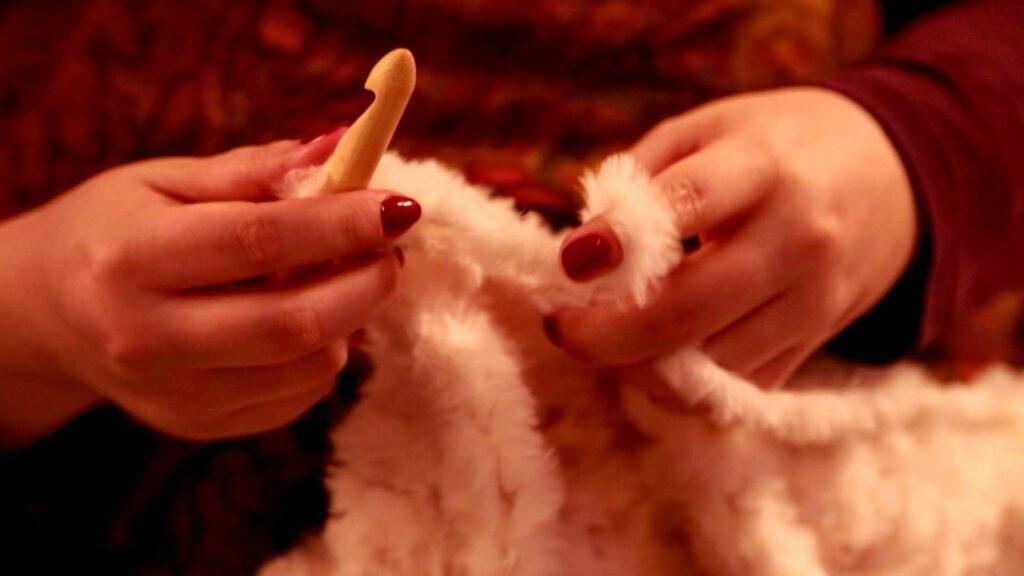
Working with chunky faux-fur yarn means you see results quickly, which provides immediate gratification. Within just over an hour, you have something substantial to show for your effort. I’ll confess the yarn itself isn’t the easiest to work with—the texture obscures your stitches, so you rely more on touch than sight to know where to insert your hook. There’s a learning curve as you develop the feel for it, trusting your fingers to find the right loops. But once you catch the rhythm, the process becomes almost meditative, and the soft, luxurious result justifies any initial fumbling.
The full tutorial I followed is available on YouTube (link HERE)—just another example of the generosity of creative communities online. Fellow makers sharing their ideas and techniques, inspiring others to try something new. It’s one of the internet’s finer qualities, this willingness to teach and encourage.

Salt Dough Ornaments
For the tree ornaments themselves, I wanted to try something even more traditional: salt dough decorations. Since moving to France, I’ve often heard people speak of spending winter evenings making either simple shortbread dough or salt dough ornaments with children—an activity that’s both craft project and quality time, resulting in decorations imbued with memory and meaning.
The recipe couldn’t be simpler: flour, salt, and water mixed into a pliable dough that air-dries hard or can be baked at low temperature. You roll it out, cut shapes with cookie cutters, poke holes for hanging ribbon, and bake them slowly so they dry without browning too much. Turn them once during baking to ensure even drying, and you have beautiful homemade ornaments ready to personalize.

If you have acrylic paints on hand, you can decorate them to coordinate with your other decorations—intricate designs or simple touches of color. I had only some nail polish available (gold, naturally), but even that small embellishment plus some ribbon transformed these humble discs of flour and salt into something charming enough to hang proudly on the tree.
These aren’t perfect, store-bought ornaments. They’re slightly irregular, clearly handmade, bearing the marks of the hands that shaped them. And that’s precisely what makes them valuable. Each one represents time spent creating rather than consuming, intention rather than convenience. When you hang them on your tree, you remember the afternoon you made them—the feel of the dough, the choice of cutters, the careful painting. They become part of your personal Christmas narrative rather than anonymous objects purchased and forgotten.

This is the magic of handmade decorations: they carry stories. Years from now, you’ll remember not just what they look like but how they came to be, who helped make them, what you were thinking about while your hands worked. They transform decorating from a task into a tradition, from expense into investment of time and creativity.
So whether you crochet or paint, bake dough or string popcorn, carve wood or fold paper—whatever making calls to you—I encourage you to add something handmade to your celebrations this year. Your tree will be more beautiful for it, not because of technical perfection but because of the love and attention woven into every stitch, every brushstroke, every carefully shaped ornament.
Until tomorrow, dear friends—happy making, and may your hands create beauty that makes your heart glad.

Written by Alexandra Poppy
Writer, reader & curator of The Ritual of Reading
I’m Alexandra, the voice behind The Ritual of Reading. Somewhere between a stack of novels and a half-finished pot of tea, I keep finding traces of the life I want to live—slower, richer, filled with stories. The Ritual of Reading is where I gather what I love: books that linger, places with a past, and rituals that make ordinary days feel a little more meaningful. I write from Paris, where elegant bookshops and old-fashioned cafés offer endless inspiration—and I share it here, hoping it brings a spark to your own days, too.