
Austrian Advent Calendar Day 4

Hello, dear friends, and happy Advent!
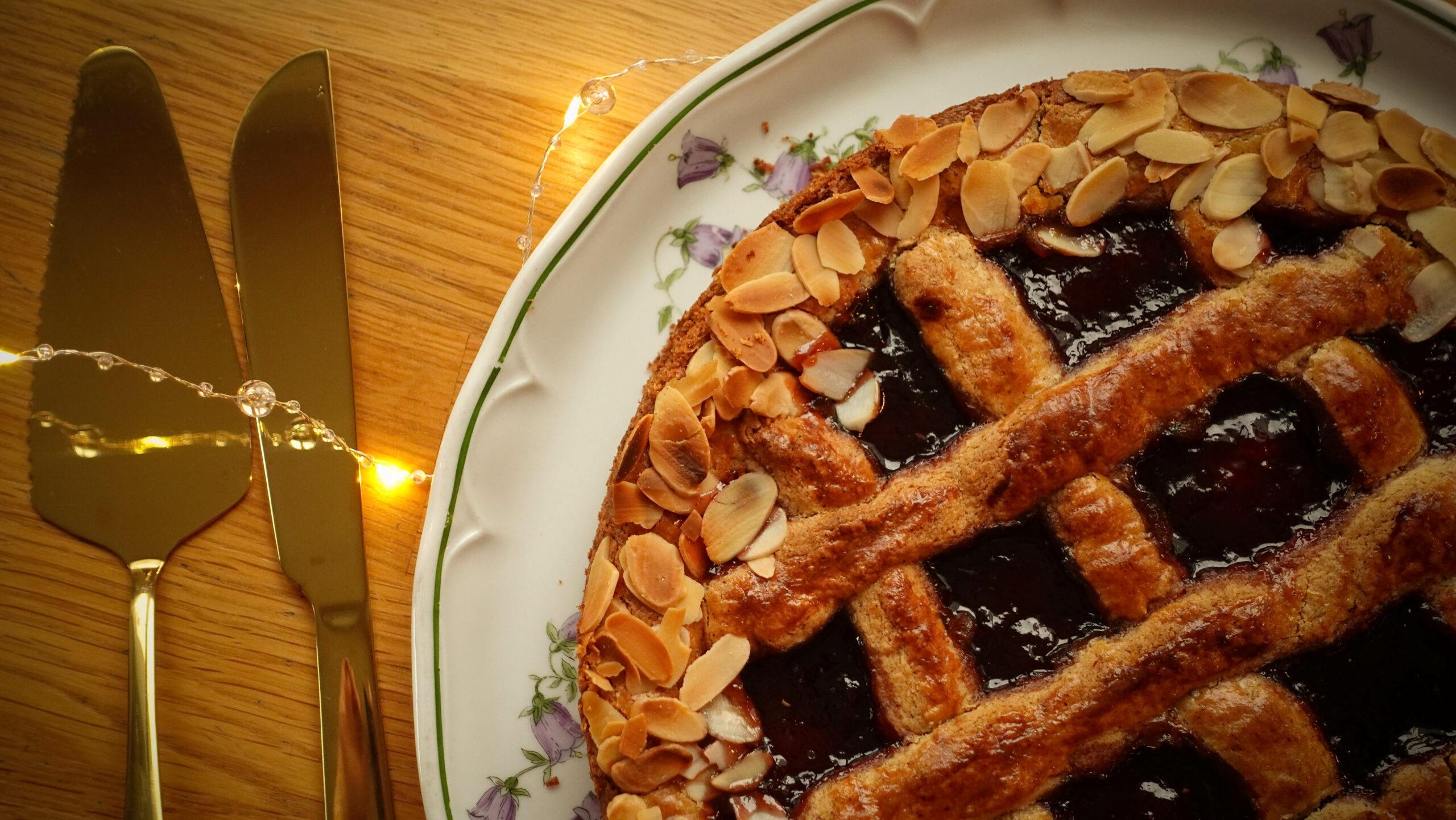
For this fourth day of our Austrian Advent Calendar, I invite you to an afternoon coffee break accompanied by a delicious traditional Austrian dessert: the Linzer Torte. This elegant pastry, with its distinctive lattice top and jewel-red filling peeking through, represents everything I love about Austrian baking—refined yet homey, beautiful yet unpretentious, steeped in history yet perfectly at ease on a modern table.
Some claim this is the oldest cake recipe in the world, though such declarations are impossible to verify with certainty. What we do know is that the Vienna Library preserves a written recipe for Linzer Torte dated 1696, which is remarkable enough. The origins of the name remain debated: some attribute it to a Viennese confectioner, while others believe it originated in the city of Linz. Today, this easily recognizable pastry—thanks to its signature lattice design—is prepared throughout Austria and remains a universal favorite. And wonderfully, it’s quite straightforward to make.
The dough is a simple shortcrust pastry made from flour, butter, ground hazelnuts (though almonds work beautifully as well), egg, sugar, and spices. I find the traditional combination of cinnamon, cloves, and grated lemon zest so perfectly festive—not to mention that as it bakes, your kitchen fills with the scent of a Christmas dream made edible.
The result is a buttery, spiced cake with just enough sweetness, the tartness of the fruit preserve cutting through the richness perfectly. It pairs beautifully with a cup of good coffee—and Austrians do take their coffee seriously. For this occasion, I traded my convenient Nespresso machine for a more traditional French press and freshly ground beans, slowing down the ritual to match the elegance of the pastry.
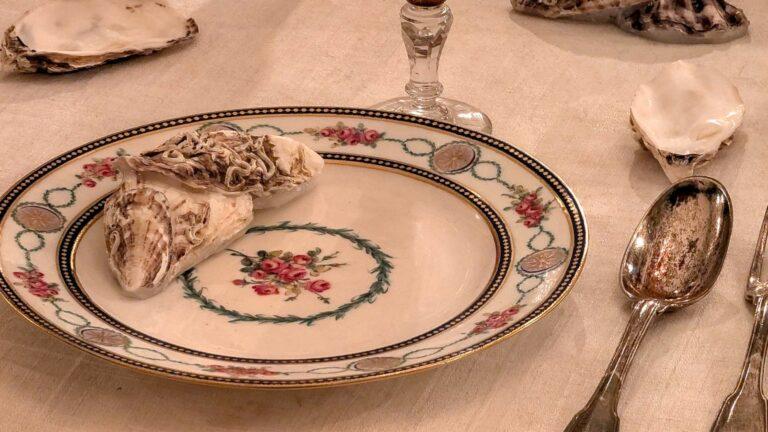
Serving afternoon coffee and cake provides the perfect excuse to bring out fine porcelain. And this particular set is special indeed.
The Vienna Porcelain Manufactory was founded in 1718 as the second porcelain manufactory established in Europe. Sadly, it closed in 1864, but was revived in 1923 as Augarten Wien with the specific mission of continuing the production methods and patterns of the historic tradition. My cups and plates feature the Maria Theresa décor, one of the great classics of the Augarten manufactory. The Empress laid out a Dutch flower garden at Schönbrunn Palace, and this porcelain pattern pays tribute to her love of botany. The bouquets of magnificent roses and garden flowers, modeled on designs from around 1750, are rendered in deep copper green—one of the most modern color innovations of Maria Theresa’s time.
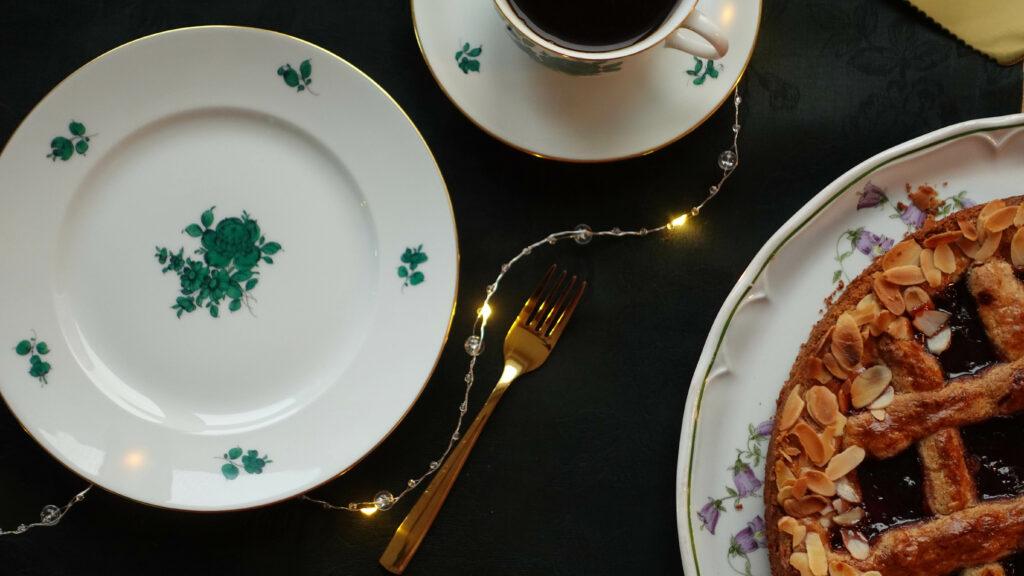
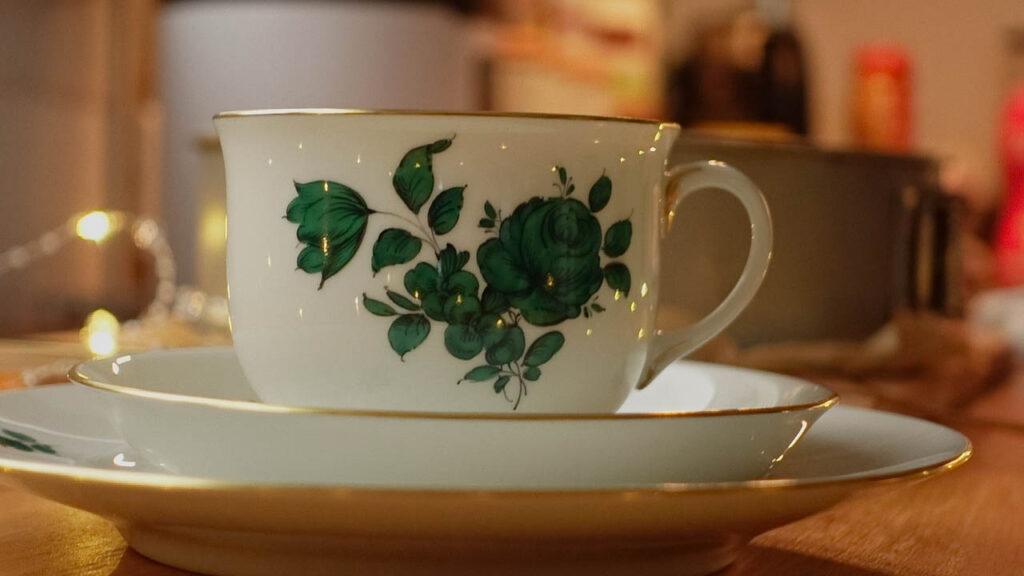
If I learned anything from last year’s exploration of Danish porcelain at Royal Copenhagen, it’s that you shouldn’t keep your beautiful things hidden in cupboards. Use them, enjoy them, let them be part of your daily rituals. So slice yourself a generous piece of Linzer Torte, pour a proper cup of coffee, and serve it all on your finest plates. You’ll feel like the Empress of your own Christmas palace.
Until tomorrow, dear friends—happy baking!

Ingredients
For the Pastry:
For Assembly:
Instructions
- In a large bowl or food processor, combine flour, icing sugar, ground hazelnuts, cinnamon, cloves, salt, and lemon zest
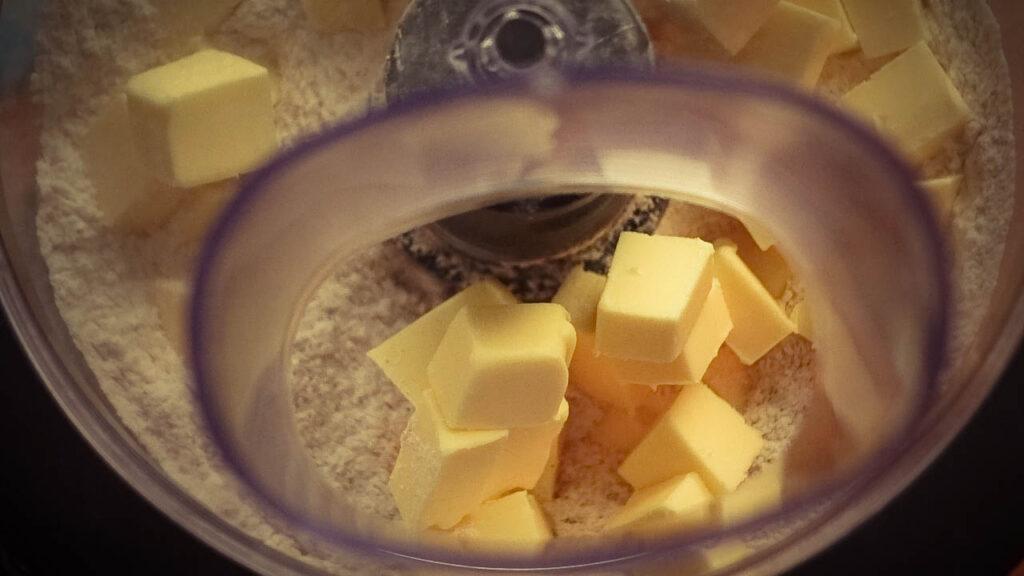
- Add cold butter cubes and work with fingertips (or pulse in processor) until mixture resembles coarse breadcrumbs
- Add whole egg and egg yolk
- Mix quickly until dough just comes together—it will seem dry at first, but will form a ball with gentle persistence
- Do not overmix
- Shape into a disc, wrap in plastic wrap, and refrigerate for at least 30 minutes
- Preheat oven to 180°C (350°F / Gas Mark 4)
- Line the bottom of a 24cm (9-inch) springform pan with parchment paper
- Butter the sides generously
- Remove dough from refrigerator
- Take slightly more than half the dough and press it into the bottom of the prepared pan using your knuckles, creating an even layer about ¼ inch thick
- Spread jam evenly over the base, leaving about ½ inch border around the edges
- From remaining dough, roll a thicker rope (about ¾ inch diameter) and press around the outer edge to create a border
- Roll thinner ropes (about ⅓ inch diameter) and arrange in a lattice pattern over the jam (can make shorter segments that join at the ends if dough is difficult to handle)
- Brush entire surface with beaten egg
- Press flaked almonds onto the outer border
- Bake for 35-50 minutes until golden brown and fragrant
- The torte is done when the lattice is golden and the jam is bubbling slightly
- Remove from oven and let cool completely in the pan before removing the springform ring
- Let cool for at least 2 hours before slicing
- Slice into wedges
- Serve with strong coffee or tea
- Optional: dust lightly with powdered sugar just before serving
Step 1: Make the Pastry
Step 2: Prepare the Pan
Step 3: Assemble the Torte
Step 4: Bake
Step 5: Serve
Notes
- TIPS:
Cold dough is key: If dough becomes too warm while working, refrigerate for 10-15 minutes
Don’t overfill: Leave space at the edges for the jam—it will bubble during baking
Jam choices: Traditional is red currant, but raspberry, apricot, or mixed berry all work beautifully
Make ahead: Linzer Torte actually improves after a day or two as flavors meld
Lattice shortcut: If lattice proves difficult, simply create a circular pattern with dough strips or cut decorative shapes - STORAGE:
Store covered at room temperature for up to 5 days, or refrigerate for up to 1 week. The torte actually tastes better after 24 hours as the flavors develop. Can be frozen (unfilled) for up to 3 months. - VARIATIONS:
Nut choice: Hazelnuts are traditional, but almonds are equally authentic
Spice blend: Add a tiny pinch of nutmeg or cardamom for variation
Chocolate version: Add 2 tablespoons cocoa powder to the dough for “Schokoladen Linzer Torte”

Written by Alexandra Poppy
Writer, reader & curator of The Ritual of Reading
I’m Alexandra, the voice behind The Ritual of Reading. Somewhere between a stack of novels and a half-finished pot of tea, I keep finding traces of the life I want to live—slower, richer, filled with stories. The Ritual of Reading is where I gather what I love: books that linger, places with a past, and rituals that make ordinary days feel a little more meaningful. I write from Paris, where elegant bookshops and old-fashioned cafés offer endless inspiration—and I share it here, hoping it brings a spark to your own days, too.