Advent Calendar Day 21

It’s December 21st, and all across the globe, countless cultures celebrate this threshold day through traditions stretching back to humanity’s earliest observations of celestial patterns. We’ve come to understand its astronomical significance far better than our ancestors did—the Earth’s axial tilt, the sun’s apparent journey along the ecliptic, the precise mathematics of solstice. Yet perhaps in gaining scientific knowledge, we’ve lost some of the symbolic resonance our forebears felt so deeply. Why not take this opportunity to reconnect with something beyond the purely rational—a higher source of energy, an ancient understanding that today marks the pivot point, the longest night of the year giving way to the gradual return of light?
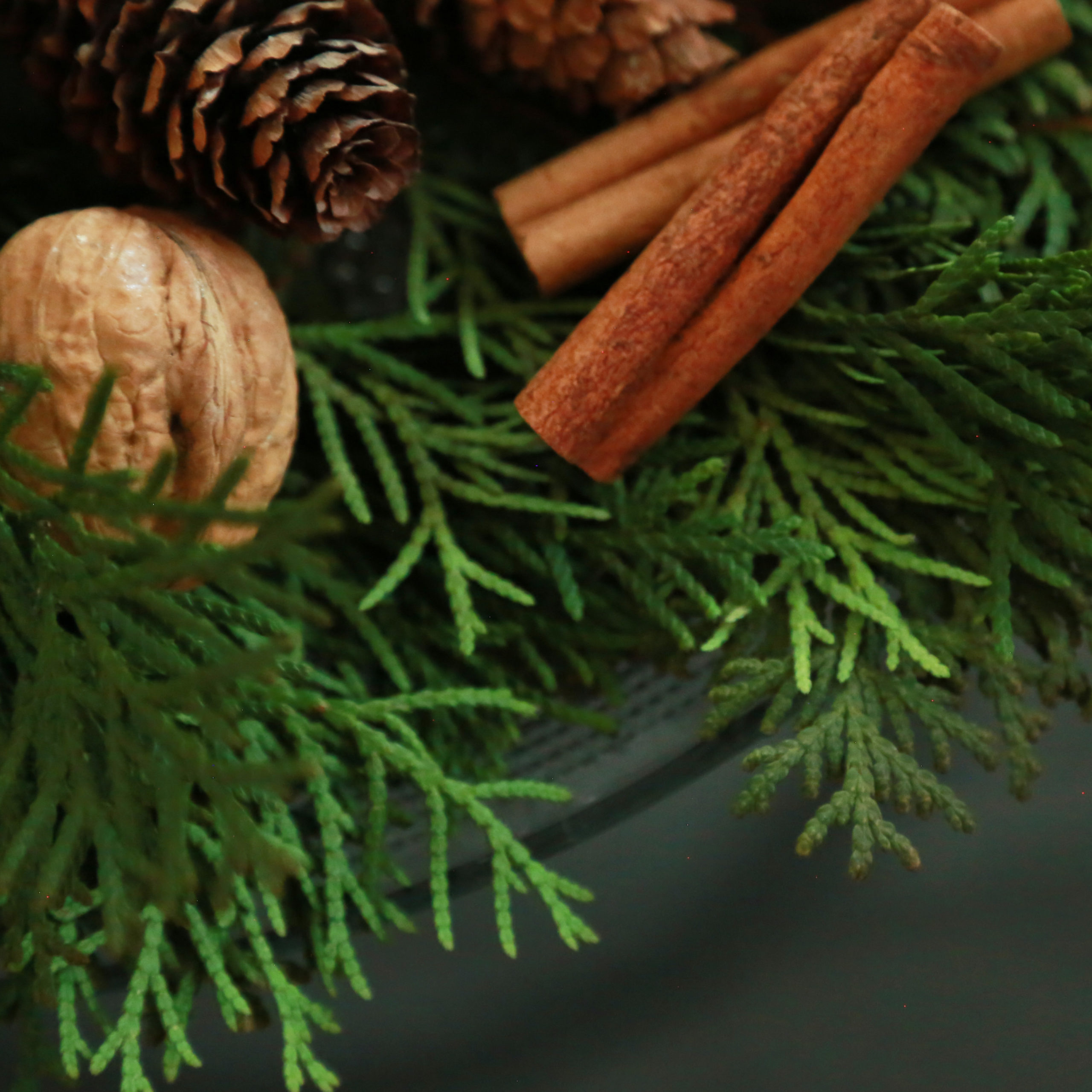
Today, as we begin lengthening our days once more—imperceptibly at first, just minutes added each afternoon—we celebrate the birth of the sun. Not its literal birth, of course, but its symbolic rebirth, its turn back toward strength and warmth after reaching its weakest, most distant point. This inspired me to create a natural mandala centerpiece to grace my table through the holidays—a small act of creation that honors the turning of the wheel.


To many ancient peoples, holiday evergreens symbolized everlasting life precisely because they remained green and vital when other plants appeared brown and lifeless. Their crisp colors offered constant reassurance that spring would return, that death was not permanent, that dormancy was merely rest before renewal. This understanding forms the pagan root of our Christmas tree tradition and appears in seasonal decorations throughout winter across cultures that have nothing to do with Christianity. The impulse is universal: to bring nature indoors when nature outside seems to have withdrawn, to surround ourselves with living green as a promise and a prayer.
Since longing for nature feels particularly acute this time of year—especially for those of us in cities, surrounded by concrete and glass—decorating with natural elements offers a way to remain grounded until the sun regains its full strength. So with evergreen branches and sprigs, pine cones and walnuts still in their shells, winter berries bright against dark foliage, and cinnamon sticks releasing their warming scent, I’m constructing a natural mandala to balance the energy of my home. The circular form itself carries meaning: no beginning, no end, the eternal return, the wheel that turns through seasons and lifetimes.
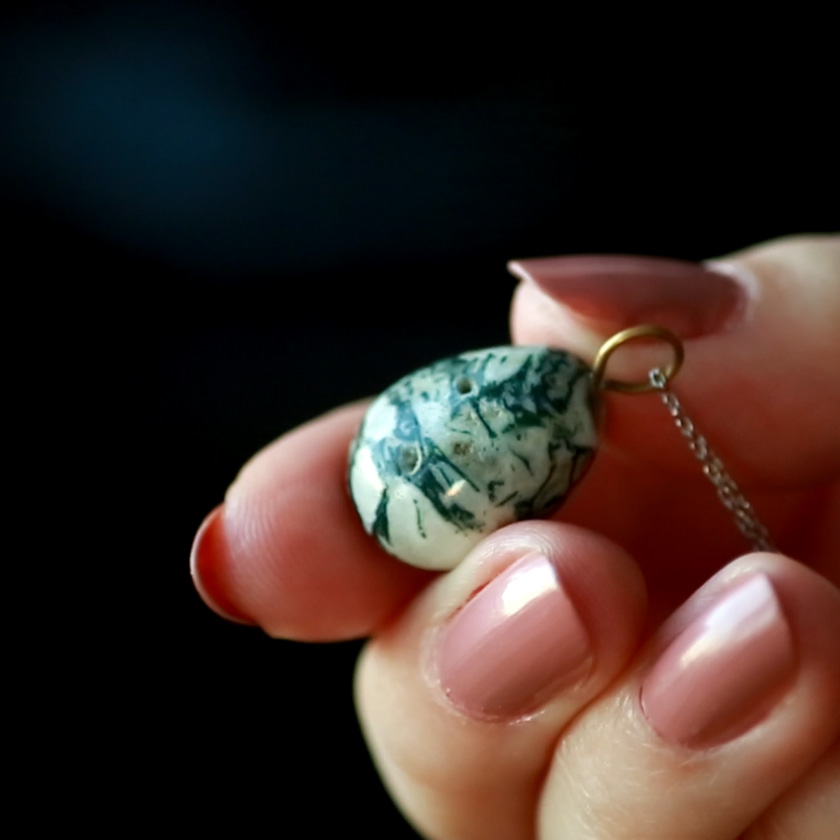
And since we’re speaking of energy, I want to share my favorite gemstone for this season. Dendritic agate, sometimes called tree agate, contains tree or fern-like inclusions of iron or manganese that create its distinctive appearance—as though tiny forests have been captured and frozen within the stone. It vibrates to a slower frequency than many crystals, making it profoundly grounding, helping us maintain connection with earth and nature even when snow covers the ground and trees stand bare. I like wearing it as a bracelet so my pulse remains in constant contact with the stones. I feel it provides a deep calmness that remains unaltered by surface mood fluctuations—an anchor when winter’s darkness weighs heavy.
Roasting chestnuts offers another beloved solstice ritual. Like root vegetables and winter squashes, chestnuts symbolize the nourishment nature provides in every season, even the harshest. The slow process of preparing and eating them becomes meditative—roasting them until the shells split, peeling away the bitter skin, savoring each warm, sweet bite. If you’re fortunate enough to have a real fireplace, it is unquestionably the place to be tonight. But for us urban refugees in modern apartments, I have a suggestion: try candles with wooden wicks. The most famous brand, with a patented system, is WoodWick, though I’ve discovered other makers using similar methods. These wicks produce a delicate crackling sound remarkably reminiscent of a genuine fire, and the scent adds another layer of sensory comfort.


The Chinese understanding of solstice connects deeply to the philosophy of yin and yang. On the longest night of the year, yin—associated with darkness, stillness, receptivity, the feminine—having achieved its maximum expression, pauses before beginning to recede and make room for the spark of yang. This moment of pause, this held breath between extremes, is called the Sacred Silence. It’s not absence but fullness, not emptiness but potential—the pregnant moment before transformation begins.
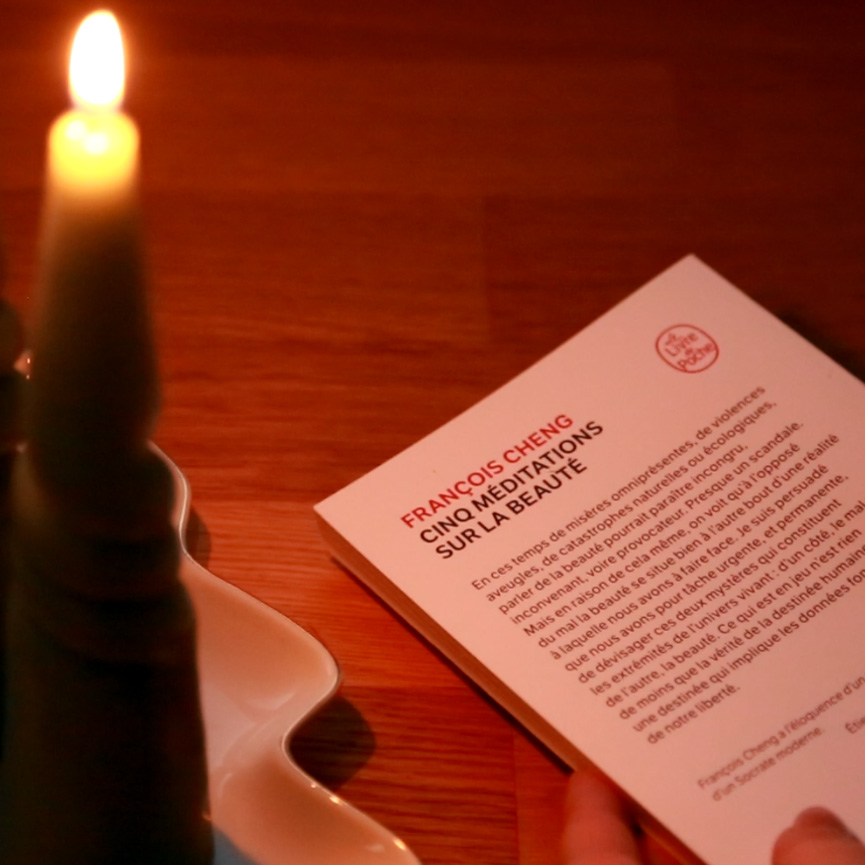
For such a subtle yet profound shift in energy, I’m offering myself the gift of wise words, diving into François Cheng’s Five Meditations on Beauty. Born in China in 1929, Cheng has lived in France since 1949. He is a poet, calligrapher, translator of Chinese poetry into French and French poetry into Chinese. Author of extraordinary essays on Chinese literature and painting, he was elected to the Académie Française in 2002—the first person of Asian origin to receive this honor. His unique synthesis of Chinese sensibility expressed through French language is, in my humble linguist’s opinion, a true gift to readers of either culture. And an appropriate companion for me tonight as I sit with the Sacred Silence, honoring both yin’s culmination and yang’s imminent return.
I hope I’ve inspired some winter reflection for your evening, dear friends. Remember that your energy exists in constant dialogue with the energy of the Earth. The planet breathes, and we breathe with it. Observe these natural rhythms. Adjust your own pace to match them. Rejoice in your uniqueness while recognizing your participation in patterns far larger and older than any individual life.
Tonight, the darkness reaches its fullest expression. Tomorrow, the light begins—slowly, imperceptibly, but inevitably—to return. This is the promise, the pattern, the eternal turning. May you find comfort in the dark and hope in the promise of returning light.
Until tomorrow, dear friends—good night, and blessed solstice.

WINTER SOLSTICE TRADITIONS & RITUALS:
What Is the Winter Solstice?
- Astronomical event: Shortest day and longest night of the year in Northern Hemisphere (opposite in Southern Hemisphere)
- Date: Usually December 21 or 22 (varies slightly year to year)
- Cause: Earth’s axial tilt positions Northern Hemisphere at maximum distance from sun
- Significance: Marks the “return of the light”—days begin lengthening again after this point
- Names across cultures: Yule (Germanic), Dongzhi (Chinese), Soyal (Hopi), Saturnalia (Roman), Inti Raymi (Incan, though celebrated at summer solstice)
SOLSTICE RITUAL IDEAS:
Simple Practices:
- Light candles at dusk to welcome returning light
- Write what you’re releasing on paper, burn it safely
- Make wishes or set intentions for the returning solar year
- Stay up through the longest night, greeting dawn
- Create art using natural materials
- Journal about the past year and hopes for the next
- Share a meal with loved ones
- Spend time in nature, even briefly
- Practice meditation or yoga
- Read poetry or sacred texts
- Listen to music that moves you
Contemplative Questions:
- What needs to rest or die in my life to make room for new growth?
- What seeds am I planting during this dark time that will sprout in spring?
- How can I honor both darkness and light as necessary?
- What wisdom has this year’s darkness taught me?
- What do I hope the returning light will illuminate?

Written by Alexandra Poppy
Writer, reader & curator of The Ritual of Reading
I’m Alexandra, the voice behind The Ritual of Reading. Somewhere between a stack of novels and a half-finished pot of tea, I keep finding traces of the life I want to live—slower, richer, filled with stories. The Ritual of Reading is where I gather what I love: books that linger, places with a past, and rituals that make ordinary days feel a little more meaningful. I write from Paris, where elegant bookshops and old-fashioned cafés offer endless inspiration—and I share it here, hoping it brings a spark to your own days, too.