
Austrian Advent Calendar Day 17

Welcome to our seventeenth day in the Austrian Advent Calendar, dear friends.
Coffee and culture—two words that perhaps best describe Vienna. They’re so intertwined in the city’s identity that separating them becomes impossible. This might be one reason I feel so immediately at home when visiting: I, too, believe that the best conversations happen over coffee, that cafés should be places where you can linger for hours with a book or a friend, that the ritual of sitting down with a properly made cup is worth preserving against the relentless efficiency of takeaway culture. And with each trip to Vienna, I discover a new facet of these twin passions.
When I first decided to dedicate this year’s Advent Calendar to Austria, I owned only two books on the subject: Rilke’s Letters to a Young Poet and Robert Seethaler’s The Tobacconist. I’d purchased the latter in a hurry at Liverpool Airport, selecting it almost randomly from the limited offerings, with no particular expectations. But Seethaler’s writing proved so charming and quietly powerful that it rapidly became a memorable reading experience—the sort of book that stays with you long after you’ve turned the final page.
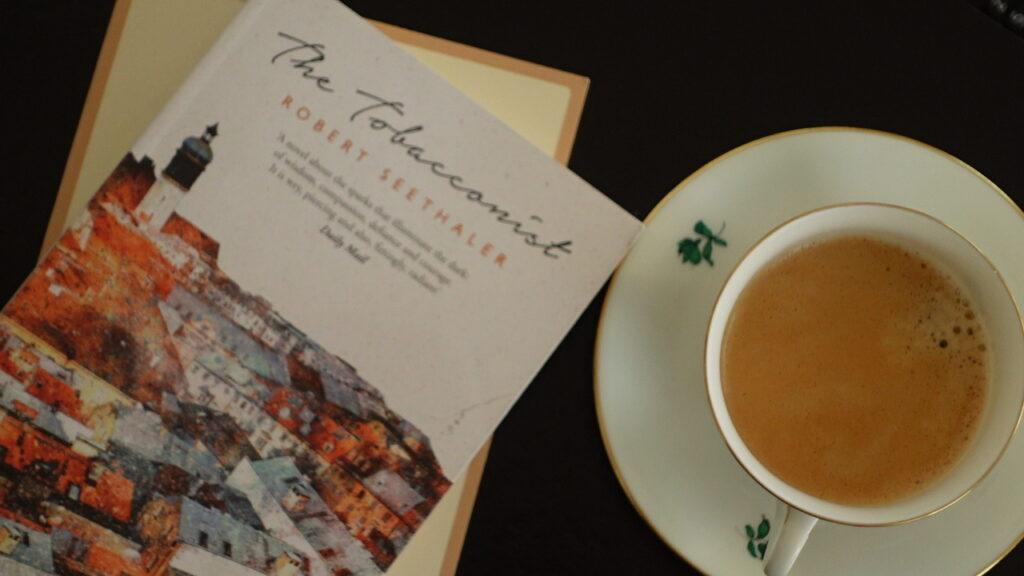
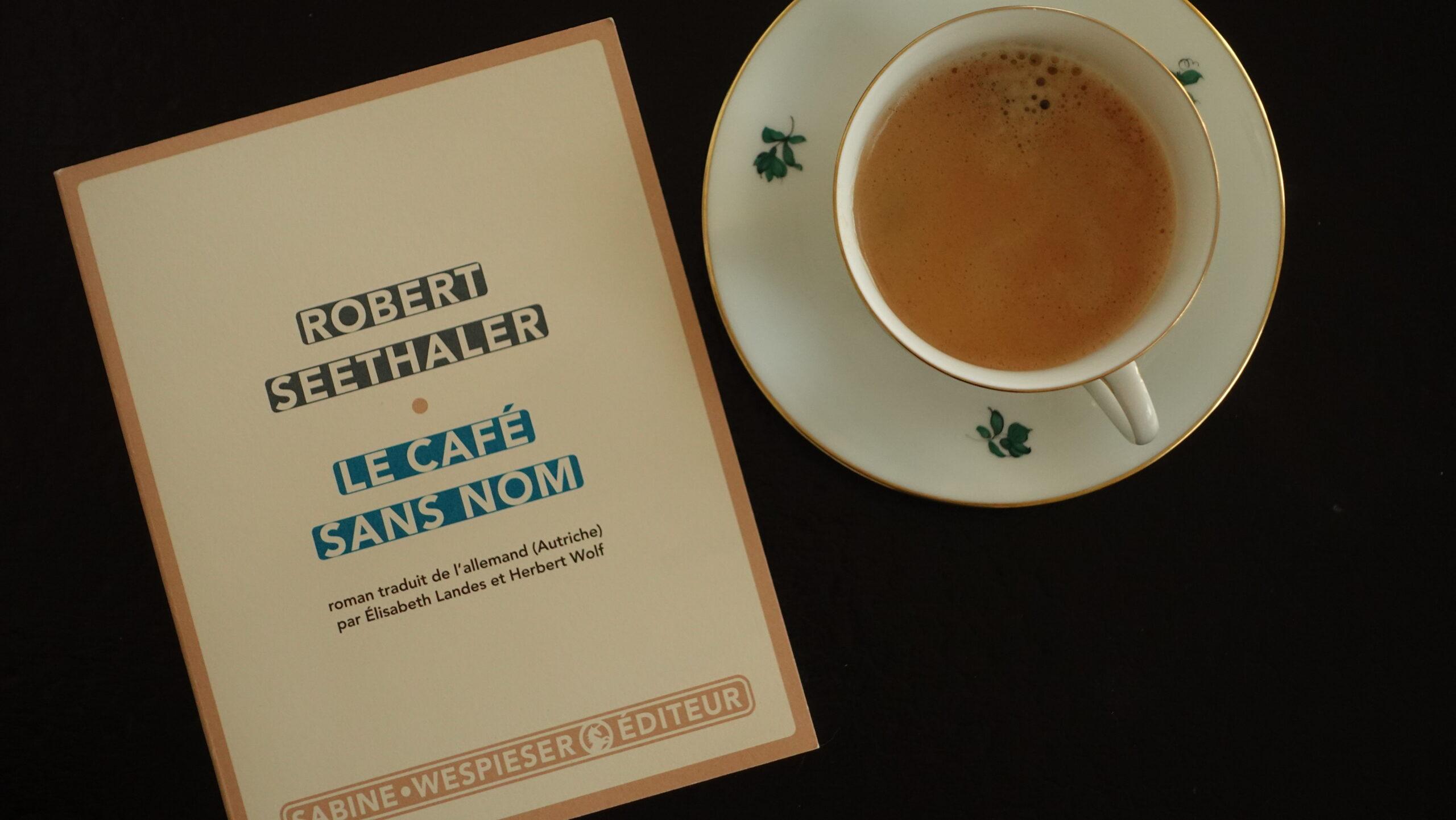
So imagine my delight when I discovered that my local bookshop was hosting an evening with Robert Seethaler for the launch of his latest translation into French. I was already deep in preparation for this Advent Calendar, so I took this as a sign—and what an auspicious one it turned out to be.
His most recent novel is titled The Café With No Name, and it stands as an ode to the beauty of small communities tucked into the heart of a great city—those pockets of intimacy and connection that survive somehow amid urban anonymity.

The protagonist, Robert Simon, works as a day laborer at the Karmelitermarkt in Vienna. Every morning on his way to work, he passes an abandoned little coffee house and dreams of one day bringing it back to life. In the particular effervescence of postwar Vienna—life resuming after the end of the Nazi regime, the city rebuilding both physically and spiritually—he takes a leap of faith and signs a lease with the property owner. His life transforms completely. The people he meets, the energy he pours into restoring the café, the joy it ultimately brings not only to him but to everyone who enters—all of this Seethaler renders in prose so beautiful it feels like a story from a world that knows no evil, where people possess fundamentally good souls and even when they make mistakes, the consequences are never catastrophic.
Seethaler’s Vienna is beautiful precisely in its famously conservative ways, because what it conserves is kindness, decency, the small gestures of human connection that make daily life bearable and sometimes even lovely. And the symbol he chooses to represent this preservation of goodness is the community that gathers in a café—strangers who become regulars, regulars who become friends, a space where you’re recognized and welcomed, where your particular coffee order is remembered, where you can sit alone with a newspaper or join a conversation at the next table.
Vienna’s café culture is justly world-famous, with roots stretching back to the Turkish sieges of the sixteenth and seventeenth centuries, when coffee beans arrived quite literally at the city’s fortified walls. Legend holds that after the failed siege of 1683, the retreating Ottoman army left behind sacks of coffee beans, which enterprising Viennese turned into the foundation of an enduring tradition.


Today you need only take your pick from the city’s exceptionally beautiful cafés for an afternoon gift of a proper coffee break. Many occupy historic buildings with soaring ceilings, crystal chandeliers, marble tables, and that particular atmosphere of faded grandeur that makes you feel you’ve stepped backward into a more elegant era. Just remember to make a reservation when they offer it—the best-known establishments fill quickly, especially during the holiday season.
I decided to combine coffee and culture in Vienna by visiting the café at the Kunsthistorisches Museum. Located in the dome hall of this magnificent nineteenth-century building, surrounded by marble columns and frescoes, this is a place to treat yourself to a truly memorable coffee experience. And what could be more quintessentially Viennese than an Einspänner?
This is a strong black coffee topped with a generous cloud of unsweetened whipped cream—the drink of choice for Fiaker drivers (the horse-drawn carriage operators) because the cream provided a thermal barrier that kept the coffee hot underneath, essential when working outdoors in Viennese winters. You drink it without stirring, sipping the hot coffee through the cool cream—a perfect balance of temperatures and textures.

As for satisfying the sweet tooth, we indulged in a creative reinterpretation of the Sachertorte that preserved the classic flavors of dark chocolate and apricot but transformed them into an airy soufflé. Tradition honored through innovation—very Viennese indeed.
A historic place, a quintessential Viennese delight, and the feeling of being exactly where you should be, doing exactly what civilized people have done in this city for centuries: pausing, savoring, connecting. This is café culture at its finest.
Until tomorrow, dear friends—enjoy your cup of coffee, wherever you happen to be drinking it.
READING RECOMMENDATIONS:
By Robert Seethaler:
- The Tobacconist (Der Trafikant) Available in English translation
Set in 1930s Vienna as Nazism rises | Tender, powerful, unforgettable
🇺🇸 World of Books | 🇬🇧 World of Books | 🇫🇷 Momox Shop
A short note on how and why I share book links - The Café With No Name (Das Café ohne Namen) Available in English translation
Set in postwar Vienna | An ode to community and small kindnesses
🇺🇸 World of Books | 🇬🇧 World of Books | 🇫🇷 Momox Shop
A short note on how and why I share book links
VIENNA CAFÉ RECOMMENDATIONS:
Historic Cafés:
- Café Central – Herrengasse 14 Legendary literary café, frequented by Freud, Trotsky, and others Reservations essential
- Café Sacher – Philharmoniker Str. 4 Home of the original Sachertorte Elegant, touristy, but genuinely excellent
- Café Sperl – Gumpendorfer Str. 11 Authentic Viennese coffeehouse, less touristy Beautiful old-world atmosphere
Museum Cafés:
- Café at Kunsthistorisches Museum Dome hall setting, spectacular architecture Creative takes on classic Viennese pastries Reservations recommended
VIENNESE COFFEE GLOSSARY:
- Einspänner – Strong black coffee topped with whipped cream
- Melange – Similar to cappuccino, espresso with steamed milk and foam
- Brauner – Black coffee with a small amount of milk or cream
- Verlängerter – Espresso diluted with hot water (like an Americano)
- Wiener Melange – Coffee with steamed milk, sometimes topped with foam

Written by Alexandra Poppy
Writer, reader & curator of The Ritual of Reading
I’m Alexandra, the voice behind The Ritual of Reading. Somewhere between a stack of novels and a half-finished pot of tea, I keep finding traces of the life I want to live—slower, richer, filled with stories. The Ritual of Reading is where I gather what I love: books that linger, places with a past, and rituals that make ordinary days feel a little more meaningful. I write from Paris, where elegant bookshops and old-fashioned cafés offer endless inspiration—and I share it here, hoping it brings a spark to your own days, too.