Austrian Advent Calendar Day 10
Hello, dear friends! We’ve already reached day ten in our Austrian Advent Calendar, and as festive menus begin taking shape in kitchens across the hemisphere, I thought I’d share some Austrian cookbooks to inspire your planning—or perhaps to simply transport you through imagination and appetite to Vienna, even if you never make a single recipe.
I mentioned on the first day of Advent that many Austro-Hungarian customs persist to this day in my hometown and throughout my native Transylvania. This historical connection made exploring these cookbooks a particularly amusing and nostalgic experience—discovering so many dishes from my childhood in their original, “official” Austrian form. It’s like finding the source of a river you’ve known all your life but only downstream from where it begins. Suddenly the familiar reveals itself as borrowed, adapted, traveled across borders and generations to arrive on the table where you first tasted it.
Let me introduce you to three cookbooks that together paint a comprehensive portrait of Austrian culinary excellence, from imperial grandeur to café coziness.
Habsburg Cuisine: Imperial Royal Cookbook
by Herta Margarete Habsburg-Lothringen
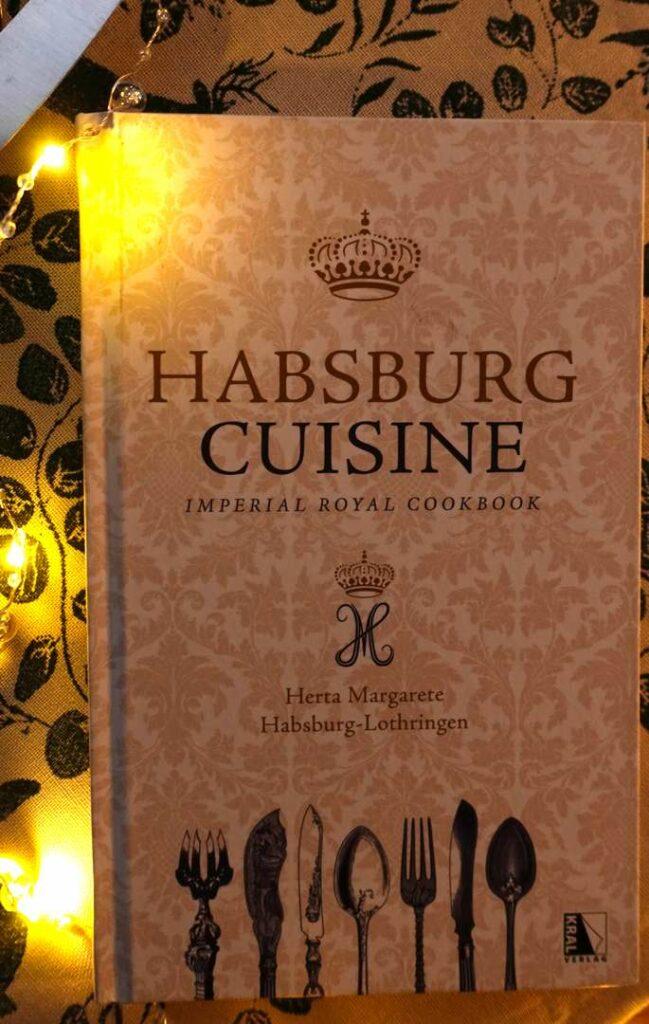
We begin with the richest historical source for authentic Austrian cooking: a cookbook compiled by Archduchess Herta Margarete herself, drawing on recipes from the Imperial household. She created this collection originally as a gift to offer during official travels—something that would promote Austrian traditions while remaining deeply personal, carrying the authority of someone whose family literally shaped the cuisine being shared.
The recipes themselves come accompanied by historical anecdotes and family photographs, transforming this from a mere instruction manual into something you genuinely enjoy reading independent of any cooking plans. You can settle into an armchair with this book and simply travel through Habsburg culinary history, learning not just how to make Tafelspitz but why it mattered, who served it, what occasions called for particular dishes.
I must particularly mention the brief yet essential tour of all the Imperial provinces—many of which are now independent nations with their own distinct identities. The cookbook acknowledges how Bohemia, Hungary, Galicia, Croatia, and other territories contributed to the gastronomy of the Empire, and how their influence remains not only recognized but deeply appreciated to this day. This is cuisine as cultural history, food as the story of how diverse peoples lived together under one imperial umbrella, each contributing their traditions to create something larger than any single region could have achieved alone.
This book offers more than recipes; it provides context, memory, and connection to a vanished world that somehow persists on our plates.
The Sacher Cookbook
(Various editions available)
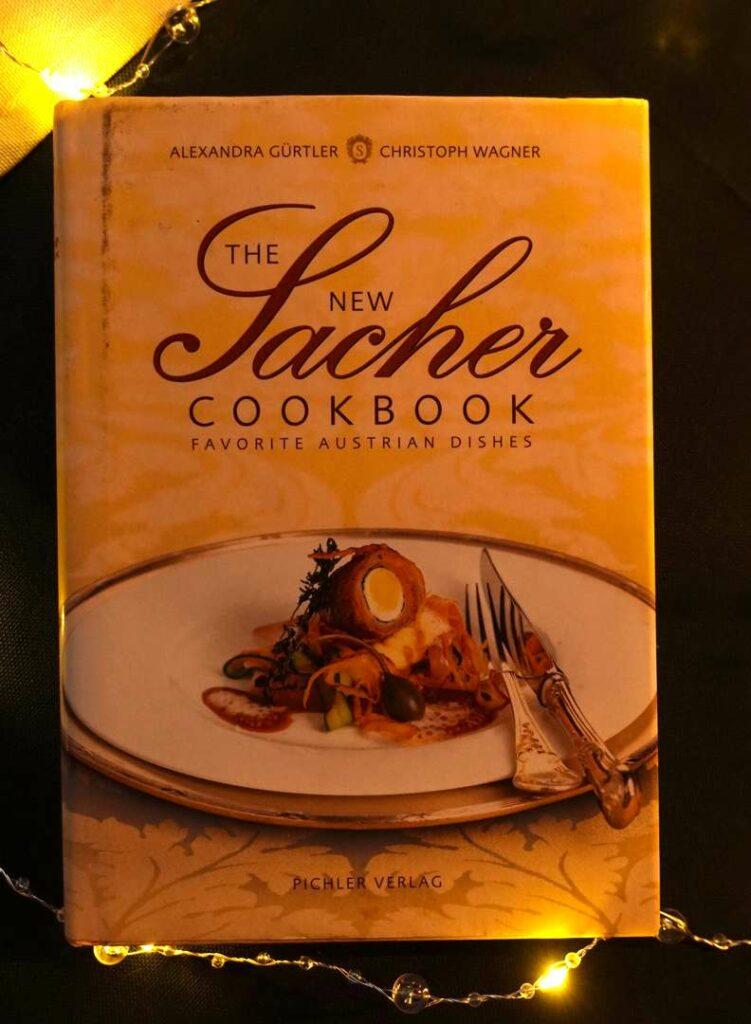
My second recommendation connects to one of the internationally recognized symbols of Austrian gastronomic excellence: the Hotel Sacher. The hotel was founded in 1876 by Eduard Sacher, son of the legendary confectioner Franz Sacher, who invented the world-renowned Sachertorte in 1832 when he was merely a sixteen-year-old apprentice tasked with creating a special dessert for Prince Metternich. That cake—dense chocolate layers separated by apricot jam, enrobed in dark chocolate glaze—became not just famous but iconic, spawning legal battles over who could claim the “original” recipe and endless attempts at replication.
Over the decades, the kitchens of this five-star Viennese luxury hotel have served extraordinary guests: Emperor Franz Joseph, King Edward VIII and Wallis Simpson, Queen Elizabeth II and Prince Philip, Prince Rainier III of Monaco and Grace Kelly, along with countless diplomats, artists, and dignitaries who expected nothing less than perfection. The exquisite recipes developed to receive such distinguished guests have been gathered in multiple beautiful cookbooks over the years, all equally elegant and inspiring in their presentation.
Yet one thing unites all editions: none can reveal the actual recipe for the Sachertorte itself, which remains a closely guarded secret, known only to a select few in the hotel’s kitchens and protected as zealously as any state secret. This tantalizing omission somehow makes the cookbooks more rather than less appealing—you can recreate the hotel’s other magnificent dishes, but the most famous one remains eternally just out of reach, maintaining its mystique.
The books offer glimpses into luxury hospitality at its zenith: Wiener Schnitzel prepared to exacting standards, soups of crystalline clarity, pastries that look almost too beautiful to eat. This is cooking as performance, as art, as the physical embodiment of Viennese sophistication.
The Austrian Café: The Best of Desserts and Pastries
(Various authors have published books with similar titles)
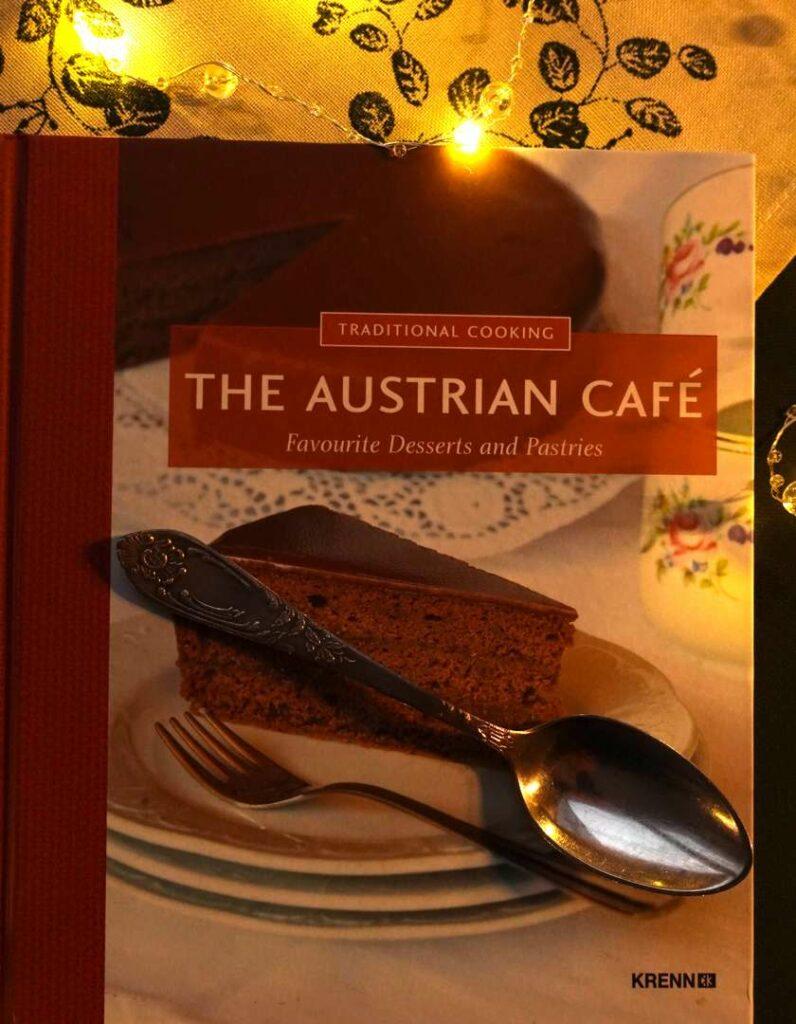
Finally, my guilty pleasure recommendation, though I’m not certain “guilty” applies when the pleasure is this pure and unambiguous. The title announces its intentions clearly: this is a book dedicated entirely to Austrian café culture’s sweet offerings, and your taste buds wake up immediately upon reading it, as though they can somehow taste through your eyes.
Little delicate pastries (Petit Fours), large frosted layer cakes (Torten), pancakes both savory and sweet (Palatschinken), Strudel in all its variations, Sachertorte attempts (never quite the original, but delicious nonetheless), Linzertorte with its lattice top and jam filling, Dobostorte with its caramel crown, Gugelhupf for afternoon coffee—everything becomes possible with a cookbook in hand and some time on a winter afternoon.
This is the season for indulgence, after all, when the cold outside justifies the comfort inside, when celebration calls for something sweet and beautiful on the table. And this represents perhaps the quickest, most affordable method of traveling to Austria—a journey that costs merely flour, sugar, eggs, butter, and a few hours of your time. The return on that modest investment is extraordinary: your kitchen fills with the scents of a Viennese café, your table holds pastries you might have found in a Konditorei, and for those moments of baking and eating, you’ve created a small pocket of Austrian atmosphere wherever you happen to be.
I hope you’ll try some Austrian recipes this winter, dear friends. They’ll bring a little Imperial magic to your table, a taste of café elegance, a connection to centuries of tradition that somehow remain alive and delicious despite the vanished empire that created them. Food has this power—to carry culture forward even when the political structures that shaped it have long since dissolved.
Until tomorrow—happy cooking, guten Appetit, and may your kitchen adventures be delicious!

Written by Alexandra Poppy
Writer, reader & curator of The Ritual of Reading
I’m Alexandra, the voice behind The Ritual of Reading. Somewhere between a stack of novels and a half-finished pot of tea, I keep finding traces of the life I want to live—slower, richer, filled with stories. The Ritual of Reading is where I gather what I love: books that linger, places with a past, and rituals that make ordinary days feel a little more meaningful. I write from Paris, where elegant bookshops and old-fashioned cafés offer endless inspiration—and I share it here, hoping it brings a spark to your own days, too.