
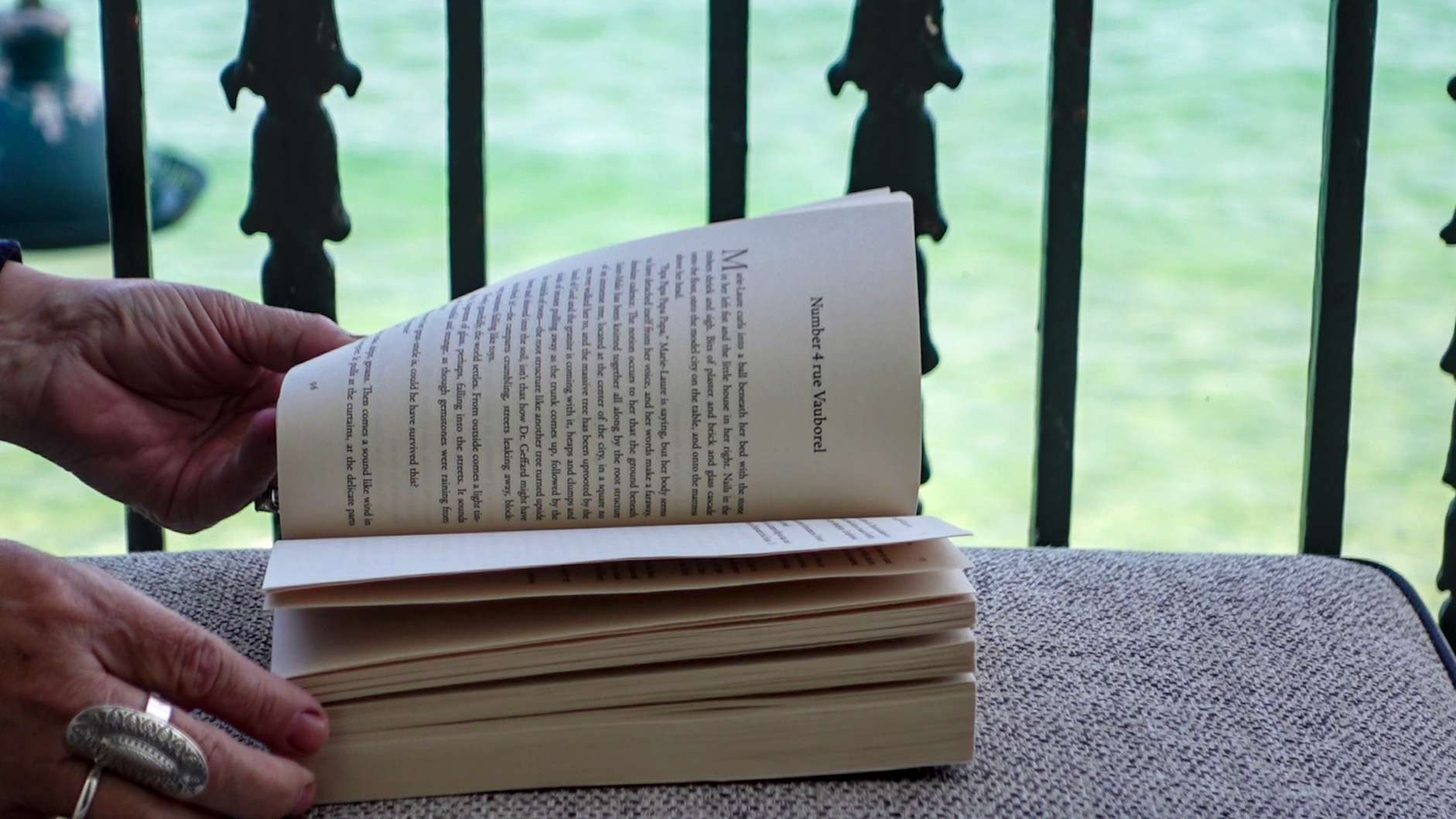
I have made it a quiet rule never to speak ill of books in these pages. Not out of timidity, but out of genuine conviction: this space has always been devoted to what nourishes, what delights, what lingers. And yet — here I am, writing what I suppose is a confessional, because I suspect I am not the only reader who has stood in the wreckage of an abandoned book and felt, quite unreasonably, like a failure.
This piece is for you, if you’ve ever felt that particular guilt.
It began, as these things often do, with the best of intentions. Earlier this year I decided to dedicate the entire month of March to food fiction and memoirs — a seasonal ritual meant to rekindle my appetite for spring cooking and bring a kind of gentle reset to both my kitchen and my body. I had chosen carefully, or so I thought. Two food memoirs followed: both acclaimed, both written by authors who clearly meant something by what they had put on the page. And yet both left me, chapter after chapter, with a creeping sense of melancholy I had done nothing to invite. Each author circled back to a childhood shadowed by bleakness, framing food as the thing that had saved them — which is a beautiful premise, truly — but the weight of what came before the saving was more than I could carry on a quiet evening. One of those books I abandoned past the halfway mark. The other I let go after eighty pages. And then I sat with the particular discomfort of someone who has, apparently, quit.
Which brought me here. To this question I imagine many of us carry in silence: what do we do when a book simply isn’t right for us — and why does it feel so much like a moral failing when we walk away?
How I Choose What to Read
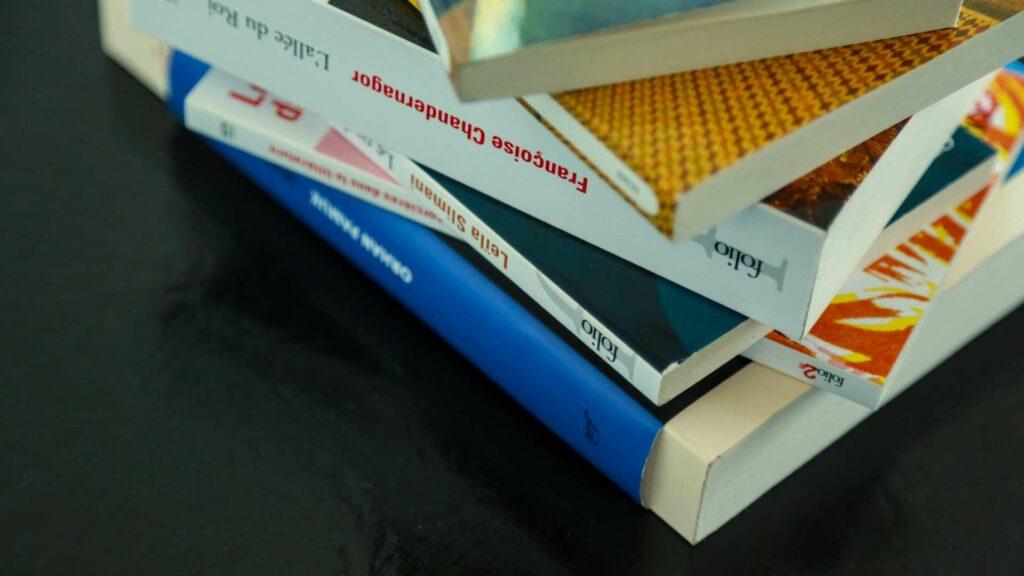
If I’m honest, I couldn’t always tell you exactly how a book finds its way to me. Some arrive as gifts. Others come through recommendations from friends whose taste I’ve learned to trust, or from a passage mentioned in a blog post or YouTube video that lands in exactly the right moment. A handful have come through authors I love so completely — Elif Shafak, Ann Patchett, Éric-Emmanuel Schmitt — that I await each new release the way one awaits a letter from a dear friend.
But ever since The Ritual of Reading began to take shape, I discovered something I think I had always carried but never properly named: a deep hunger for themed reading. When a subject captivates me, I don’t simply want one book about it — I want to disappear entirely into that world. I want the full immersion. I once prepared a visit to the tulip fields of the Netherlands with twelve different novels. I created my own Hanami season at home one April with seven Japanese novels. I’ve built five Advent Calendar reading series across Scandinavia, Austria, Belgium, medieval France and medieval England. For each of these undertakings, I begin the same way: with a long and pleasurable afternoon of research — newspaper archives, blogs, Goodreads lists, conversations with my AI assistants — until I have something resembling a map. Sometimes a spreadsheet appears. There have been colour codes. I contain multitudes, and I have entirely stopped apologising for it.
This is, I think, why my shelves contain relatively few unfinished books. Most of what I choose, I choose on purpose — because it belongs to a world I am actively building in my imagination.
And yet. Even the most careful reader picks up the wrong book sometimes.
On DNF-ing: Giving Yourself Permission
I am a recovering perfectionist. For years, abandoning a book midway felt — there is no gentler word for it — shameful. Some stubborn conviction told me that the discomfort was mine to overcome, that the book was testing something in me I ought not to fail. So I would continue. I would finish. And I would arrive at the last page carrying a weight of sadness or frustration that seemed entirely disproportionate to the act of reading a few hundred pages of someone else’s sentences.
What changed, gradually, was exposure. As I began reading across more languages, I became increasingly aware of the sheer abundance that exists beyond any single book I might feel obligated to finish. There are books that are so exquisitely matched to who I am, what I need, and how I think, that persisting with the wrong one began to feel not noble but wasteful. The guilt of DNF-ing, I eventually understood, had been keeping me from something better.
These days, I give myself roughly fifty pages. Fifty pages is generous enough to allow for slow beginnings, for narratives that need time to find their footing. But if by fifty pages a book is actively diminishing my days — pulling the light out of my evenings, weighing on me in the small hours — then I consider that information. A book is not a test of character. It is, ideally, a form of nourishment. And one is allowed to push away what does not nourish.
How to Recover from a Reading Disappointment

The aftermath of a DNF used to undo me more than I care to admit. I would wonder, somewhere in the quieter parts of my mind, whether my inability to connect with a book reflected some limitation in me — a failure of perception, of generosity, of intellectual reach. I now recognise this for what it was: a rather unkind story I was telling myself.
What I have learned instead is something I also apply to difficult days in ordinary life. When I encounter something that pulls my mood into shadow, I don’t wait for it to lift on its own. I do something I know — know — will restore me. In daily life, that might mean an episode of The Big Bang Theory, which has the peculiar power, even after countless rewatchings, of returning me to something lighter within minutes. In reading life, the equivalent is reaching for a book I am absolutely certain will delight me.
For me, this means one of several reliable categories. A murder mystery — Agatha Christie never fails me, Dorothy L. Sayers is equally steadying, and more recently Richard Osman’s gentle comedy and Georges Simenon’s Commissaire Maigret have earned a permanent place on my comfort shelf. A travel memoir or one of those particular books about relocating one’s life to an unfamiliar country and building something new — that genre has an almost unfailing power to lift my spirits. Or the newest release from one of my favourite contemporary authors: the particular pleasure of returning to a known voice, a known sensibility, like settling in with someone you’ve missed.
The point, simply, is this: the cure for a bad book is a good one. And the good ones are never very far away.
Reading with Intention: A Case for the DNF
There is something quietly important in learning to close a book without apology. Not every book is written for every reader — and that is not a failure of either party. It is simply the nature of a world that contains, mercifully, far more books than any one life can hold. The act of choosing, of curating one’s reading life with the same care one might bring to any other ritual, is itself a form of self-knowledge. It took me longer than I would like to admit to understand that discernment is not the same as dismissal.
Read with intention. Accept the mismatches with grace. And always, always have a comfort book within reach.
Now I’d love to hear from you. How do you handle a DNF? Do you feel remorse, relief — or some complicated mixture of both? And what kind of book do you reach for when you need to mend a broken reader’s heart? Tell me in the comments below — or come find me on Instagram where this conversation continues.

Written by Alexandra Poppy
Writer, reader & curator of The Ritual of Reading
I’m Alexandra, the voice behind The Ritual of Reading. Somewhere between a stack of novels and a half-finished pot of tea, I keep finding traces of the life I want to live—slower, richer, filled with stories. The Ritual of Reading is where I gather what I love: books that linger, places with a past, and rituals that make ordinary days feel a little more meaningful. I write from Paris, where elegant bookshops and old-fashioned cafés offer endless inspiration—and I share it here, hoping it brings a spark to your own days, too.
Enter The Ritual of Reading
Each Sunday, receive a letter to steady your attention—literary inspiration, seasonal rituals and reflections from a life shaped by books.
On the first of each month, a gift: The Literary View, a custom wallpaper created to accompany your days.

That’s a really helpful perspective. Sometimes it’s more about respecting your time and energy than forcing yourself to finish a book.
Exactly! In my case, I needed time to detach myself from the academic structure of reading which demands (and even penalizes you for a lack of) completion. That happened a few years after my last degree, when I could finally dissociate from those standards.