January arrived this year not as a fresh start, but as exhaustion wearing a calendar date.
The last three months of 2025 had been chaotic—the kind of chaos that makes you feel like you’re running just to stay in place. I’d spent those weeks battling to keep my creative life afloat while the rest of my days demanded more than I had to give. And when the new year finally came, I found myself standing in that peculiar stillness that follows depletion: Now what?
I needed to decide on some things for 2026. Not the action part—I wasn’t ready for action—but the vision part. What is the direction I wish to move towards? And in a world of slow attention spans, fast-changing algorithms, and overexposure to information, my instinct whispered something unexpected: Don’t lose yourself in something new. Go back to your basics.
So I stood in front of my bookshelves and picked up what made me smile with the memory of how I felt reading it for the first time.
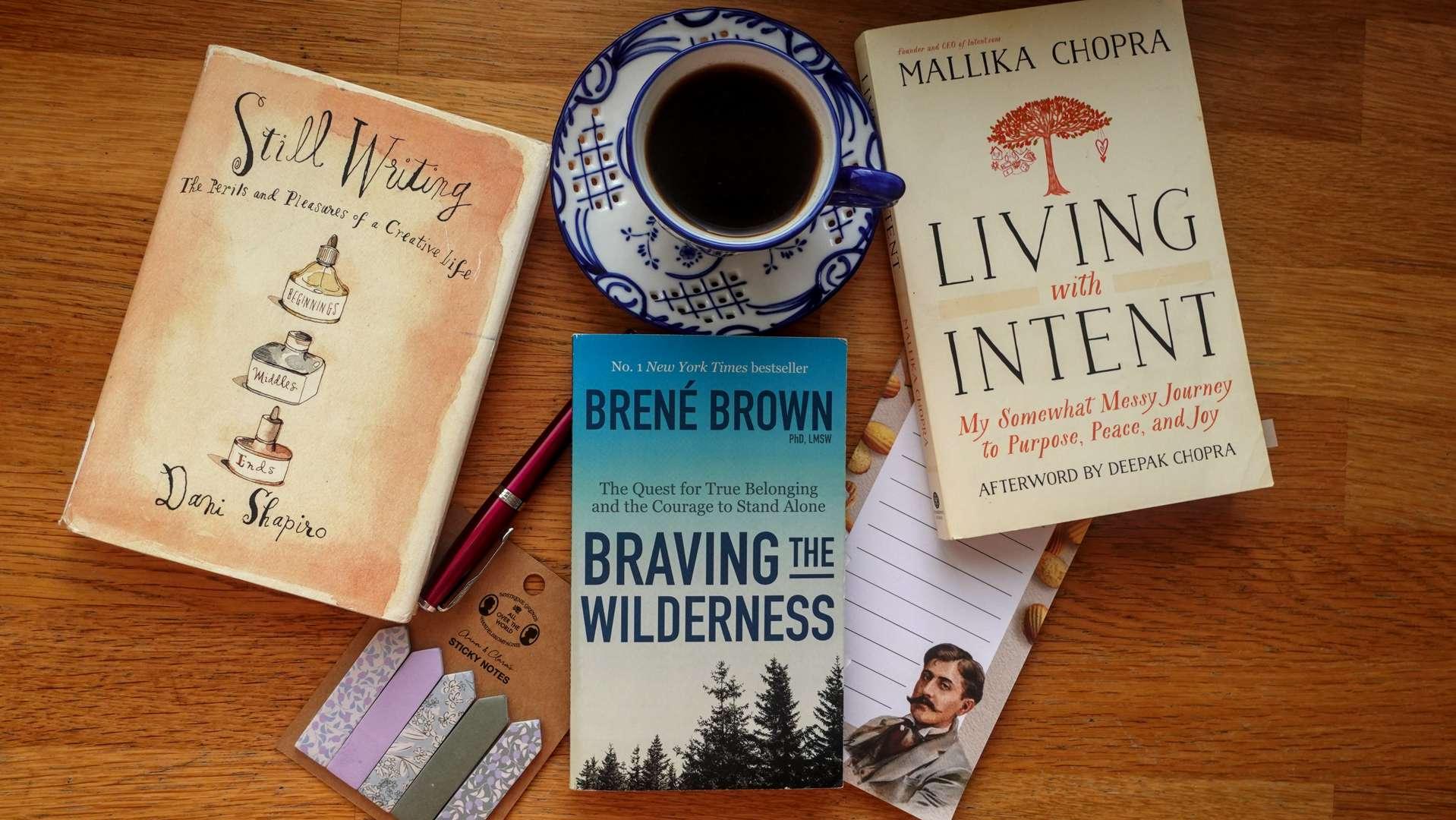
That’s how I found myself with three books in my hands—three old friends I hadn’t visited in years.
Living with Intent: Lessons on Being a “Frequency Holder” from Mallika Chopra
I have a tendency to tick off things on my list as “got it” and carry on with the certitude that the lesson I learned is imprinted in me forever. But life constantly brings new things, we live in an overflow of information, and somewhere in the chaos of 2025, I’d lost the thread. The ideas I thought I’d integrated had become diluted, their edges softened until I could barely make out their original shape.
Mallika Chopra’s Living with Intent was the first book I reached for, and when I opened it, her words felt like she’d been watching me crawl into bed each night:
“More often than I like to admit, I crawl into bed wondering what I did all day. Am I nurturing my body, my mind, my soul? I think about what’s going on in the world and wish I could do more to give back. What is my purpose? How can I serve? Am I living with intent?”
– Mallika Chopra, Living with Intent
That last question—Am I living with intent?—felt particularly sharp this January.
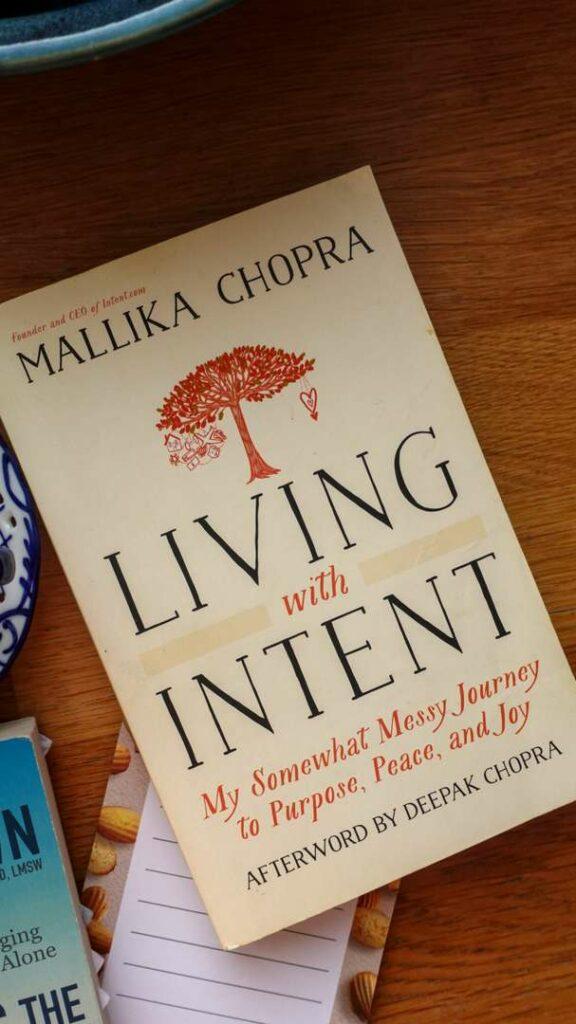
After two previous books for parents, Mallika documented her own year-long journey into finding purpose in her life as an entrepreneur, a wife and a mother. Through deeply personal stories and conversations with thought leaders like Eckhart Tolle, Andrew Weil, and Marianne Williamson, she breaks down the path to intentional living into a practical framework. But the book is less about grand gestures and more about finding meaning in the everyday—about discovering that living with purpose doesn’t always mean changing the world in visible ways.
How many of us live the idea of a life either already traced for us (by family expectations, by society’s patterns) or maybe a life we vaguely envisioned at one point, but never reassessed to see if it still aligns with who we are today? And when we feel the disconnect—when we wonder what we did all day, all year—we think the answer must be to do something bigger. Our names should be engraved in golden letters, mentioned with reverence in the press or the public eye.
But there’s a passage in Mallika’s book that I remembered the moment I picked it up again—a conversation she had with Eckhart Tolle that I first read ten years ago (speak of the 2016 trend on social media). Here it is:
“I tell Tolle that while being a mom is the most important thing in my life, I sometimes worry that it isn’t enough. He smiles, almost like my grandfather would when I needed reassurance.
“There are people who are happy to be doing small things,” he says. “I call them frequency holders. They are just as important as those who create big things. Their purpose is to give their full attention to the present moment and to every action and interaction with other human beings—to be fully aware even in the smallest interactions. In that way, they also change the world for the better. In our culture, frequency holders aren’t often recognized, but that doesn’t mean they’re not important. I was a frequency holder for a long time and still am in many ways.””
– Mallika Chopra, Living with Intent
Maybe you needed to read that today too. I did. I’m lucky to have a best friend who says to me, “Remember when Mallika Chopra met Eckhart Tolle?”—and I instantly recalibrate my anxiety.
But re-reading this in January 2026, after months of feeling like I wasn’t enough, the concept of being a “frequency holder” landed differently. It wasn’t just permission to do small things. It was an invitation to ask: Where do I even want to hold frequency? What space is mine to tend?
Braving the Wilderness: Brené Brown on True Belonging and Authenticity
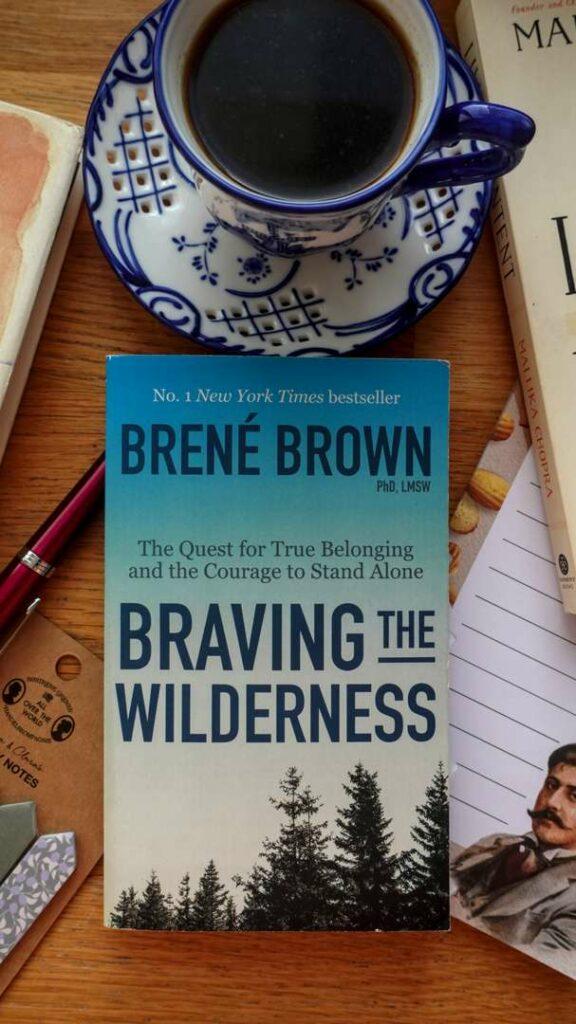
Which brought me to the second book I needed: Brené Brown’s Braving the Wilderness.
In this exploration of true belonging, Brown redefines what it means to feel connected in an increasingly divided world. Drawing on her research as a social scientist, she argues that we’re experiencing a spiritual crisis of disconnection and introduces four practices of true belonging that challenge everything we believe about ourselves and each other. The wilderness she describes is both metaphorical and real: an untamed, unpredictable place of solitude where we learn that belonging doesn’t come from changing who we are, but from being who we are—even when standing alone feels terrifying.
Brené’s books are some of my favourite reads when I feel a little disconnect between myself and the world I live in—and January 2026 definitely qualified.
Her whole premise seems to begin and end with a quote from Maya Angelou: “You are only free when you realize you belong no place—you belong every place—no place at all. The price is high. The reward is great.”
As a social worker and scientist, Brené is constantly looking at the individual from the perspective of community, of society. A vantage point that isn’t always comfortable for me, a functional introvert who prefers to protect her sensibility by limiting exterior engagements. I challenge myself constantly with her books in order to broaden my instinctive views.
There is something unsettling for me in the concept of belonging, which is ironic since I have done nothing if not adapt and learn how to belong in different places for the past twenty years. I left home at eighteen and changed regions in my home country, which was almost as exotic as changing countries altogether, Romania being so divided (still) by the history of its three historic provinces and the empires that influenced each one (Habsburg, Tsarist and Ottoman). At twenty-one I left for Paris, studied, worked, met people, lived and dreamed in a new language, tried to find my place in this world that felt fascinating and yet so different from my inner world.
Do I belong in any of the places I find myself? Is mimetism necessary? Do I need to quiet down my personality in order to be accepted?
These questions felt especially loud this January, standing in front of my bookshelves, trying to figure out what direction to move towards in 2026. Because here’s what the chaos of 2025 had taught me: I’d spent so much energy trying to keep up—with trends, with expectations, with the relentless pace of everything—that I’d started to lose track of what was actually mine.
And there’s guilt in that, isn’t there? In choosing to step back, to protect your peace, to tend your own fire when the world feels like it’s burning. I wrote about this earlier this week—about the silent heroes who refuse to let crisis steal every moment of joy, who understand that your serenity isn’t indecent, it’s essential. (You can read that reflection here if it resonates.)
Brené answered all of these questions with her own definition (which is what I’d been doing instinctively, I realized):
“True belonging is the spiritual practice of believing in and belonging to yourself so deeply that you can share your most authentic self with the world and find sacredness in both being a part of something and standing alone in the wilderness. True belonging doesn’t require you to change who you are; it requires you to be who you are.”
-Brené Brown, Braving the Wilderness
Reading this again, I understood: maybe the exhaustion came from trying to belong everywhere. Maybe January’s stillness was inviting me into the wilderness—not as exile, but as homecoming.
But if I was going to stand alone, if I was going to hold my own frequency in my own space, I needed to know how to stay grounded when everything felt uncertain.
Still Writing: Finding Your “Mountain Pose” with Dani Shapiro
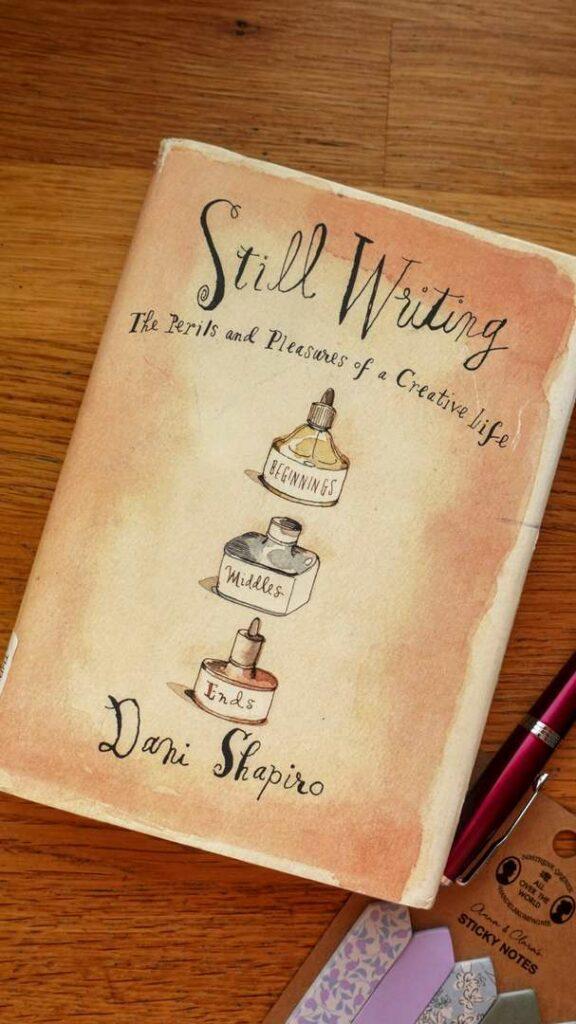
Which is why the third book chose me as much as I chose it: Dani Shapiro’s Still Writing: The Perils and Pleasures of a Creative Life.
At once a memoir, a meditation on the artistic process, and advice on craft, this intimate guide offers hard-won wisdom from Shapiro’s twenty-plus years of teaching and writing. Divided into beginnings, middles, and ends—both of books and of a writing life—she explores everything from dealing with distractions and self-sabotage to finding courage in uncertainty. With a blend of personal stories, lessons from other writers, and honest reflections on her own creative journey, Shapiro offers not just craft advice but a deeply human exploration of what it means to commit to a creative life, even when—especially when—it feels impossible.
The first time I read this, in 2017, I was only contemplating a vague idea of writing, in a rather turbulent time in my life, spending many nights trying to envision what my ideal life would look like. Shapiro’s words felt soothing but rather abstract in a way, like I was missing a few miles ahead before I could catch up with her.
It would seem those miles were actually some nine years, a few more life lessons, and the peace of mind to actually receive her message.
Because this time, when I opened the book, one passage stopped me completely:
“In my yoga practice, I have been taught to begin in mountain pose. Mountain pose—standing with feet slightly apart, with head, neck and pelvis in alignment, eyes softly focused, face relaxed—is a grounding pose. Until we can feel the ground beneath our feet, supporting us, we cannot attempt the other poses: eagle, dancer, warrior. We need to be rooted before we can fly. And although those other poses might look more challenging, sometimes it feels as if mountain pose is the most challenging of all. To be still. To be grounded. To claim one’s place in the world.”
-Dani Shapiro, Still Writing: The Perils and Pleasures of a Creative Life
After months of chaos, after arriving at January depleted, after standing in front of my bookshelves wondering what direction to move towards—this was the answer.
Not action. Not reaching. Not flying.
Standing still. Being grounded. Claiming my place in the world.
Her life story, her own encounters that brought lessons, wisdom or simply a ray of light, her struggles and childhood trauma all blend into a living example that there is no perfect, peaceful place from which to start creating in a sort of ecstatic levitation of inspiration. You begin where you are. You begin in mountain pose.
The Enduring Wisdom of Trusted Friends: Your Intentional Reading List
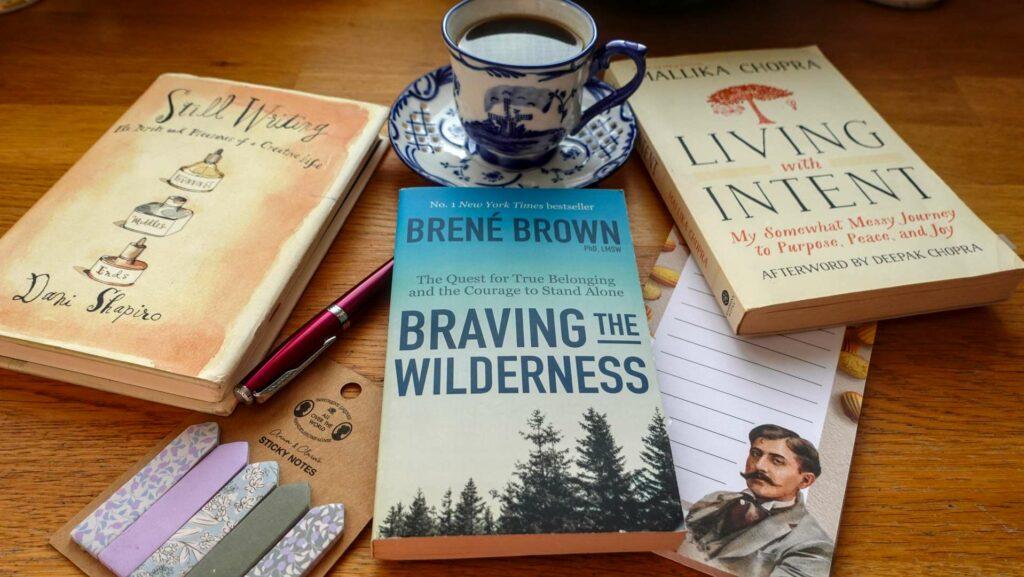
This January, I needed to reconnect with these three friends—don’t you feel like some books hold the place of trusted friends in your home?
But more than that, I needed them to answer each other.
Mallika reminded me that I don’t have to do something grand to live with purpose—that being a frequency holder matters.
Brené gave me permission to stop trying to belong everywhere and instead belong to myself, even in the wilderness.
And Dani showed me that before I can decide what direction to move towards, I need to feel the ground beneath my feet.
Together, they formed something like instructions for emerging from exhaustion: Stand still. Know your own ground. Hold your frequency there. This is enough. This is the work.
That’s why we keep books on our shelves even after we’ve read them. Not everything we come across deserves a re-read, but the ones that do? They wait patiently for the version of us who will finally understand what they’ve been trying to say all along.
Sometimes the wisdom we need isn’t in the next trending title or viral recommendation. It’s in the book that made us smile the first time we read it, waiting on our shelf, ready to meet us exactly where we are.

What about you? Do you have books you return to when you need to remember who you are? The ones that seem to know exactly what you need to hear, precisely when you need to hear it?
I’m curious which book might be calling you this January—not to learn something new, but to remember something true.
Until next time, may you find yourself standing still, grounded, holding your frequency with quiet courage.
The Intentional Bookshelf
- Living with Intent by Mallika Chopra – 🇺🇸 World of Books | 🇬🇧 World of Books | 🇫🇷 Momox Shop
- Braving the Wilderness by Brené Brown – 🇺🇸 World of Books | 🇬🇧 World of Books | 🇫🇷 Momox Shop
- Still Writing by Dani Shapiro – 🇺🇸 World of Books | 🇬🇧 World of Books | 🇫🇷 Momox Shop
Note: This post contains affiliate links. If you choose to purchase through these links, I may earn a small commission at no extra cost to you. Thank you for supporting my work!
A short note on how and why I share book links

Written by Alexandra Poppy
Writer, reader & curator of The Ritual of Reading
I’m Alexandra, the voice behind The Ritual of Reading. Somewhere between a stack of novels and a half-finished pot of tea, I keep finding traces of the life I want to live—slower, richer, filled with stories. The Ritual of Reading is where I gather what I love: books that linger, places with a past, and rituals that make ordinary days feel a little more meaningful. I write from Paris, where elegant bookshops and old-fashioned cafés offer endless inspiration—and I share it here, hoping it brings a spark to your own days, too.
Enter The Ritual of Reading
Each Sunday, receive a letter to steady your attention—literary inspiration, seasonal rituals and reflections from a life shaped by books.
On the first of each month, a gift: The Literary View, a custom wallpaper created to accompany your days.