
Mood Board at a Glance
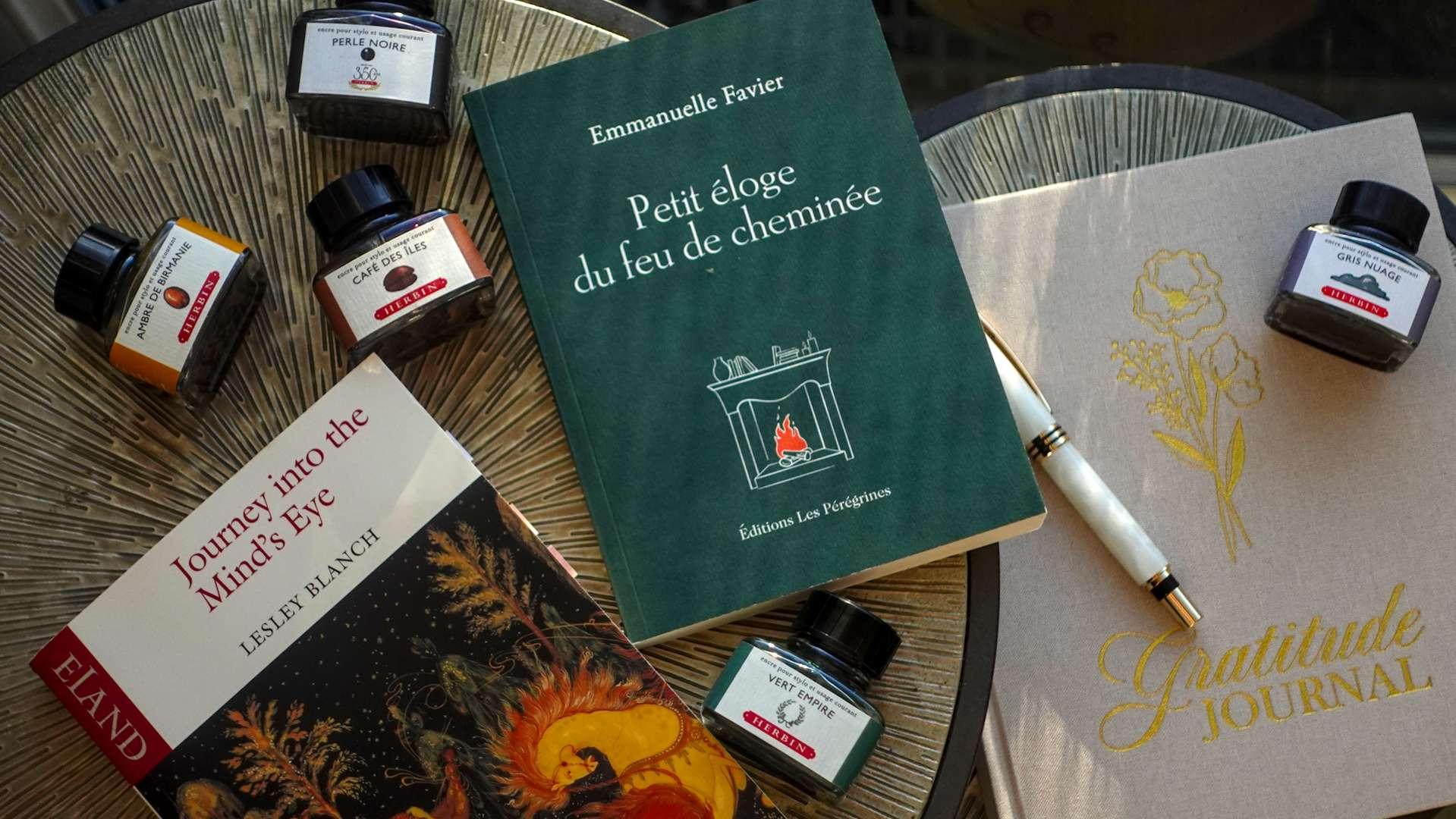
This January, I’m embracing slow living through a curated literary mood board. Featuring ‘A Short Ode to the Fireplace’ by Emmanuelle Favier, the Russian travels of Lesley Blanch, and the warmth of a simple beetroot soup, this month is about gentle self-care and the books our friends choose for us.
When the Christmas ornaments go back into storage and the festive menu has finally been cleared (let’s admit it, we had our fun, but deep down we’re all craving something lighter), what tends to greet us is either a dark, cold winter stretching endlessly ahead — or the guilt‑ridden New Year’s resolutions that are meant to carry us heroically beyond January 5th.
In my book, January is neither a trial to endure nor a battlefield to conquer. January is a time for literary self‑care.
Yes, we are going back to work after the holidays. Yes, most of us don’t have the time — or the logistical freedom — for a retreat just now (and if you do, you have my admiration; do share how and where). But the quiet gift of winter is precisely this: a form of self‑care that doesn’t require much. No reinvention. No performance. Just attention. These slow living habits for January—reading by the fire, making soup, writing in a journal—are the antidote to the frenetic pace the world wants to impose on us.
For my reading at the start of the year, I decided to take a slightly different path to the familiar idea of friendship as self‑care. I am, admittedly, a selective person when it comes to friendships. I don’t have much patience for socialising for the sake of it. But the friends I do have are exceptional — and, as it happens, they give remarkable books.
So in these first days of the year, I’ve turned toward books that were offered to me by friends, carrying both the excitement of a new read and the quiet curiosity of discovering what they believe would suit my taste. This unconventional approach to building a winter reading list—letting friends curate for you—has become one of my favorite literary rituals. Reading, here, becomes a dialogue — even before the first page is turned.
The Magic of “A Short Ode to the Fireplace” and Marguerite Yourcenar
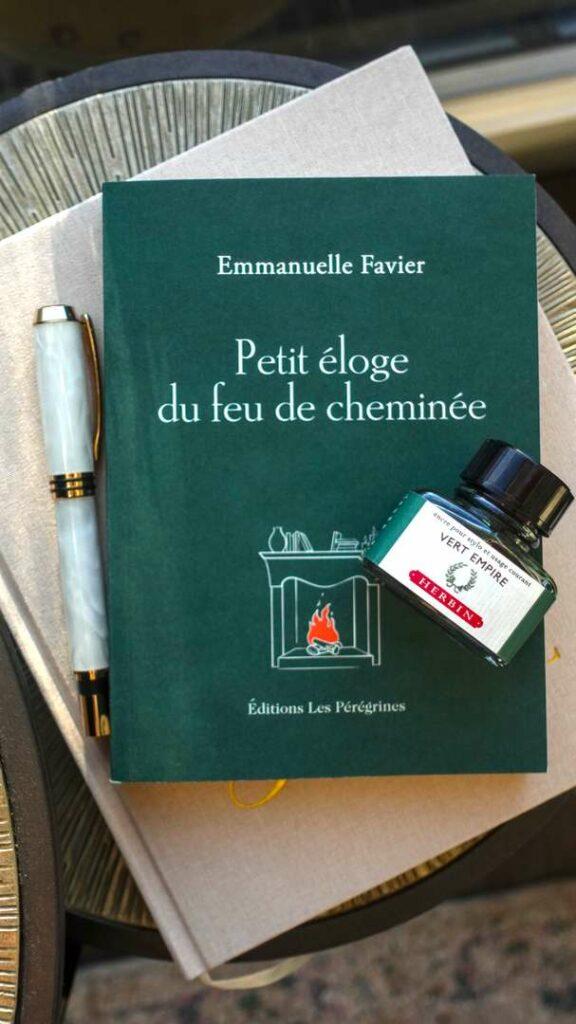
The first book I finished this year was Petit éloge du feu de cheminée by Emmanuelle Favier (published in 2025 and not yet translated; my own translation would be A Short Ode to the Fireplace).
It was a Christmas gift, offered with the kind of honesty only true friendships can sustain: “I don’t know why I bought you this book. Frankly, I don’t think it’s the kind of book you’ll like. But something kept pulling me toward it. I hope you’ll like it anyway.”
The book itself is a love declaration to the fireplace — an essay that wanders through history, specialised vocabulary, fireplace paraphernalia, personal reflections, and, most of all, literature. Emmanuelle Favier traces the presence of the hearth through the works and habits of her favourite authors. It is erudite, intimate and quietly obsessive.
But for me, it became something else entirely.
If you followed along with my Belgian Advent Calendar series, you might remember the very first book I spoke about: Marguerite Yourcenar’s The Abyss (L’Œuvre au Noir), and the frankly unbelievable chance that had me staying — entirely by accident — in a B&B in Bruges, Belgium, that once belonged to one of her friends.
I wrote then about my conversation with Frederik, the owner, and his generosity in letting me read letters Marguerite Yourcenar had written to his mother. I left Bruges with the unsettling feeling of having stepped into a parallel dimension — as though my steps had been guided by some invisible force. I had chosen The Abyss as my entry point into Yourcenar’s world (not her most famous work), only to spend the night in a 15th‑century house she herself described as precisely the kind of home she imagined for her main character, Zénon.
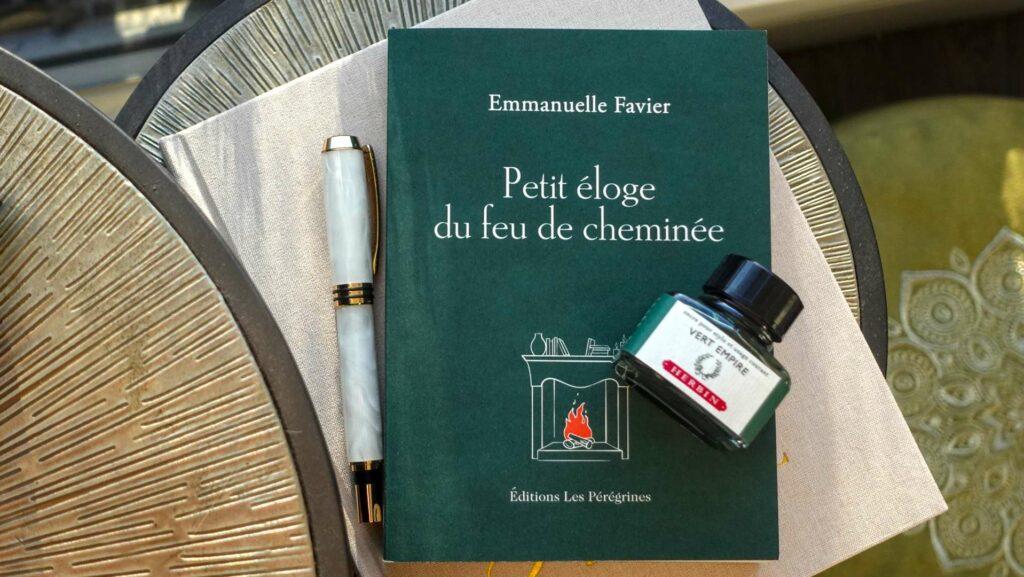
In the last days of December, still recovering from the intensity of the Belgian Advent Calendar project, I finally picked up A Short Ode to the Fireplace, curious to discover why my friend felt it might not be “my kind of book.”
And then, on page 70, Marguerite Yourcenar appears — along with Zénon — standing in front of his fireplace in Bruges.
The goosebumps are impossible to describe.
Emmanuelle Favier recounts the exact story of the B&B where I had stayed, only her visit dates back to the time of its restoration, when Frederik was preparing to open it. She writes of his kindness, of being shown the same letters I held in my hands, and of her delight in reading Yourcenar’s declaration:
“In front of a fire just like this one, in a house just like the one you’re seeing, could very well have lived the Zénon of The Abyss.”
The book had been bought for me weeks before I even stepped off the train in Bruges. A slightly chilling, yet undeniable reminder that friendships are not measured by the frequency of meetings or the number of messages exchanged, but by a form of presence — an invisible energy that holds, connects and sometimes knows before we do.
“Journey into the Mind’s Eye”: Discovering Lesley Blanch
Carried by the enthusiasm of this first reading experience of the year, I turned to my current read — a book with the potential of becoming one of my most surprising and unpredictable favourites.
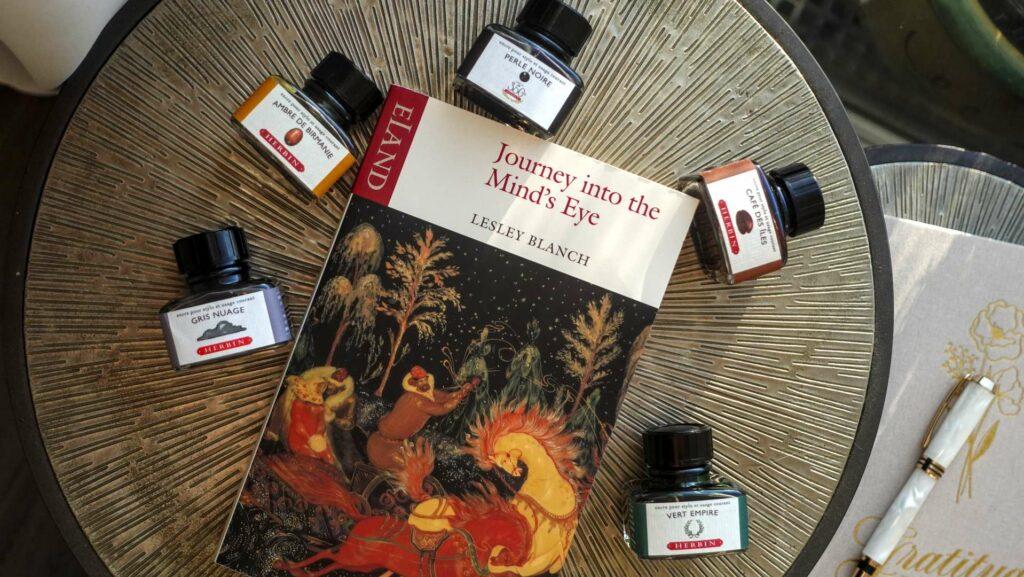
Lesley Blanch’s travel memoir Journey into the Mind’s Eye was offered to me in the spring of 2025 by a close friend and avid reader, without a doubt the most eclectic reader I have had the pleasure of knowing.
Even though I trust his taste and his tact implicitly, I must admit I was surprised when he said:
“I am sure you will adore this book. It’s so very you.”
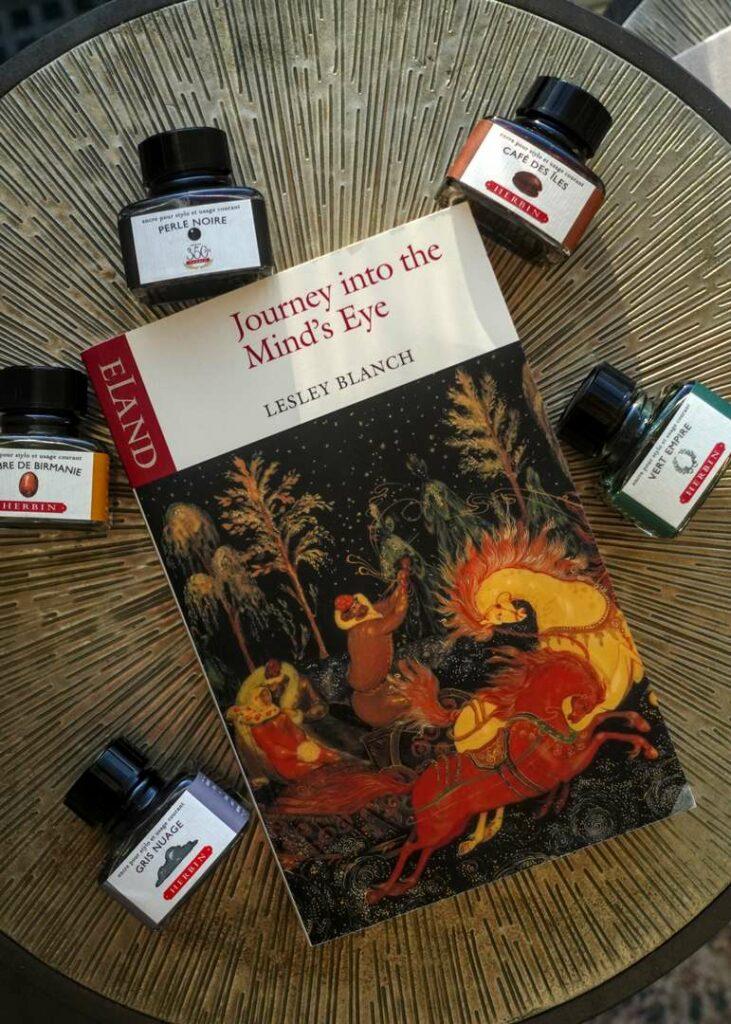
Lesley Blanch tells the story of her lifelong fascination with everything Russian, and her absolute obsession with the mysterious lands of Siberia. The book is described both as a travel narrative and a love story. It was my first encounter with Blanch — British writer, traveller, first wife of Romain Gary — and I am slowly discovering not only a remarkable author, but an extraordinary cultural figure.
My hesitation, however, came from the subject itself. Russian culture is not an easy territory for me. Cultural biases, inherited histories, and the complex relationship between Russia and my home country make it harder for me to approach its literature with the same openness I offer elsewhere — even while firmly believing that every culture holds value beyond its political moment.
So why would my friend insist this book was so very me?
From the first page, I was mesmerised by Blanch’s writing — elegant and complex, yet strikingly direct. Her personality spills into every sentence, every childhood memory unfolding as though you were standing beside her. That, immediately, felt familiar.
And then came the line that unlocked everything:
“You must think yourself where you want to be.”
Blanch recounts a childhood moment in which she is forbidden to follow her Traveller friend to Siberia. His consolation unfolds into a vision of Mongol warriors galloping across the Gobi, racing after arrows shot into the air — an act of pure magic.
A short note on how and why I share book links
“You must think yourself where you want to be.” Since I continued to stand rooted to the nursery floor, he took my hand, smiling one of his rare soft smiles; then, assuming the proud stance of an archer, he told me how the Mongol warriors galloped across the Gobi, accomplishing distances which nothing less than magic could explain, racing after the arrows they shot into the air before them.
“I remember an old song of theirs,” he said. “Fly, fly, wherever ye be, For I am the Lord of the Arrows, said he.”
“You must learn their secrets,” he went on, “magic is everywhere—in the Gobi—in this nursery too.”
And with that, I had to be content.— Lesley Blanch, Journey into the Mind’s Eye
That sentence felt like my entire life compressed into a single idea. It felt like The Ritual of Reading. Like all the ways in which I choose to spend my days. Suddenly, I understood: my friend hadn’t recommended the book because of its geography, but because of the beauty it carries — a beauty that exists beyond borders, cultures, and categories.
I am taking my time with this one. Giving myself space to move gently past my own limitations. Reading not only an author and her story, but also imagining my friend, somewhere else in time, closing the book and thinking: this is a book for Alexandra.
Winter Wellness: Beetroot Soup and Ayurvedic Self-Care
As I open myself — slowly — to ancient Slavic stories and Syberian mysteries, I let this gentleness spill into the kitchen as well.
You probably know this about me by now: without being a strict practitioner (which I once was), I like to follow a few basic Ayurvedic principles when it comes to food. And it so happens that one of the vegetables recommended for this time of year is also a staple in Slavic cuisine: the beetroot.


I am not making a traditional borscht, but rather a personal variation, using what I have at hand. There’s something about the deep magenta color of beets that feels like winter’s secret warmth, the kind of nourishment that works from the inside out. Chopping them stains your fingers temporarily pink, a small price for the earthiness they’ll bring to the pot.
Few dishes convey self‑care as clearly as a bowl of warm soup. It asks very little of us, and yet gives back so much: warmth, nourishment, the reassurance that we are taking care — in the most literal sense — of ourselves. You chop, you simmer, you wait while the kitchen fills with steam and the windows fog over. Not many dishes can give such a powerful impression of taking care of yourself as making and eating a simple bowl of warming soup. It’s the opposite of those punishing January cleanses—this is sustenance, comfort, the kind of gentle nourishment that actually feels like love rather than discipline. You sit with your bowl, maybe with a book propped open beside it, and for those minutes, winter doesn’t feel like something to endure but something to inhabit fully.
Get the full recipe for my Beet Soup by clicking here.


Small rituals, twice a day
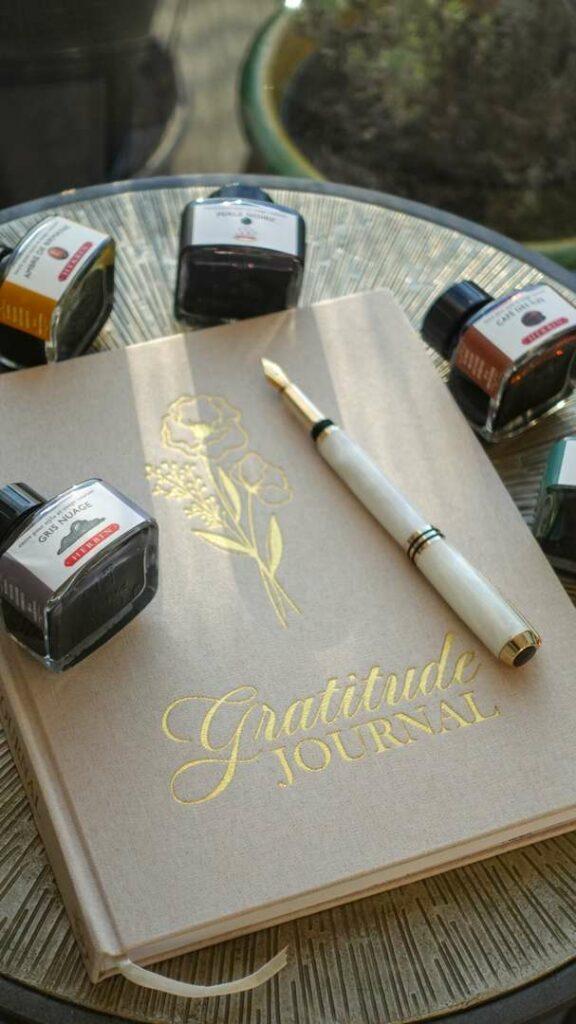
One last element of this January mood board — an experiment, really — is a gratitude journal.
I know, I am late to the game. Everyone seems to be photographing their five‑minute journals next to a morning coffee, posting it as a trophy on social media. As usual, I am slightly resistant to trends. Gratitude, for me, has taken other forms over time — one of them being the end‑of‑the‑month Gratitude newsletter I send to my subscribers.
What is new here is not the concept, but the rhythm: morning and evening, just a few minutes each time. I am slow to integrate new habits, so we will see how this unfolds. But for now, I can say this: I love the notebook itself. It gives me a reason to use my fountain pens, to rotate through my inks — and that alone creates two small moments of pleasure in my day. Which, in January, feels like a quiet victory.
This month, as we settle into this gentle January together, I’ll be revisiting a favorite book that infuses quiet strength into my days—the kind of rereading that feels less like repetition and more like returning home. I’ll also be sharing some relaxing fiction as a self-care ritual, because sometimes the best medicine is a story that asks nothing of you except to turn the page. And later in the month, I’ll be contemplating small changes that could make a difference in my reading this year—not resolutions exactly, but gentle shifts toward a more intentional literary life.
If you’re looking for more book recommendations for winter, these friend-chosen titles are just the beginning. There’s something particularly sustaining about reading during the coldest months, when the world asks us to stay inside and we finally have permission to do exactly that.
May January be gentle with you, and may your books choose you as wisely as your friends do.

Written by Alexandra Poppy
Writer, reader & curator of The Ritual of Reading
I’m Alexandra, the voice behind The Ritual of Reading. Somewhere between a stack of novels and a half-finished pot of tea, I keep finding traces of the life I want to live—slower, richer, filled with stories. The Ritual of Reading is where I gather what I love: books that linger, places with a past, and rituals that make ordinary days feel a little more meaningful. I write from Paris, where elegant bookshops and old-fashioned cafés offer endless inspiration—and I share it here, hoping it brings a spark to your own days, too.
Enter The Ritual of Reading
Each Sunday, receive a letter to steady your attention—literary inspiration, seasonal rituals and reflections from a life shaped by books.
On the first of each month, a gift: The Literary View, a custom wallpaper created to accompany your days.