
Belgian Advent Calendar – Day 15
There’s a particular madness that overtakes you in Belgium when you stand before a chocolate shop window. The rows of glossy pralines, the shimmer of gold leaf, the names whispered like incantations: ganache, gianduja, praliné. You tell yourself you’ll just look. You tell yourself you’re merely browsing. And then, somehow, you’re inside, pointing at trays, nodding eagerly as the shopkeeper fills a small box that will cost more than a decent meal—and you regret nothing.
This is the Belgian chocolate experience. And for my Advent journey, I decided to surrender to it completely.
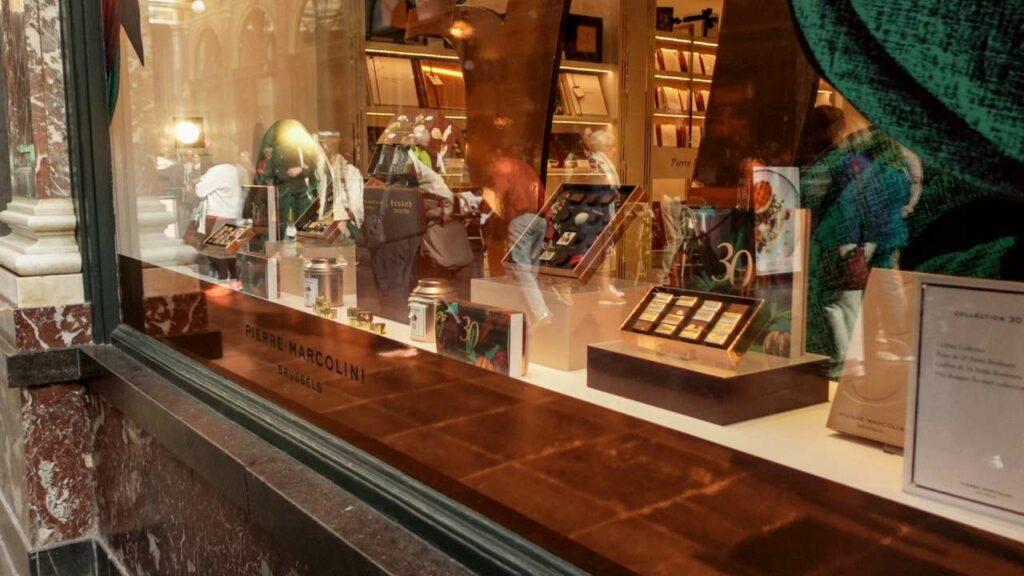
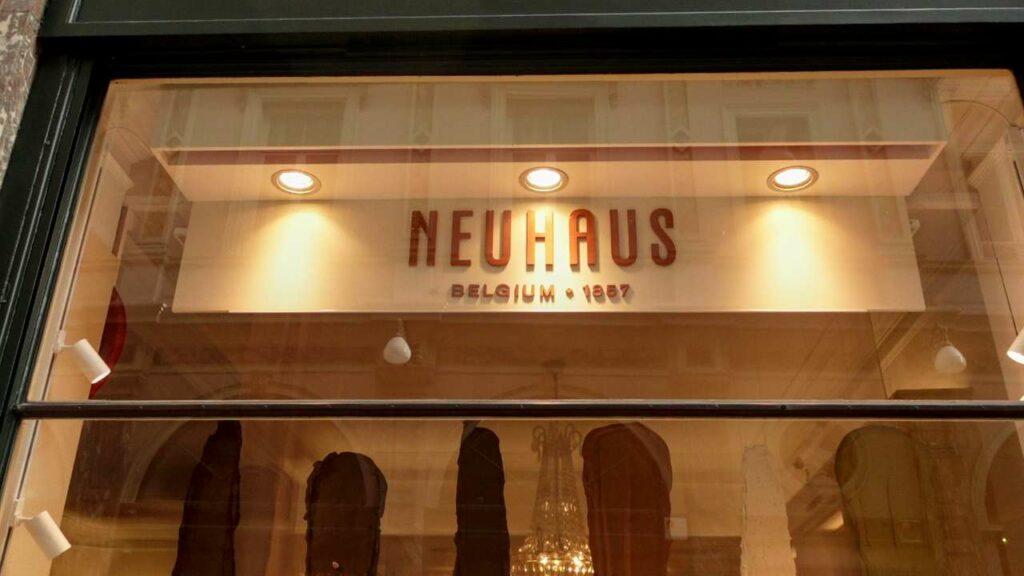
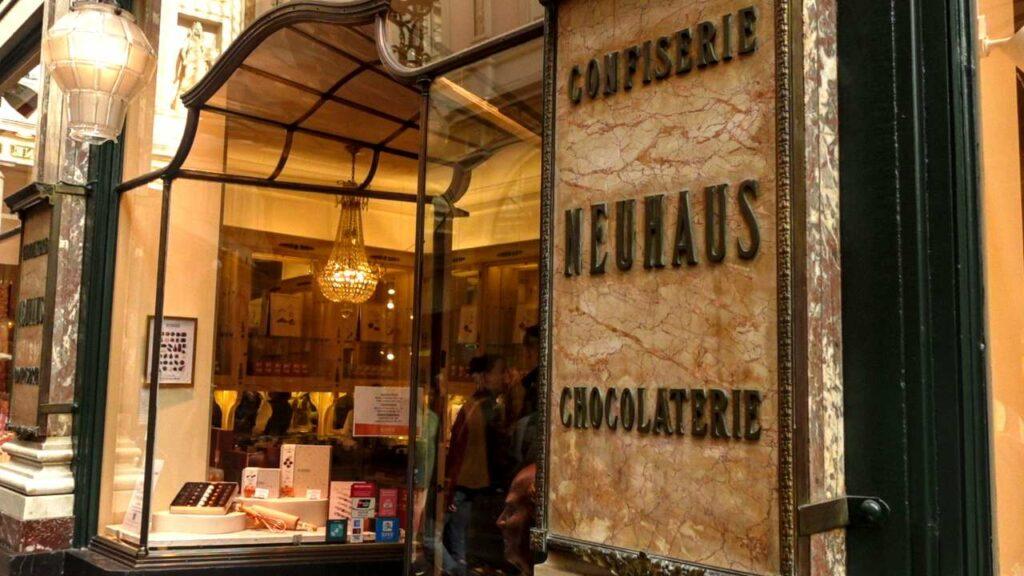
The Pilgrimage Begins
My chocolate quest took me to one of Belgium’s most storied settings: the Galeries Royales Saint-Hubert in Brussels. These magnificent glass-roofed arcades, built in 1847, are where chocolate shopping becomes theater. Light filters through the vaulted glass ceiling onto marble floors, casting everything in a honeyed glow. Neuhaus sits here, in the very place where the praline was invented in 1912 by Jean Neuhaus Jr. That small fact alone makes walking through these galleries feel like stepping into chocolate history—as if the ghosts of a century’s worth of chocolatiers and their delighted customers still linger in the air, sweet and perpetual.
The Ritual of Choosing
What I love most about Belgian chocolate shops is the ceremony of it all. The shopkeeper doesn’t rush you. There’s no impatience as you lean close to the glass, studying each praline as if it were a tiny sculpture—which, in a sense, it is. Some are striped, some bear a delicate swirl, others are dusted with cocoa or crowned with a single nut. Each marking is a code, a promise of what waits inside.
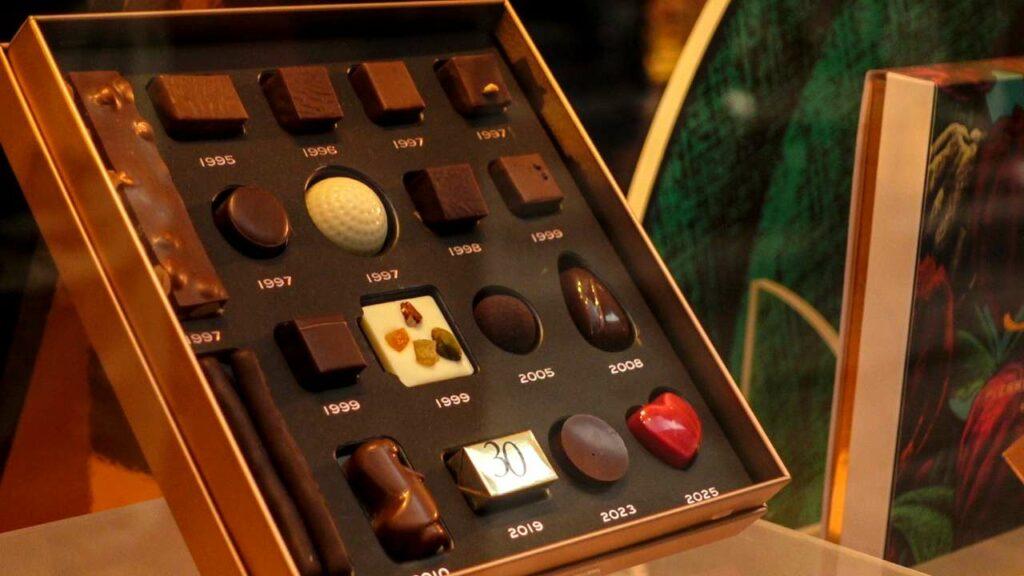
I visited both Neuhaus and Mary, two houses with historic and distinct personalities. Neuhaus feels grand, classical—the elder statesman of Belgian chocolate. Mary, founded in 1919, carries a quieter elegance, the character of the first woman chocolatier, intimate and refined. Both share that essential Belgian quality: the insistence that chocolate is not merely candy, but craft.
But it is in the creativity of a contemporary artist that I found myself most: Pierre Marcolini. Where tradition meets audacity, Marcolini’s universe feels like stepping into a gallery where chocolate becomes sculpture—bold geometric forms, unexpected textures, a modernist sensibility that transforms each creation into an edible work of art.
The Tasting
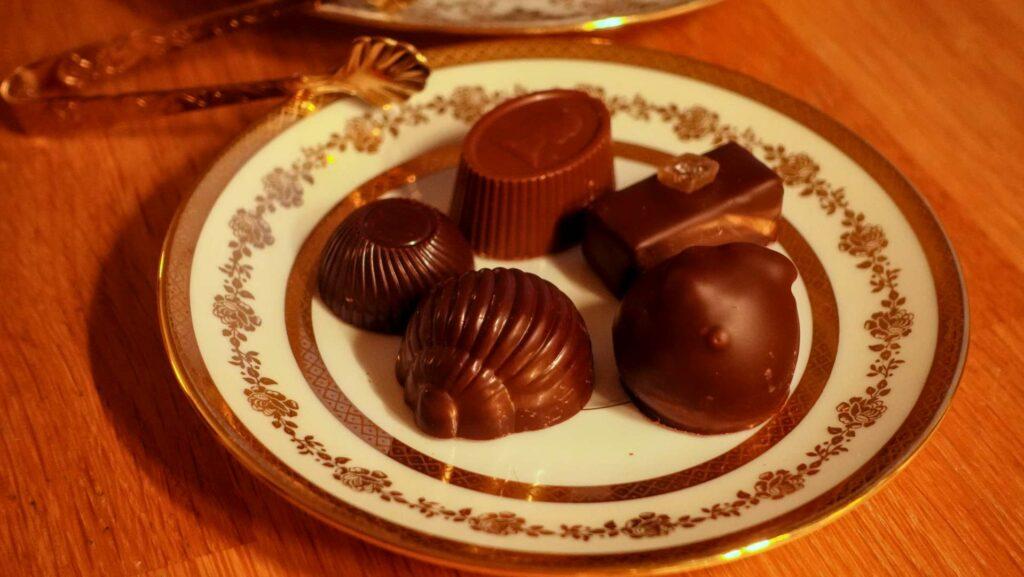
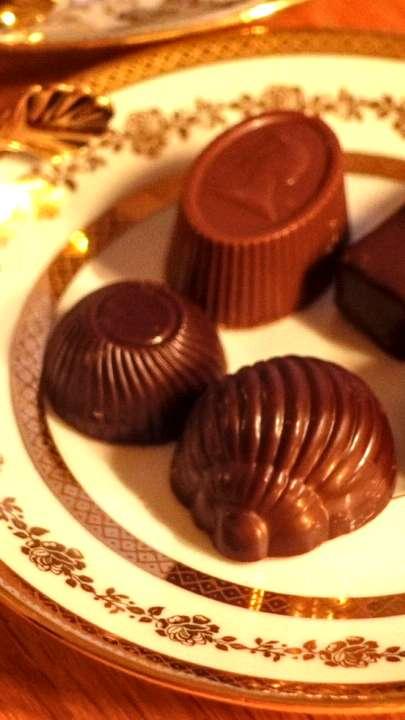
At home, I arranged my spoils like a painter arranging colors on a palette. This is the moment I’d been anticipating—the private chocolate tasting, where time slows and nothing else matters.
The first bite of a proper Belgian praline is always a small revelation. The shell cracks—not crumbles, but cracks cleanly—and then comes the filling: sometimes liquid, sometimes creamy, always singing with flavor. A whisper of hazelnut. A bloom of coffee. The deep, almost solemn richness of dark ganache. Each praline is a tiny world, complete unto itself.
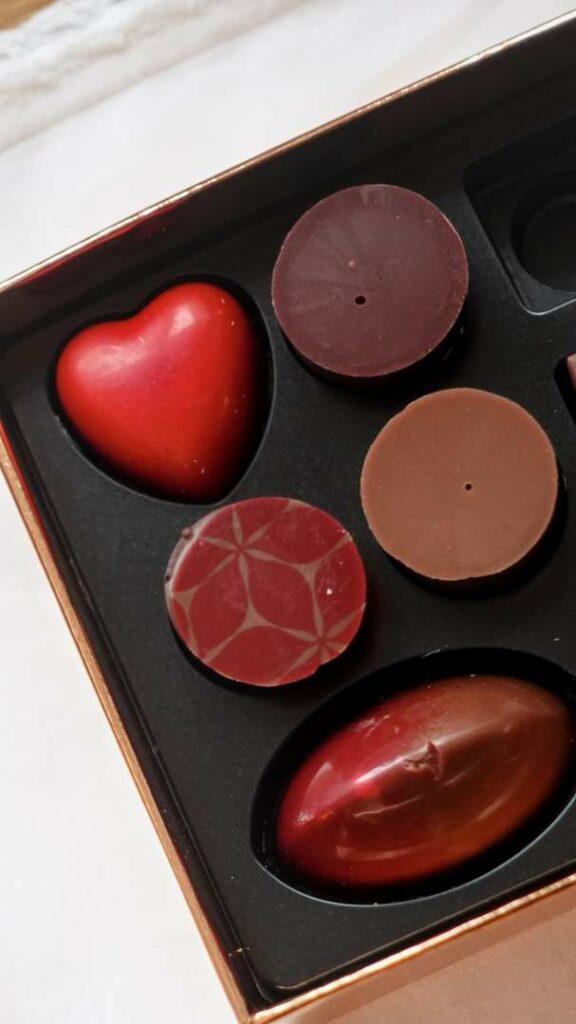
The Marcolini tasting was where this revelation deepened into something else entirely. Here were flavor pairings I hadn’t imagined: yuzu meeting dark chocolate, Szechuan pepper dancing with caramel, olive oil lending its grassy sophistication to ganache. The presentation itself was a statement—sleek boxes, architectural arrangements, each piece positioned like a museum exhibit. This is where the grand mastery of chocolate meets contemporary art, where tradition bows to invention without losing its soul.
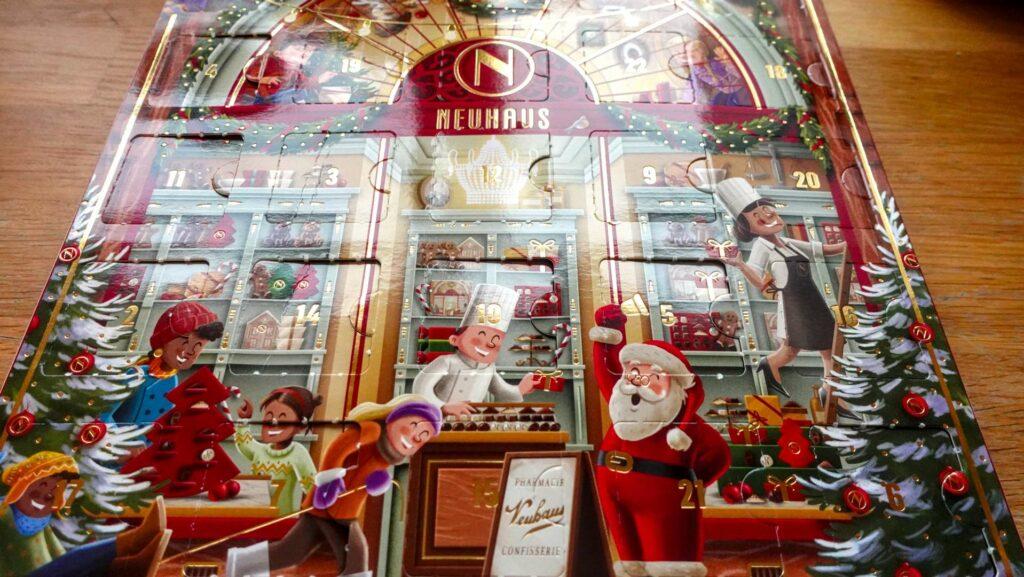
This year, I also treated myself to a Neuhaus chocolate Advent calendar—twenty-four pralines, each one a daily mystery. It has become my December ritual: the morning coffee, the numbered window, the brief ceremony of pleasure. It’s another kind of meditation in a way.
Why Belgium?
People often ask what makes Belgian chocolate different. The answer is both simple and complex. Technically, it’s about the quality of the cocoa, the percentage of cocoa butter, the absence of vegetable fats. It’s about using fresh cream in the ganache, about craftsmanship over mass production.
But really, it’s something less tangible. It’s the cultural reverence. In Belgium, chocolate isn’t a guilty pleasure—it’s a point of national pride, a serious business, an art form. The Belgians don’t apologize for their obsession with it. They’ve simply decided that life is too short for mediocre chocolate, and they’ve built an entire culture around that principle.
Standing in those shops in Brussels, watching the careful hands of the chocolatiers at work, I understood: this is what it means to care deeply about something small. To refuse compromise. To insist that even something as fleeting as a praline—gone in two bites—deserves absolute attention, complete integrity.
Belgium taught me something about winter joy: sometimes it arrives not in sweeping vistas or profound revelations, but in a single perfect chocolate, enjoyed slowly, with full attention and zero regret.
Tomorrow, I continue my journey through Belgian December. But tonight, there’s one more chocolate waiting in my Advent calendar.
See you tomorrow !

During the 2025 Advent season, each post on The Ritual of Reading was accompanied by a Daily Advent Letter, sent privately to subscribers. These letters echo the theme of the article, but take a more personal and reflective path — closer to the hesitations, intuitions, and emotions that accompanied the writing.
What follows is the Daily Advent Letter that was written alongside this post.
| December 15th |
| Dear Friend, I have a confession: I’m a ganache purist. Not for me the crunch of nougatine, the grit of praline, the honeyed resistance of caramel. Give me ganache—that silk-smooth filling that yields instantly, that melts before you can even think about chewing. It’s the most honest expression of chocolate, I think. The purest conversation between cocoa and cream. But here’s where it gets interesting: I don’t want my ganache to taste like chocolate. Or rather, I don’t want it to taste only like chocolate. I want olive oil cutting through the richness with its grassy sharpness. I want Timut pepper—that strange Nepalese cousin of Szechuan pepper—tingling on my tongue with its grapefruit-electric bite. I want basil whispering its green secrets into dark chocolate, creating something that shouldn’t work but absolutely does. This is what I search for in every chocolate shop: the unexpected. The combinations that make me pause mid-bite and think, “Wait, what?” The flavours that sound wrong on paper and turn out to be revelations in the mouth. Why do I chase these strange marriages? Because they transform eating from compulsion into ritual. When you bite into a praline filled with yuzu ganache or cardamom-infused cream, you can’t just mindlessly consume. You have to pay attention. You have to be present for the experience, because your brain is too busy being surprised to let you drift into autopilot. It’s training, in a way. Every unexpected flavour is teaching my palate to stay curious, to remain open, to trust that familiar things can still astonish me if I’m willing to be surprised. In Belgium, where chocolate is taken so seriously that it borders on the sacred, this feels especially important. The masters here understand that tradition doesn’t mean repetition—it means having the confidence to experiment, knowing your foundation is solid enough to support flights of fancy. So yes, give me the ganache. But make it strange. Make it memorable. Make it something I’ll still be thinking about three days later, trying to decode exactly what I tasted, wondering if I can ever find it again. Because that’s what the best experiences do, isn’t it? They train us to notice. To discover. To stay awake to the world and all its delicious possibilities. Until tomorrow, Alexandra |

Written by Alexandra Poppy
Writer, reader & curator of The Ritual of Reading
I’m Alexandra, the voice behind The Ritual of Reading. Somewhere between a stack of novels and a half-finished pot of tea, I keep finding traces of the life I want to live—slower, richer, filled with stories. The Ritual of Reading is where I gather what I love: books that linger, places with a past, and rituals that make ordinary days feel a little more meaningful. I write from Paris, where elegant bookshops and old-fashioned cafés offer endless inspiration—and I share it here, hoping it brings a spark to your own days, too.
Enter The Ritual of Reading
Each Sunday, receive a letter to steady your attention—literary inspiration, seasonal rituals and reflections from a life shaped by books.
On the first of each month, a gift: The Literary View, a custom wallpaper created to accompany your days.