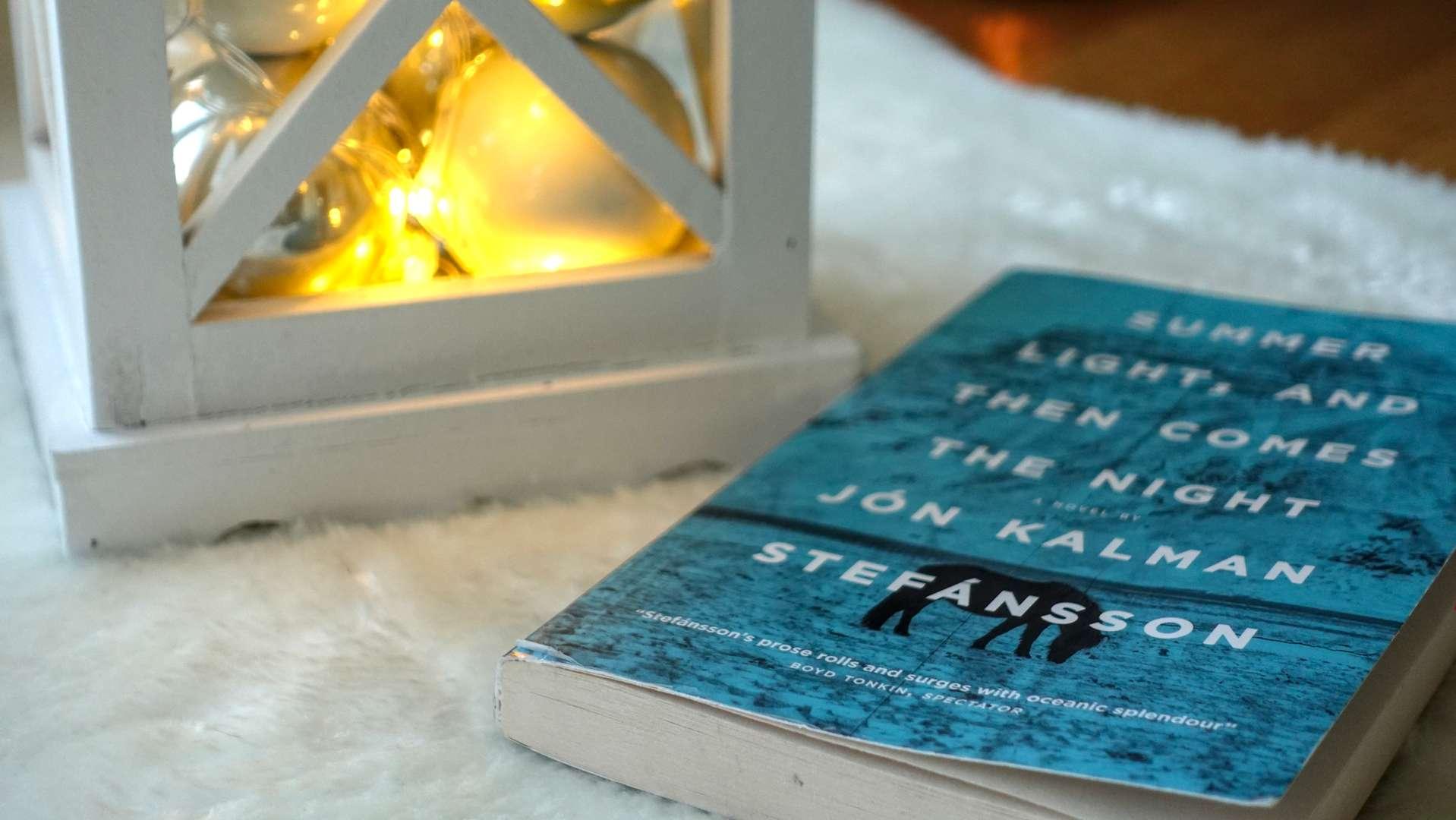
Scandinavian Advent Calendar Day 20

A short note on how and why I share book links
Light or darkness—do you value them equally? Are you drawn to the ethereal strangeness of the midnight sun, that disorienting season when day refuses to end? Or does your soul lean toward the polar night, when darkness settles over the land like a blanket and time itself seems to slow?
We who live in temperate latitudes imagine we can comprehend what it means to inhabit the extremes of Arctic light and shadow. We picture ourselves adapting, romanticize the drama of those seasonal transformations. But who better to illuminate this experience than those who have lived it, whose rhythms are shaped by the sun’s long absence and longer presence? Today we turn to an Icelandic novel that begins with this very question—light or darkness—and then draws us so deeply into its world that we forget we ever asked.
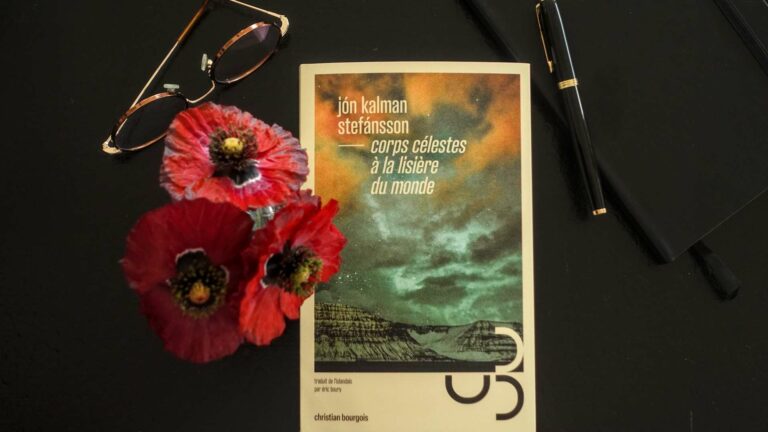
Summer Light, and Then Comes the Night by Jón Kalman Stefánsson is a work that resists easy categorization. Winner of the Icelandic Literature Prize and longlisted for France’s prestigious Prix Médicis étranger, the novel weaves together the intersecting lives of residents in a small western Icelandic village. Each chapter shifts focus to a different character, yet these seemingly separate stories connect through invisible threads, forming a subtle lattice of meaning and connection. Here we encounter farmers and dreamers, pragmatists and mystics, people grappling with mortality, desire, the ordinary mysteries of existence, and occasionally the extraordinary ones.

What strikes me most powerfully about this novel is the profound contrast between its subject matter and its execution. How does one write poetry about the utterly mundane? How does one find transcendence in the daily routines of a farming community governed by nature’s unforgiving calendar? Stefánsson accomplishes this alchemy through language that transforms the prosaic into the luminous. His villagers tend sheep and mend fences, gather for dances at the community hall, gossip about their neighbors—all the small ceremonies that constitute rural life. Yet through his prose, these simple acts become charged with significance, imbued with a kind of austere beauty that matches the landscape itself.
Consider how Stefánsson renders even heartache sublime:
“The world is full of dreams that never come true. They evaporate and settle like dew in the sky where they transform into the stars in the night.”
Or how he gives physical form to sorrow:
“Tears are shaped like rowing boats, pain and heartache pull the oars.”
There is something distinctly Icelandic in this approach—a willingness to find the mythic within the domestic, to treat the invisible world as coexistent with the visible one.

My favorite passage captures the season we’re living through now:
“He listens sometimes to the sound of the winter darkness pressing up against the windows of the houses.”
That verb—pressing—transforms darkness from mere absence into presence, even threat. This is winter not as backdrop but as character, as force.
What emerges from these pages is a portrait of rural Iceland that honors both its harshness and its strange, spare beauty. The enigma of existence set against volcanic stone and endless sky, the mysteries of ordinary lives lived in an extraordinary landscape. Stefánsson has given us something rare: a novel that reads like a collection of prose poems, each chapter a meditation on what it means to be human in a place where nature’s extremes make everything feel both more fragile and more essential.
Until tomorrow, dear friends—may you listen to the sound of winter pressing against your windows.

Written by Alexandra Poppy
Writer, reader & curator of The Ritual of Reading
I’m Alexandra, the voice behind The Ritual of Reading. Somewhere between a stack of novels and a half-finished pot of tea, I keep finding traces of the life I want to live—slower, richer, filled with stories. The Ritual of Reading is where I gather what I love: books that linger, places with a past, and rituals that make ordinary days feel a little more meaningful. I write from Paris, where elegant bookshops and old-fashioned cafés offer endless inspiration—and I share it here, hoping it brings a spark to your own days, too.